
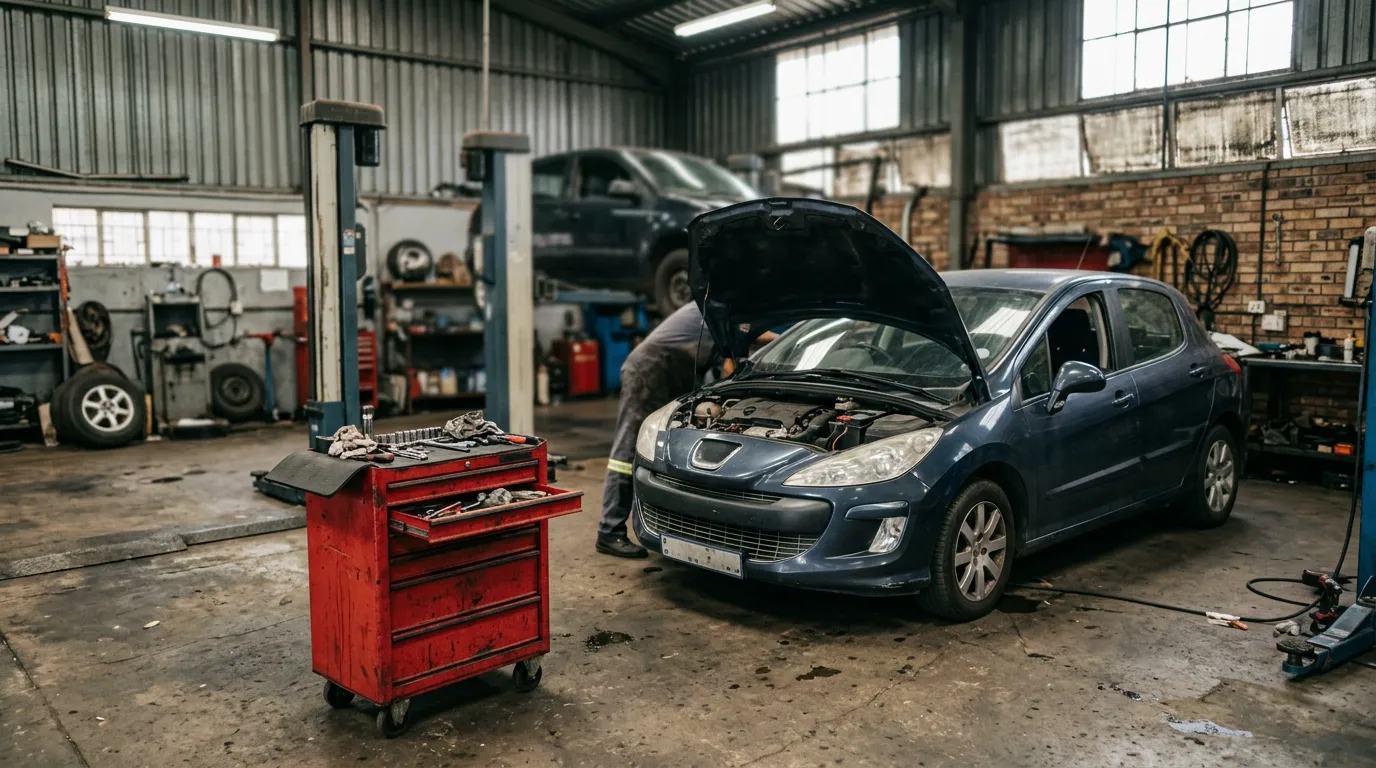
Peugeot 1.6 THP Prince Engine Timing Chain Problems Explained

Key Takeaways
| Aspect | Details | Indicative cost (not a quote) |
|---|---|---|
| Engine | 1.6 THP "Prince" — PSA codes EP6DT / EP6CDT / EP6CDTM / EP6DTS / EP6CDTX / EP6FDTX; BMW/Mini equivalents N14 (early) and N18 (from 2011) | — |
| Affected SA models | 207 GTi, 208 GTi, 308 GT/GTi, 3008, 5008, 508, RCZ — 2007 to 2018 | — |
| Symptom #1 | Diesel-like cold-start rattle from cam cover | — |
| Diagnostic codes | P0011, P0014, P0016, P0017 (cam-crank correlation) | — |
| Chain kit replacement fitted | Chain, both tensioners, guides, sprockets, VVT solenoids | Ask for a quote |
| Carbon walnut-blast service | Direct-injection inlet valve cleaning | Ask for a quote |
| If the chain has already jumped | Bent valves, head rebuild on top | Ask for a quote — our listed price for a 1.6 VTi / THP head is R4,000 – R12,000 and for a 1.6 VTi / THP engine R15,000 – R32,000 |
The 1.6 THP "Prince" is the engine behind Peugeot's hot hatches and GT models — and the one most likely to wreck itself if nobody told you about the timing chain. Co-developed with BMW and shared with the Mini Cooper S, the EP6 family powered Peugeot's hot hatches and GT models for over a decade. It is also infamous for cold-start chain rattle, carbon-coated inlet valves, high-pressure fuel pump failure, and oil consumption that makes wet-belt cars look frugal. This is the full owner's guide — what the Prince engine is, which Peugeots in SA have it, the four interlocking failure modes, and what each one costs to fix in rands.
What Is the "Prince" Engine?
"Prince" was the project name for the joint BMW-PSA petrol engine programme. The 1.6 litre turbocharged variant — Peugeot codes EP6DT (150 hp), EP6CDT (156 hp), EP6CDTM (163 hp), EP6DTS (175 hp), EP6CDTX (200 hp) and EP6FDTX (208 hp), with BMW's N14 on the early cars and the N18 from 2011 as the Mini equivalents. Mini fitted it to the Cooper S, Clubman S and JCW. Peugeot fitted it to the 207 GT/GTi, 208 GTi, 308 GT/GTi, 3008, 5008, 508 GT, and the RCZ coupe [1][2].
Mechanically it is a sophisticated, downsized turbo: direct injection, variable valve timing (VVT), and a chain-driven valvetrain. On paper it should outlast the wet-belt PureTech that replaced it. In practice it suffers four reinforcing problems that, together, give the Prince engine one of the worst reputations of any Stellantis powerplant:
- Timing chain stretch and tensioner failure
- Carbon build-up on the back of the inlet valves (direct injection)
- High-pressure fuel pump (HPFP) wear — the cam follower kills itself
- Oil consumption — piston rings, turbo seals, PCV valve
The four failures are linked. Oil consumption fouls the chain tensioner. Carbon build-up worsens VVT timing and accelerates chain stretch. HPFP debris contaminates the fuel rail. A stretched chain throws cam-crank correlation codes that look identical to carbon-build-up misfires.
South African Context
Stop-start city traffic gives the chain and the inlet valves a hard time — cold starts and low sustained load are the conditions that accelerate both faults.
Problem 1 — Timing Chain Stretch
The single most consequential Prince engine failure.
Symptoms
- Diesel-like rattle from the cam cover on cold start, lasting 2-10 seconds and getting longer with age
- Engine warning light with P0016 / P0017 cam-crank correlation codes (or P0011 / P0014)
- Rough idle, misfires, hesitation under light throttle
- Longer cranking after the car has stood overnight — the tensioner has bled down and the chain is slack until oil pressure builds
- In late-stage failure — chain skips teeth, valves contact pistons, engine destroyed
Causes
The hydraulic chain tensioner bleeds down between starts — when you fire the engine cold, the chain slaps before oil pressure builds [4]. Peugeot revised the tensioner during the production run, but confusingly at least one revision kept the same part number (0829.G3) and is identifiable only by a small dot on the back of the housing [3]; later-build cars are somewhat better but still vulnerable, and some specialists fit the BMW/Mini equivalent instead. The exact number of revisions is not publicly documented.
Solution
Replace the chain as a kit — chain, both tensioners, both guides, sprockets, and VVT solenoids — not the chain alone. Always inspect and renew the oil-pump pickup strainer at the same time; sludge from oil consumption (Problem 4 below) clogs it. Use only PSA-approved 5W-30 ACEA C2/C3 oil and shorten the interval to 10,000 km maximum. Listen for the cold-start rattle on every Prince-engined Peugeot you consider buying — if it lasts more than two seconds, walk away or budget the full chain job.

Need a timing chain kit for your 1.6 THP?
Full Prince engine timing chain kits — chain, both tensioners, guides, sprockets, and VVT solenoids — OEM and quality aftermarket for 207, 208, 308, 3008, 5008, 508 and RCZ.
Get Quote →Problem 2 — Carbon Build-Up on Inlet Valves
The Prince is a direct-injection engine: petrol is sprayed directly into the cylinder, never washing the back of the inlet valves. Oil mist from the PCV system condenses on the hot valve stems and bakes onto the inlet ports. Over time the deposits choke airflow.
Symptoms
- Rough idle, especially after cold start
- Misfire codes P0300-P0304 on light throttle
- Hesitation and flat spots from 1,500-2,500 rpm
- Failed emissions test
- Measurable power loss against the original spec
Causes
Direct injection by design, made worse by short-trip use (carbon doesn't burn off at city temperatures), and failed PCV / oil-separator valves (pulling more oil into the intake). The 308 owner thread [5] shows the same pattern in independent forum data.
Solution
Walnut-blast media-clean the inlet valves with the intake manifold removed. Ask for a quote — labour varies by workshop. Replace the PCV / oil-separator valve at the same time. Avoid short trips; switch to a top-tier fuel and run an upper-cylinder cleaner every 10,000 km. There is no Peugeot-scheduled preventive walnut-blast — the manufacturer treats carbon as a remedial job. A borescope inspection of the inlet ports from around 80,000 km, cleaning when deposits are visible, is a sensible approach.
Problem 3 — High-Pressure Fuel Pump (HPFP) Failure
The same engine family is fitted to the BMW Mini Cooper S, which made HPFP failure famous. The Prince HPFP isn't quite as notorious as the N14 in the Mini, but the same failure mode reaches Peugeot cars too [7][8].
Symptoms
- Engine cranks but won't start hot
- Sudden loss of power, limp mode, EML
- P0087 (fuel rail pressure too low). If P008A shows as well, that is the low-pressure side — check the in-tank pump, filter and feed pressure before condemning the HPFP
- Long crank time when cold
- Stalling at idle
Causes
Two paths. The cam-driven HPFP follower wears through and the cam lobe destroys itself (worse on the Mini N14, present on the Prince too). Or the HPFP's internal seal fails, leaking rail pressure back to the tank. Cheap pattern HPFPs have a poor reputation on this engine and owners report the P0087 code returning after fitment [7] — but before condemning any pump, measure the feed pressure on the low-pressure side, because a weak in-tank pump throws the same code. Fit a genuine PSA or Bosch unit.
Solution
Genuine PSA or Bosch HPFP, fitted with the revised steel-cup cam follower kit at the same time. Inspect the cam lobe carefully while the pump is off — if the lobe is scored, you are into a cylinder-head job. Always replace the rail pressure sensor and fuel filter as part of the same service. Ask for a quote for the pump and the fitting — labour varies by workshop.
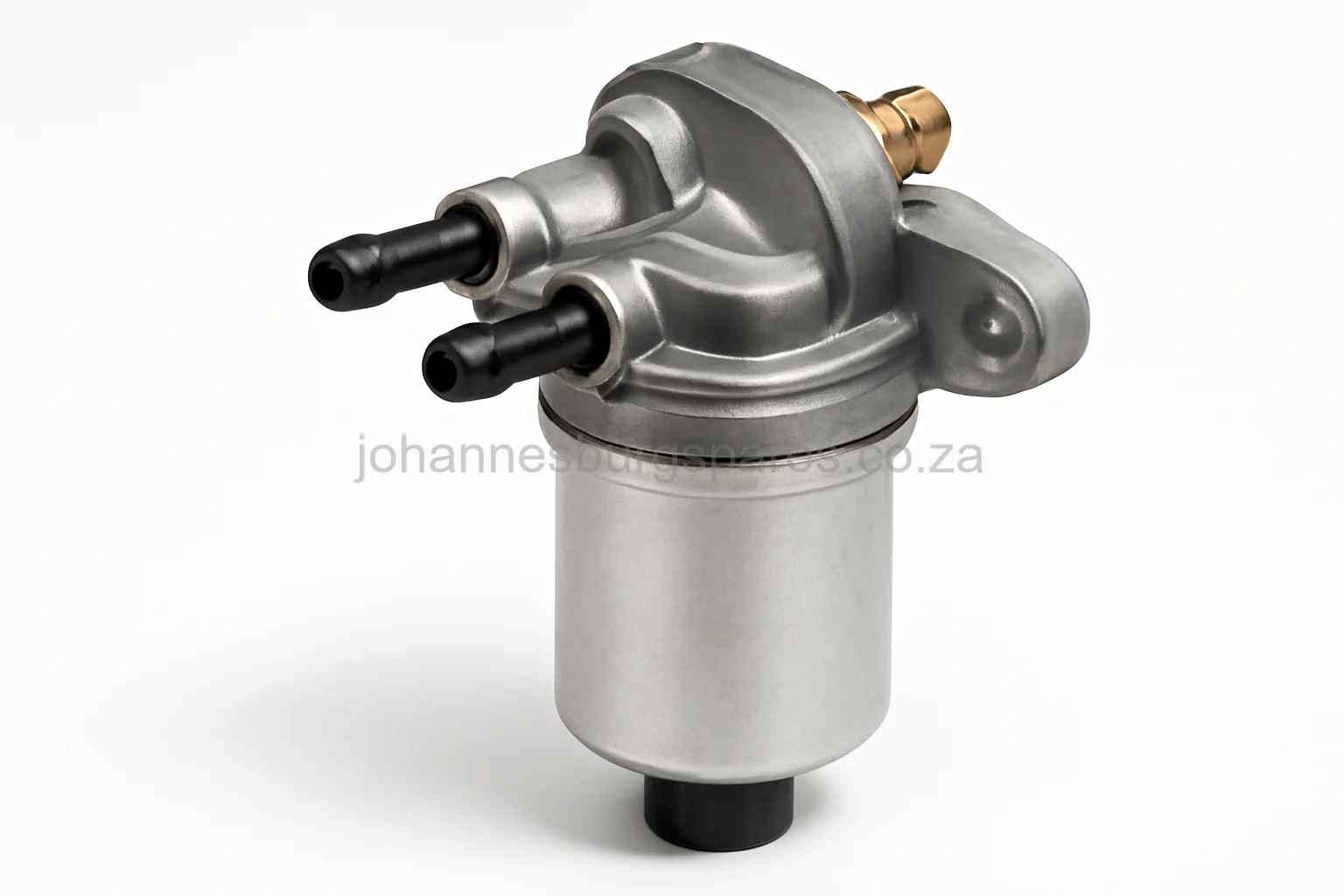
HPFP, follower or rail pressure sensor?
We can source genuine Bosch and PSA high-pressure fuel pumps, revised steel cam followers, rail pressure sensors and fuel filters for Prince-engined Peugeots and courier them nationwide.
Get Quote →Problem 4 — Oil Consumption
The Prince engine drinks oil. Owner reports of 1 litre per 1,000 to 5,000 km are common from 100,000 km onwards on the EP6CDT [6][9]. The cascade is well-documented:
- Worn piston rings — known weakness on the EP6CDT past 100,000 km
- Failed PCV valve in the cam cover sucking oil into the intake (also drives carbon build-up — see Problem 2)
- Turbo oil-seal failure (often runs concurrent with HPFP and chain issues)
- Sump-rail and timing-chain-cover sealant cracking at 8+ years
Solution path (cheapest to most expensive)
- Replace the PCV valve in the cam cover gasket / breather hose — fixes a large share of cases where the loss is modest and there is no blue smoke. R1,200 – R2,500 parts, easy DIY.
- Reseal the sump rail and timing-chain cover with PSA OE sealant. R3,500 – R6,500 fitted.
- Check the turbo oil-feed banjo and screen. Reseal the turbo or fit a reman unit if seals are gone. Our listed price for a 1.6 THP turbo is R4,000 – R10,000; ask for a quote on fitting.
- Bottom-end strip for new piston rings. Ask for a quote. Only worth doing if the rest of the car is sound.
Across all four interventions, change the timing chain in the same job — labour overlaps significantly.
Which SA Peugeots Have the Prince Engine?
- Peugeot 207 GT / GTi — 2007-2012, 1.6 THP 150/175 hp [2]. The 207 was replaced by the 208 in April 2012; the later 207 Compact and 207+ were never offered with the THP.
- Peugeot 208 GTi — 2013-2018, 1.6 THP 200/208 hp [1]
- Peugeot 308 GT / GTi — 2007-2013 T7, 2014-2016 T9 1.6 THP [5]
- Peugeot 3008 — 2010-2016 T84, plus early 2016-2018 P84 1.6 THP [6]
- Peugeot 5008 — 2010-2016 T87, early P87 1.6 THP [10]
- Peugeot 508 — Mk1 2011-2018 1.6 THP, early Mk2 [11]
- Peugeot RCZ — 2010-2015 1.6 THP 156/200
Engine code on the cam cover sticker — anything EP6 is Prince family. Anything EB2 is the wet-belt PureTech that replaced it (covered in our 1.2 PureTech wet belt guide).
Preventive Maintenance for Long Prince Life
- Engine oil + filter every 10,000 km maximum. ACEA C2/C3 5W-30 only — note that B71 2294 is an A3/B4 approval, not a C2/C3 one, so check the PSA approval printed in your handbook against your VIN before you buy.
- Listen for cold-start chain rattle every morning. First two seconds of run time. Anything past two seconds is a chain inspection.
- Borescope the inlet ports from around 80,000 km and walnut-blast when the deposits are visible.
- Replace the PCV valve at 80,000 km. Cheap insurance against oil consumption.
- Change the spark plugs every 60,000 km. OEM iridium spec only — cheap plugs damage the coil packs.
- Inspect the HPFP cam follower at 100,000 km. Finding wear early can save a pump failure.
- Treat the timing chain as a wear item from 80,000 km. Replace at first cold-start rattle, not at a fixed mileage.
For the SA-specific service schedule and dealer costs, see our Peugeot 208 maintenance schedule guide.
Buying a Used 1.6 THP in SA
Three non-negotiable checks. (1) Cold-start the engine in front of you — if the rattle lasts more than two seconds, walk. (2) Pull the oil filler cap and look inside the cam cover for sludge — clean = good service history, sludgy = budget the rebuild. (3) Plug a scanner in and look for stored P0016, P0017 or P0087 codes that have been cleared. A clean dashboard does not mean a clean engine.
Frequently Asked Questions
Is the Peugeot 1.6 THP engine reliable?
Not really. The Prince engine suffers four reinforcing failures — timing chain stretch, inlet-valve carbon, HPFP wear, oil consumption — that often present together at 100,000 km. With strict 10,000 km oil intervals on PSA-spec 5W-30 oil it can reach 200,000 km, but cars run on stretched service intervals commonly need major work well before that.
What does a Peugeot 1.6 THP timing chain replacement cost in SA?
Ask for a quote — labour varies by workshop. Replace the full chain kit (chain, both tensioners, guides, sprockets, VVT solenoids) and renew the oil-pump strainer. After valve damage, head work is extra.
What is the difference between 1.6 THP and 1.6 VTi?
Both are EP6 family engines, but VTi is naturally aspirated (120 hp, no turbo) and THP is turbocharged (150-208 hp). Both have the timing chain, both suffer carbon build-up. The VTi escapes the HPFP and turbo failures but still loses time to chain stretch and carbon. The EP6 VTi is the 207 1.6 16v, 308 1.6, 3008 1.6 base petrol.
Why does my 1.6 THP rattle on cold start?
Hydraulic chain tensioner bleeds down overnight — when you fire the engine cold, the chain slaps before oil pressure rebuilds the tensioner. Two seconds is normal. Five-plus seconds or "rhythmic metallic knock from the driver side" means the chain has stretched and the tensioner can no longer fully take up the slack [4]. Do not drive far before getting it inspected.
Is a chain rattle the same as a wet-belt fault?
No. The 1.6 THP Prince has a chain, the 1.2 PureTech has a wet belt. They are different engines with different fault patterns. The PureTech wet belt affects 1.0 and 1.2 PureTech engines from 2014 onwards — non-hybrid versions were still built with the belt after the 2023 chain engine arrived; the Prince chain is a 2007-2018 engine fault. See our Peugeot timing belt vs chain guide for the full engine-by-engine breakdown.
How long does walnut-blasting last on a 1.6 THP?
Roughly 60,000-80,000 km if you keep the PCV valve healthy and avoid pure-urban duty. On a heavy short-trip city car, repeat the clean at 50,000 km.
Can I claim back Prince engine repair costs from Peugeot SA?
Only if the car is still inside its factory warranty, which almost none of these cars are. Section 56 of the Consumer Protection Act is a six-month implied warranty of quality running from the date you took delivery, so it does not reach an out-of-warranty engine repair on a car this age. Outside warranty a goodwill contribution is entirely at Peugeot SA's discretion — call customer care on 0860 738 472 with your VIN and a complete service history, which is what any goodwill decision turns on.
Sources
- Peugeot 208 GTi 2012-2019 buyer's guide (Garage Dreams)
- 207 GT 1.6 THP 150 timing issues (Peugeot Forums)
- Timing chain issues thread (Peugeot Forums)
- 308 1.6 VTi Prince timing chain (Peugeot Forums)
- Carbon build up — 308 owner thread (Peugeot Forums)
- 3008 1.6 THP 121 kW oil consumption 1L per 1000 km (Peugeot Forums)
- 1.6 THP High Pressure Fuel Pump HPFP (Peugeot Forums)
- High pressure fuel pump HPFP — owner thread (Peugeot Forums)
- Excessive engine oil consumption — 5008 thread (Peugeot Forums)
- Peugeot 5008 1.6 THP 163 2012-2017 common faults (Automotive Faults)
- Timing chain broken — 508 owner thread (Peugeot Forums)
Important Disclaimer
This guide is informational and reflects forum, specialist and owner-reported patterns. It is not a substitute for diagnosis by a qualified Peugeot specialist. SA rand pricing is indicative and varies by region, supplier and parts source. Always confirm parts compatibility against your VIN before purchase. Pro Peugeot Spares is a parts supplier, not a workshop — we do not perform installation.
Important Disclaimer
This content is for informational purposes only and is based on research from automotive industry sources. Pro Peugeot Spares is not a certified automotive repair facility. Always consult with qualified automotive professionals before performing any repairs or maintenance. Improper repairs can result in personal injury, property damage, or vehicle malfunction. We assume no responsibility for actions taken based on this information.