
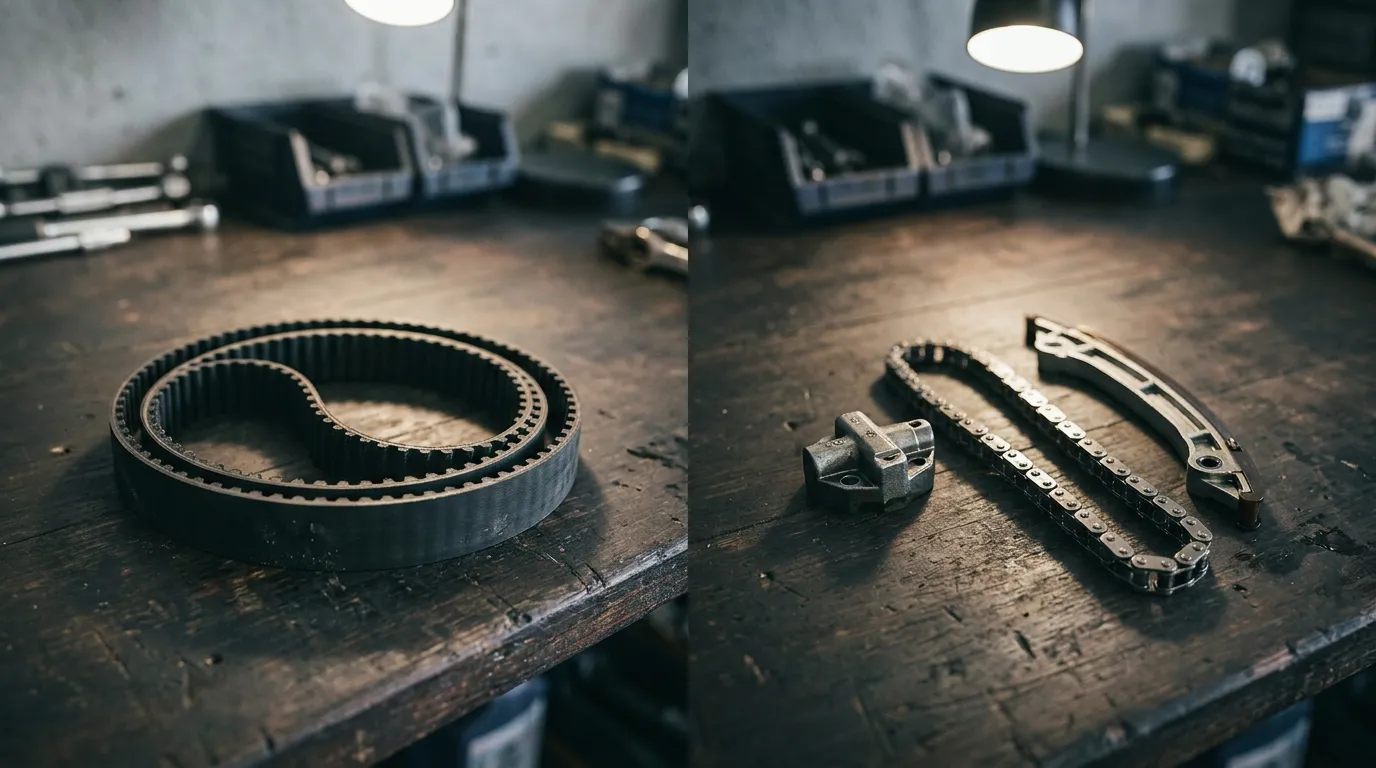
Peugeot Timing Belt vs Chain: Model-by-Model Guide (South Africa)

Whether your Peugeot uses a timing belt or a timing chain depends almost entirely on the engine code under the bonnet, not the model name on the badge. A 208 can have either (the 1.2 PureTech runs a wet belt on every non-hybrid version and a chain only on the Gen-3 48V mild hybrid, the 1.6 BlueHDi runs a dry belt), and getting it wrong is an expensive mistake: skipping a peugeot timing belt replacement on a BlueHDi or an older TU5 will usually destroy the engine. This guide maps every popular Peugeot sold in South Africa — by engine code — to its exact timing system and replacement interval. If you're reading this because you just bought a used Peugeot and don't know when the belt was last done, start here, then get a quote before you drive another kilometre.
Due for a Timing Belt? Get a Parts Quote Today.
We supply OEM and quality aftermarket timing kits (belt, tensioners, idlers and water pump) for every Peugeot engine sold in SA, with nationwide delivery.
Key Takeaways
| Engine | Belt or chain — interval |
|---|---|
| General rule | Belts need scheduled changes; chains don't — but the early EP6 THP chain can still stretch and fail. |
| TU 1.4 / 1.6 petrol (206, 207) | Belt — 80,000 km / 5 yrs |
| 1.0 / 1.2 VTi and PureTech (non-hybrid, 2012 on) | Wet belt — 100,000 km / 6 yrs; critical |
| 1.6 THP EP6 (308, 3008, 5008, RCZ) | Chain — early 2010–15 stretch risk |
| 1.6 HDi / BlueHDi (208, 2008, 308, 3008) | Belt — 120,000–160,000 km |
| 2.0 HDi / BlueHDi (307, 407, 508, Expert) | Belt — up to 160,000 km / 10 yrs |
| Full belt job (SA) | Ask for a quote — labour varies by workshop |
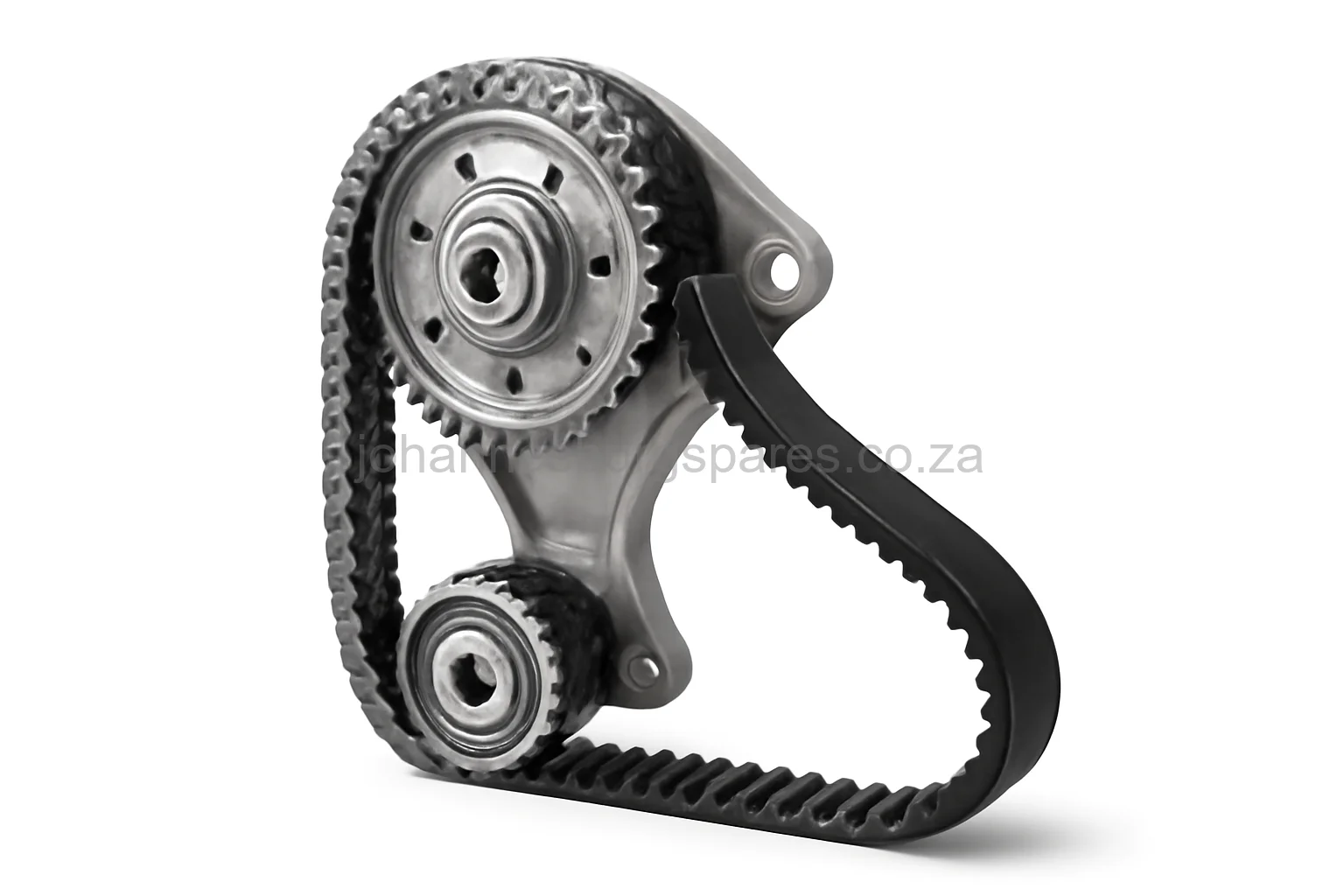
Timing Belt & Chain Kits Available
Complete kits — belt, tensioner, idlers and water pump — for every belt-driven Peugeot engine sold in SA. Gates, Dayco, INA, SKF and OEM options quoted side by side.
Timing Belt vs Timing Chain — The Fundamentals
Both components do the same job: they keep the crankshaft and camshaft spinning in perfect sync so the valves open and close at the right moment. The difference is in the material and the maintenance philosophy.
A timing belt is a reinforced rubber band with fibre cords inside. It's cheap to make, quiet, and light — but it ages. Heat, oil contamination, and simple time cause the rubber to harden and the cords to fatigue. Peugeot builds its belt-driven engines as interference designs, meaning if the belt snaps, the pistons will hit open valves and bend them. That's the difference between a routine belt service and an engine rebuild.
A timing chain is a metal chain running in an oil bath. It doesn't age the way rubber does, so it's marketed as a "lifetime" component. In reality, chains on certain Peugeot engines — especially the early EP6 1.6 THP — can stretch, jump teeth, or wear the guides. The symptoms are similar to a failing belt: cold-start rattle, rough idle, check engine light.
The short version: if your Peugeot has a belt, book the replacement by the book. If it has a chain, don't assume you can ignore it forever.
Complete Engine Reference: Belt or Chain for Every Peugeot Engine
This is the definitive engine-by-engine table. Find your engine code on the service sticker under the bonnet (or on the cam cover), then read across for the system type, interval, and which models use it. All intervals are "whichever comes first" for km and years.
| Engine code | Displacement | Belt or chain | Interval (km) | Interval (years) | Common SA models | Notes |
|---|---|---|---|---|---|---|
| TU3JP / TU3A | 1.4 petrol (8V) | Belt | 80,000 km | 5 years | 206 1.4, 207 1.4, Partner 1.4 | Interference engine. Water pump is belt-driven — always replace together. Very common in SA — many overdue on high-mileage cars. |
| TU5JP4 / TU5J4 | 1.6 petrol (16V) | Belt | 80,000 km | 5 years | 206 1.6, 207 1.6 Sportium/XS, Partner 1.6 | Most common SA Peugeot belt failure. 80,000 km catches used buyers out — it is not the 100,000 km many assume. |
| EB0 / EB2 / EB2F / EB2FA (VTi / PureTech, non-turbo) | 1.0–1.2 petrol (3-cyl, naturally aspirated) | Wet belt (in oil bath) | 100,000 km (revised down from roughly 175,000–180,000 km) | 6 years | 208 1.2 VTi / PureTech 82, 2008 1.2 PureTech 82 | Same wet-belt architecture as the turbo PureTech — the belt runs in the sump and sheds rubber into the oil pickup. There is no "lifetime" chain on the naturally aspirated 1.0/1.2. Treat it exactly like the turbo: belt, strainer, sump clean, fresh oil. |
| 1KR-FE (CFA / CFB) | 1.0 petrol (3-cyl, Toyota/Daihatsu) | Chain | No scheduled replacement | Lifetime (inspect if rattle) | 107 1.0, 108 1.0 VTi 68 | The 107 and the 108 1.0 use the Toyota/Daihatsu 1KR-FE built for the Toyota–PSA joint venture — genuinely chain-driven. Do not confuse it with PSA's own 1.0 EB0, which is a different engine (208, C3, C-Elysée) and runs a wet belt. |
| EB2DT / EB2ADTS (PureTech turbo) | 1.2 PureTech (3-cyl, turbocharged) | Wet belt (in oil bath) | 100,000 km (revised down from roughly 175,000–180,000 km) | 6 years | 208 1.2 PureTech (2014 onward, non-hybrid), 2008 1.2 PureTech, 308 1.2 PureTech, 3008 1.2 PureTech | Critical issue: wet belt sheds rubber into oil, clogging pickup strainer → oil starvation → bearing failure. PSA revised the interval down from roughly 175,000–180,000 km / 10 years to 100,000 km / 6 years after European claims. Includes belt, strainer, sump clean, new oil + filter. |
| EB2LTED / EB2LTEDH2 (PureTech Gen 3, 48V mild hybrid) | 1.2 PureTech (redesigned) | Chain | No scheduled replacement | Lifetime (inspect if rattle) | 48V mild-hybrid PureTech 100/136 (2023 production onward) | Only the Gen-3 mild-hybrid engine got the chain. A build date after 2022 is not proof of a chain — plain non-hybrid PureTech 100 and 130 cars registered in 2024 and 2025 still leave the factory with the wet belt. Confirm the engine code: EB2LTED / EB2LTEDH2 = chain; EB2, EB2F, EB2FA, EB2DT, EB2DTS, EB2ADTD and EB2ADTS = wet belt. |
| EP6C / EP6DT (1.6 VTi / THP) | 1.6 petrol (Prince engine, turbo and NA variants) | Chain | No scheduled replacement | Lifetime (but inspect) | 207 1.6 GTi (THP), 308 1.6 VTi / THP, 3008 1.6 THP, 5008 1.6 THP, RCZ 1.6 THP, 508 1.6 THP | Known issue: early 2010–2015 units develop cold-start chain rattle due to tensioner and guide wear. Chain stretch can jump teeth on interference engine. Post-2016 units improved. |
| DV6B / DV6C (1.6 HDi) | 1.6 diesel (older HDi, non-BlueHDi) | Belt | 100,000–120,000 km | 5–7 years | 206 1.6 HDi, 207 1.6 HDi, 308 1.6 HDi (pre-2014), 307 1.6 HDi, 2008 1.6 HDi, Partner 1.6 HDi | Dry belt, external. Interference engine. Earlier DV6B: 100,000 km / 5 years. Later DV6C and early DV6FC (pre-BlueHDi): 120,000 km / 7 years. Always replace water pump. |
| DV6FC (1.6 BlueHDi) | 1.6 diesel (BlueHDi) | Belt | 160,000 km | 10 years | 208 1.6 BlueHDi 75/100/120, 2008 1.6 BlueHDi, 308 1.6 BlueHDi, 3008 1.6 BlueHDi | Long interval but time limit is firm — a 2014 208 BlueHDi that's done 90,000 km in 10+ years still needs a new belt. Requires PSA timing tools 0194 and 0197. Not a DIY job. |
| DW10B / DW10BTED4 (2.0 HDi) | 2.0 diesel (older HDi) | Belt | 100,000 km | 5 years | 307 2.0 HDi, 407 2.0 HDi, Expert 2.0 HDi, Partner 2.0 HDi | Earlier 2.0 HDi units use 100,000 km / 5-year interval. Interference engine. High labour time on Expert / Partner (belt behind accessories). Replace pump, tensioners and idlers as a set. |
| DW10C / DW10CD (2.0 BlueHDi) | 2.0 diesel (BlueHDi) | Belt | 160,000 km | 10 years | 308 2.0 BlueHDi, 3008 2.0 BlueHDi, 5008 2.0 BlueHDi, 508 2.0 BlueHDi, Expert 2.0 BlueHDi | Longer interval on BlueHDi-spec 2.0, same 160,000 km / 10-year rule as 1.6 BlueHDi. Belt kit for Expert is significantly more labour-intensive than passenger cars. |
| EW10J4 / EW10A (2.0 petrol) | 2.0 petrol (407 / 307 petrol) | Belt | 80,000–100,000 km | 5 years | 307 2.0 XS/XT, 407 2.0 petrol | Interval varies by variant: some EW10 specs call 80,000 km, some 100,000 km. Use the more conservative 80,000 km or factory service book for your exact variant. Interference design. |
| EW12J4 (2.2 petrol) | 2.2 petrol (407, inline-4) | Belt | 80,000 km | 5 years | 407 2.2 petrol | Single timing belt, but a heavier and more awkward job than the 1.4/1.6 TU engines — more ancillaries to strip and a longer belt path. Belt + water pump is the standard service item. |
How to find your engine code: Open the bonnet and look for a sticker on the strut tower or radiator support — it lists the engine code alongside the VIN. It's also stamped on the engine block itself (on most TU and DW engines, driver's-side near the sump). If you only have the VIN, WhatsApp it to us and we'll confirm the engine code and belt/chain status for you.
Belt Replacement Intervals — What the Data Says
Intervals differ by engine family, not by model year or trim. Here are the working numbers:
| Engine family | Found in | Interval (km) | Interval (time) |
|---|---|---|---|
| TU3 1.4 (8V) | 206, 207, Partner | 80,000 km | 5 years |
| TU5 1.6 (8V/16V) | 206, 207 | 80,000 km | 5 years |
| DW10 2.0 HDi (older) | 307, 407, Partner, Expert | 100,000 km | 5 years |
| EW10 2.0 petrol | 307, 407 | 80,000–100,000 km | 5 years |
| DV6 1.6 HDi (older) | 206, 207, 307, 308 (pre-2014), Partner | 100,000–120,000 km | 5–7 years |
| 1.2 PureTech wet belt | 208, 2008, 301, 308, 3008 (non-hybrid, 2012 on) | 100,000 km | 6 years |
| DV6FC 1.6 BlueHDi | 208, 2008, 301, 308, 3008 | 160,000 km | 10 years |
| DW10C 2.0 BlueHDi | 308, 3008, 5008, 508, Expert | 160,000 km | 10 years |
That TU5 80,000 km figure is the one that catches SA owners out. The engine was so common in the 206 and 207 that used buyers often assume it's a 100,000 km interval like most modern belts — it isn't. If you've bought a 206 or 207 with no service history and more than 80,000 km on the clock, assume the belt is overdue until proven otherwise.
The BlueHDi 160,000 km figure sounds generous, but remember: whichever comes first. A 208 BlueHDi that's only done 90,000 km in ten years still needs a new belt.
Model Quick-Answer Guide: "Does My [Model] Have a Belt or Chain?"
The most-searched question on this topic is "does my specific Peugeot [model] have a belt or chain?" — not a generic overview. Use this section for an exact, direct answer.
Peugeot 208: Timing Belt or Chain?
The 208's answer depends entirely on the engine, and there are three different systems across the range.
208 1.2 VTi 82 (EB2 / EB2FA, naturally aspirated): Timing wet belt — not a chain. The naturally aspirated three-cylinder uses the same belt-in-oil design as the turbo PureTech. Service it on the same 80,000–100,000 km schedule; assuming "no chain, no worries" on this engine is how sumps end up full of rubber.
208 1.2 PureTech turbo (EB2DT / EB2ADTD / EB2ADTS, non-hybrid): Timing wet belt. This belt sits inside the oil sump and is lubricated by engine oil. PSA's original schedule was roughly 175,000–180,000 km / 10 years; after widespread failures the service interval was revised to 100,000 km or 6 years, whichever comes first. The wet belt sheds rubber particles that clog the oil pickup strainer, starving the engine of oil — this leads to main bearing failure and a destroyed engine. Change oil every 10,000 km on 0W-30 carrying the PSA B71 2312 approval (ACEA C2) — the approval number matters as much as the grade on this engine — and treat the 80,000–100,000 km wet-belt service as non-negotiable.
208 1.2 PureTech Gen 3 (EB2LTED / EB2LTEDH2, 48V mild hybrid): Timing chain. Stellantis redesigned the engine with a conventional chain from 2023 production, but only on the 48V mild-hybrid versions — plain non-hybrid PureTech 100 and 130 cars have continued to ship with the wet belt into 2024 and 2025. Do not judge by the build date on the door pillar: get the engine code confirmed.
208 1.6 BlueHDi 75/100 (DV6FC diesel): Timing belt. Replacement at 160,000 km or 10 years, whichever comes first. Requires PSA timing tools 0194/0197 — workshop job only.
Cost: ask for a quote — labour varies by workshop.
Peugeot 308: Timing Belt or Chain?
The 308 is sold across multiple generations with multiple engines — the answer is different per engine code.
308 1.4 VTi (TU3 petrol, T7 generation): Timing belt. Interval 80,000 km or 5 years. The 1.4 TU3 uses the same belt-driven system as the 206/207 1.4. Relatively straightforward job, but do not skip it.
308 1.6 VTi / 1.6 THP (EP6, T7 generation 2008–2014): Timing chain. No scheduled interval — but the EP6 (Prince engine, built with BMW) is the engine with the documented cold-start rattle issue on 2010–2015 units. If your 308 THP rattles on cold mornings for more than two seconds, investigate immediately.
308 1.6 HDi (DV6, T7 generation 2008–2014): Timing belt. Older DV6 variant: 100,000–120,000 km or 5–7 years.
308 1.2 PureTech (T9 generation 2014+): Timing wet belt on every non-hybrid PureTech, or chain only on the Gen-3 48V mild hybrid (EB2LTED / EB2LTEDH2, 2023 production onward). Same situation as the 208 — go by the engine code, not the build date.
308 1.6 BlueHDi (DV6FC, T9 generation 2014+): Timing belt. Interval 160,000 km or 10 years.
308 2.0 BlueHDi (DW10C, T9 generation): Timing belt. Interval 160,000 km or 10 years.
Cost: ask for a quote — labour varies by workshop.
Peugeot 2008: Timing Belt or Chain?
2008 1.2 PureTech petrol: Timing wet belt on every non-hybrid PureTech, or chain only on the Gen-3 48V mild hybrid (EB2LTED / EB2LTEDH2, 2023 production onward). The 2008 was launched with the 1.2 PureTech engine in 2013 — most SA examples on the used market are wet-belt cars and need the 80,000–100,000 km service. A 2023 or 2024 car is only chain-driven if it is the mild hybrid, so check the engine code before assuming.
2008 1.6 BlueHDi diesel (DV6FC): Timing belt. NOT the wet-belt engine — this is a conventional dry belt running outside the oil system. Interval: 160,000 km or 10 years. No wet-belt contamination risk. The "2008 1.6 HDi wet belt" fear is misplaced — the diesel uses a dry external belt only.
Cost: ask for a quote — labour varies by workshop.
Peugeot 3008: Timing Belt or Chain?
3008 1.6 THP / 1.6 VTi (EP6 engine, gen 1 up to 2016): Timing chain. Known issue: cold-start rattle on 2010–2015 EP6 units. Do not ignore this symptom on any 3008 THP — chain stretch is progressive and jumping a tooth on this interference engine causes the same damage as a snapped belt.
3008 1.2 PureTech (gen 2, 2017+): Timing wet belt on every non-hybrid PureTech, or chain only on the Gen-3 48V mild hybrid (EB2LTED / EB2LTEDH2, 2023 production onward). Same situation as 208/308 — most SA gen-2 3008s currently on the road are wet-belt cars, and the engine code is the test, not the build date.
3008 1.6 BlueHDi (DV6FC diesel): Timing belt. 160,000 km or 10 years. The 3008 1.6 BlueHDi is a dry-belt engine with the same extended BlueHDi interval. This is one of the more labour-intensive belt jobs on this platform — budget slightly more for labour.
3008 2.0 HDi / 2.0 BlueHDi (DW10): Timing belt. 160,000 km or 10 years (BlueHDi spec). Earlier 2.0 HDi units: 100,000 km or 5 years.
Cost: ask for a quote — labour varies by workshop.
Peugeot 301: Timing Belt or Chain?
The 301 was never sold new in South Africa (it was a left-hand-drive model), but for completeness it came with three engine options — two very different timing systems depending on which you have.
301 1.2 PureTech 82 (EB2 / EB2FA, naturally aspirated): Timing wet belt. The 301 launched with the naturally aspirated 1.2, and it is a wet-belt engine, not a chain engine — same 80,000–100,000 km service as the turbo.
301 1.2 PureTech (EB2DT, turbocharged): Timing wet belt. Same engine as in the 208 and 308 — same risks, same 80,000–100,000 km service interval applies. Change oil strictly on schedule (10,000 km intervals, on 0W-30 carrying the PSA B71 2312 approval / ACEA C2).
301 1.6 BlueHDi (DV6FC): Timing belt. Interval 160,000 km or 10 years. The same extended BlueHDi service interval. This is a dry external belt, not the wet belt — no oil contamination risk.
Cost: ask for a quote — labour varies by workshop.
Peugeot Expert 2.0 BlueHDi: Timing Belt or Chain?
The Peugeot Expert 2.0 BlueHDi (DW10C engine) uses a timing belt. Replacement interval: 160,000 km or 10 years, whichever comes first. This is the same DW10C engine used in the 508, 3008 and 5008, but on the Expert the job is substantially more labour-intensive because of the commercial vehicle's extra accessories and belt routing. Ask for a quote for a full belt + water pump service — labour varies by workshop.
Do not defer the Expert belt — high-mileage panel vans typically see the km limit long before the 10-year clock, and a belt failure on a loaded Expert means a major engine repair.
Earlier Expert 2.0 HDi (DW10B, pre-BlueHDi spec): 100,000 km or 5 years — shorter interval, older engine spec.
Which Peugeot Engines Use a Belt — and Which Use a Chain
This is the summary table most owners come here for. Cross-reference your engine code (on the service sticker under the bonnet) with the table below.
| Model | Common SA engine | Belt or chain |
|---|---|---|
| 107 / 108 | 1.0 1KR-FE (Toyota-sourced) | Chain |
| 206 | 1.4 TU3, 1.6 TU5, 2.0 GTi EW10 | Belt (all) |
| 207 | 1.4 TU3, 1.6 TU5, 1.6 THP EP6 | Belt (TU3/TU5) / Chain (EP6 THP) |
| 207 | 1.6 HDi DV6 | Belt (100,000–120,000 km) |
| 208 | 1.2 VTi / PureTech 82 EB2 (naturally aspirated) | Wet belt (100,000 km / 6 yr) |
| 208 | 1.2 PureTech EB2DT (2014 onward, non-hybrid) | Wet belt (100,000 km / 6 yr) |
| 208 | 1.2 PureTech Gen 3 48V mild hybrid (EB2LTED/EB2LTEDH2) | Chain |
| 208 | 1.6 BlueHDi DV6FC | Belt (160,000 km / 10 yr) |
| 301 | 1.2 VTi / PureTech 82 EB2 (naturally aspirated) | Wet belt (100,000 km / 6 yr) |
| 301 | 1.2 PureTech EB2DT | Wet belt (100,000 km / 6 yr) |
| 301 | 1.6 BlueHDi DV6FC | Belt (160,000 km / 10 yr) |
| 307 | 1.6 XS/XT TU5, 2.0 XS/XT EW10, 2.0 HDi DW10 | Belt (all) |
| 308 T7 | 1.4 TU3, 1.6 VTi/THP EP6, 1.6 HDi DV6 | Belt (TU3/DV6) / Chain (EP6) |
| 308 T9 | 1.2 PureTech (2014 onward, non-hybrid) | Wet belt (100,000 km / 6 yr) |
| 308 T9 | 1.2 PureTech Gen 3 48V mild hybrid (EB2LTED/EB2LTEDH2) | Chain |
| 308 T9 | 1.6 BlueHDi, 2.0 BlueHDi | Belt (160,000 km / 10 yr) |
| 2008 | 1.2 PureTech (2013 onward, non-hybrid) | Wet belt (100,000 km / 6 yr) |
| 2008 | 1.2 PureTech Gen 3 48V mild hybrid (EB2LTED/EB2LTEDH2) | Chain |
| 2008 | 1.6 BlueHDi DV6FC | Belt (160,000 km / 10 yr) |
| 3008 gen 1 | 1.6 THP/VTi EP6 | Chain (rattle risk 2010–2015) |
| 3008 gen 1 | 2.0 HDi DW10 | Belt (100,000 km / 5 yr) |
| 3008 gen 2 | 1.2 PureTech (2017 onward, non-hybrid) | Wet belt (100,000 km / 6 yr) |
| 3008 gen 2 | 1.2 PureTech Gen 3 48V mild hybrid (EB2LTED/EB2LTEDH2) | Chain |
| 3008 | 1.6 BlueHDi, 2.0 BlueHDi | Belt (160,000 km / 10 yr) |
| 5008 | 1.6 THP EP6 | Chain (rattle risk on early units) |
| 5008 | 2.0 HDi / BlueHDi | Belt |
| 407 | 1.6 HDi DV6, 2.0 petrol EW10, 2.0 HDi DW10, 2.2 EW12 | Belt (all common SA variants) |
| 508 | 1.6 THP EP6 | Chain |
| 508 | 2.0 HDi / BlueHDi DW10 | Belt |
| RCZ | 1.6 THP EP6 | Chain (rattle risk on early units) |
| Partner | 1.4 TU3, 1.6 TU5, 1.6 HDi DV6, 2.0 HDi DW10 | Belt (all) |
| Expert | 1.6 HDi DV6, 2.0 HDi DW10, 2.0 BlueHDi DW10C | Belt (all diesels) |
What this means practically:
- Running an older 307 HDi or 307 petrol? You have a belt, full stop. Budget for it.
- Shopping for a 208? Every non-hybrid 1.2 PureTech is a wet-belt car with a critical service — only the Gen-3 48V mild hybrid (EB2LTED/EB2LTEDH2) has the chain, so check the engine code rather than the year; the 1.6 BlueHDi is a dry-belt engine with a ten-year clock.
- Driving a 3008 1.6 THP or an RCZ? Technically chain-driven, but these early EP6 engines have a history of chain stretch — don't ignore a ticking noise.
If you want the full compatibility breakdown for your specific car — engine code, year, kit contents — our Peugeot 307 timing belt section and RCZ timing chain page list stocked kits against real OEM references.
Warning Signs Before Failure
Whether it's a belt about to snap or a chain about to jump a tooth, the symptoms overlap. Treat any of these as a "park it and diagnose" warning — especially on interference engines:
- Cold-start rattle lasting more than a second or two. On 1.6 THP chains, this is the classic stretched-chain symptom.
- Ticking, whirring, or slapping noise from the timing cover end of the engine (right-hand side as you face the engine on most Peugeot transverse layouts).
- Check engine light with cam/crank correlation or cam-timing codes: P0016 (the classic stretched-chain code on the 1.6 THP), P0010, P0011, P0340 or P0341. These don't always mean the belt or chain is gone, but they mean timing is out of spec.
- Rough idle, misfires, or hesitation that wasn't there a week ago.
- Visible belt damage on inspection: cracks, glazing, oil soaking, or missing teeth. On a belt-driven engine, if you can see the belt and it looks tired, it is.
- Engine cranks but won't start — the worst-case confirmation that the belt has let go. At this point the damage is already done.
- Low oil pressure warning on a 1.2 PureTech — the wet belt sheds debris into the sump and clogs the pickup; if you're seeing oil pressure warnings on a PureTech, have the strainer and wet belt inspected immediately.
Replacement Cost in South Africa
Indicative ranges only, not quotes; prices vary by condition, mileage, supplier and labour rate. Ranges include parts, tensioners, idlers, water pump (where applicable), coolant and labour.
| Job | Parts-only (kit) | Full job at indie workshop | Full job at Peugeot dealer |
|---|---|---|---|
| TU3 1.4 belt + water pump (206/207) | R1,800 – R3,000 | R3,500 – R5,500 | R6,000 – R8,500 |
| TU5 1.6 belt + water pump (206/207) | R2,500 – R4,000 | R4,500 – R6,500 | R7,000 – R9,500 |
| 307 HDi (DV6) belt kit | Ask for a quote | Ask for a quote | Ask for a quote |
| 307 2.0 HDi (DW10) belt kit | Ask for a quote | Ask for a quote | Ask for a quote |
| 208/301/2008 BlueHDi 1.6 belt kit | Ask for a quote | Ask for a quote | Ask for a quote |
| 308/3008 1.6 BlueHDi belt kit | Ask for a quote | Ask for a quote | Ask for a quote |
| 3008/5008/508 2.0 BlueHDi belt kit | Ask for a quote | Ask for a quote | Ask for a quote |
| Expert 2.0 BlueHDi belt kit (inc. high labour) | Ask for a quote | Ask for a quote | Ask for a quote |
| 1.2 PureTech wet belt service (incl. strainer/sump) | Ask for a quote | Ask for a quote | Ask for a quote |
| 1.6 THP/EP6 timing chain replacement (when needed) | Ask for a quote | Ask for a quote | Ask for a quote |
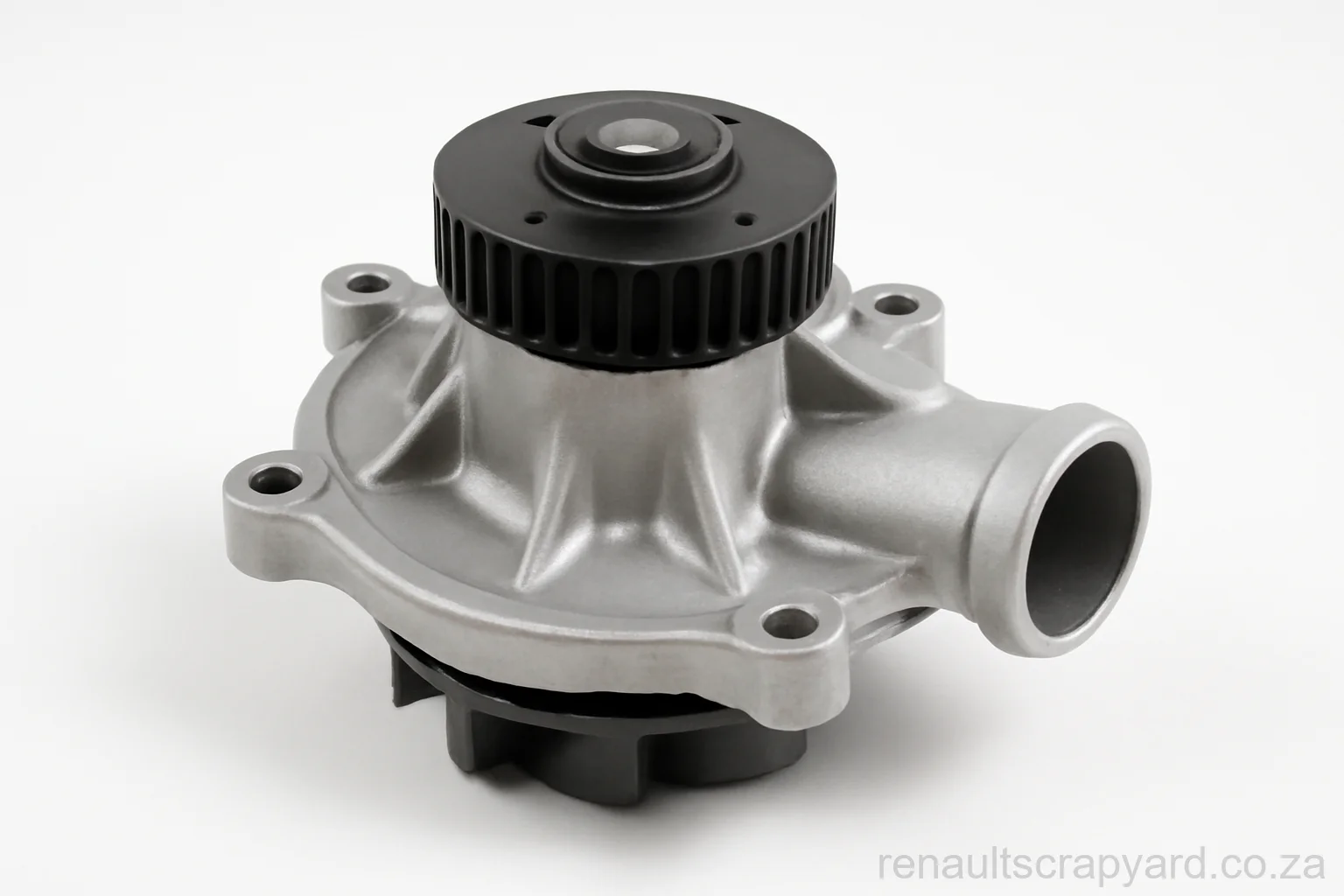
Water Pump — Always Replaced with the Belt
The water pump is belt-driven on every TU3, TU5, DV6, DW10 and BlueHDi engine — meaning if you skip it now, the labour bill to fit one next year is the entire timing belt job all over again. We ship Hepu, SKF, INA and OEM PSA pumps with fresh seals and gasket.
OEM vs aftermarket: A genuine Peugeot belt kit costs roughly 40-60% more than quality aftermarket equivalents from Gates, Dayco, INA or SKF. For any Peugeot still under warranty, use OEM. For out-of-warranty cars, a good aftermarket kit from a named brand is perfectly safe — what you want to avoid is the R1,200 "mystery kit" from an online marketplace. When we quote a timing kit, we quote the complete kit — belt, tensioner, idlers and water pump — so the job is done once.
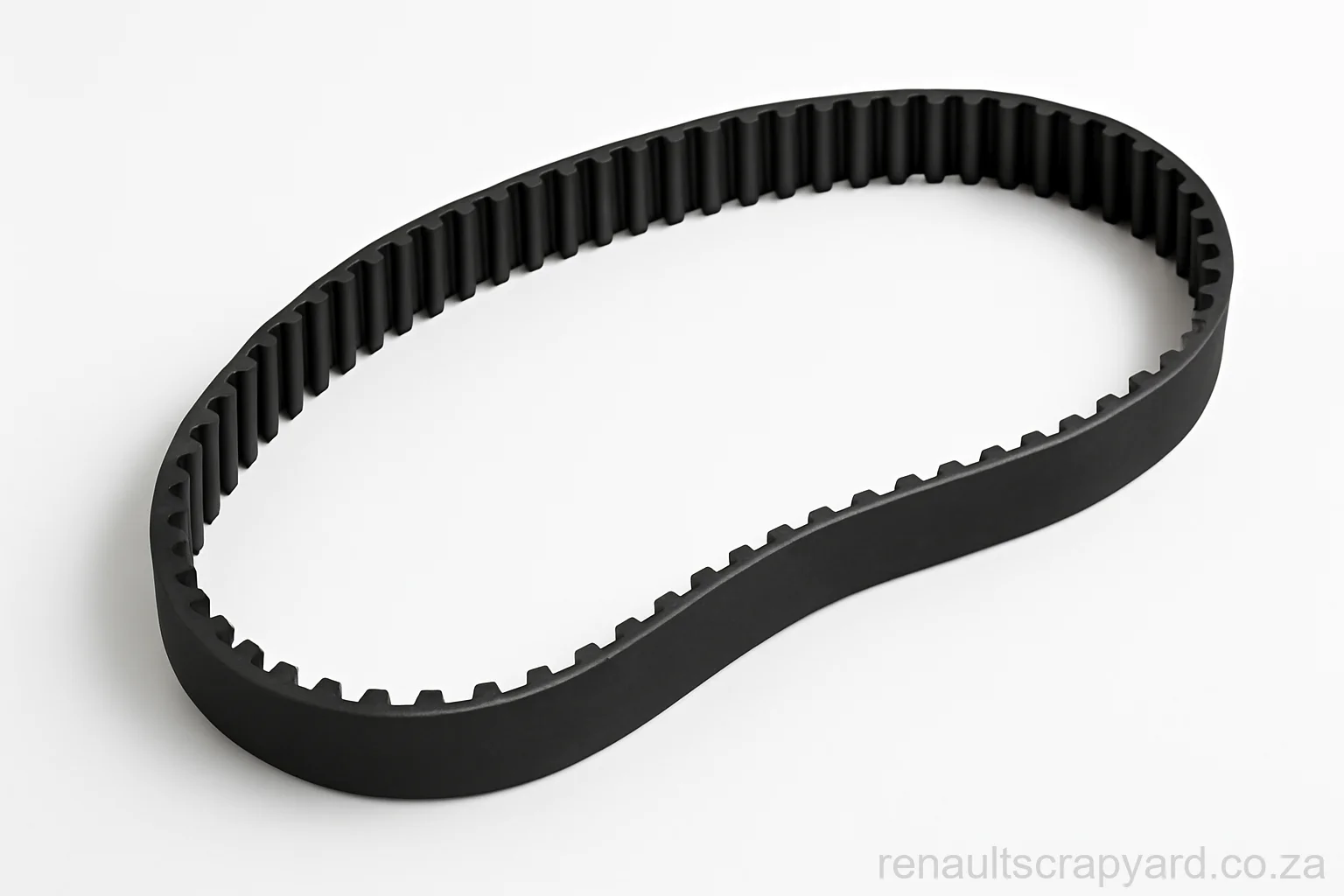
Timing Belt Kit — Belt + Tensioner + Idlers
Tensioners and idlers are the bits that fail before the belt does. Reuse old ones at your peril — bearing failure on a 100 km/h cruise rips the belt straight off. We supply matched kits from Gates PowerGrip, Dayco, INA and SKF, with PSA OEM cross-references on every line.
Browse the full range of timing chains and belts we stock for South African Peugeot models — every kit listed comes with the OEM part numbers it cross-references against.
Unsure Which Kit Fits Your Peugeot? We'll Check the VIN.
Send us your VIN or engine code and we'll match you to the exact timing kit your car needs — no guesswork, no wrong parts.
The Cost of Skipping It
This is the part we have to be blunt about. Every single belt-driven Peugeot engine sold in SA — the TU3, TU5, the DV6 and the DW10 — is an interference design. That means the valves and pistons occupy the same space, just not at the same moment. When a timing belt snaps, that synchronisation ends, and the pistons punch the valves open at the wrong instant.
The typical damage bill after a snapped belt:
- Bent intake and exhaust valves (usually 8 or 16, depending on engine)
- Damaged valve guides and seats
- Piston crown damage on higher-compression engines
- Cracked cylinder head in the worst cases
- Bent connecting rods if the engine was under load when the belt went
A head rebuild or engine replacement after a snapped belt costs many times more than a preventative belt job, so it's not a difficult decision — but it only works if you do it on time. For engine-rebuild scenarios on the 208 family we track stock of used and rebuilt units via our 208 engine parts catalogue.
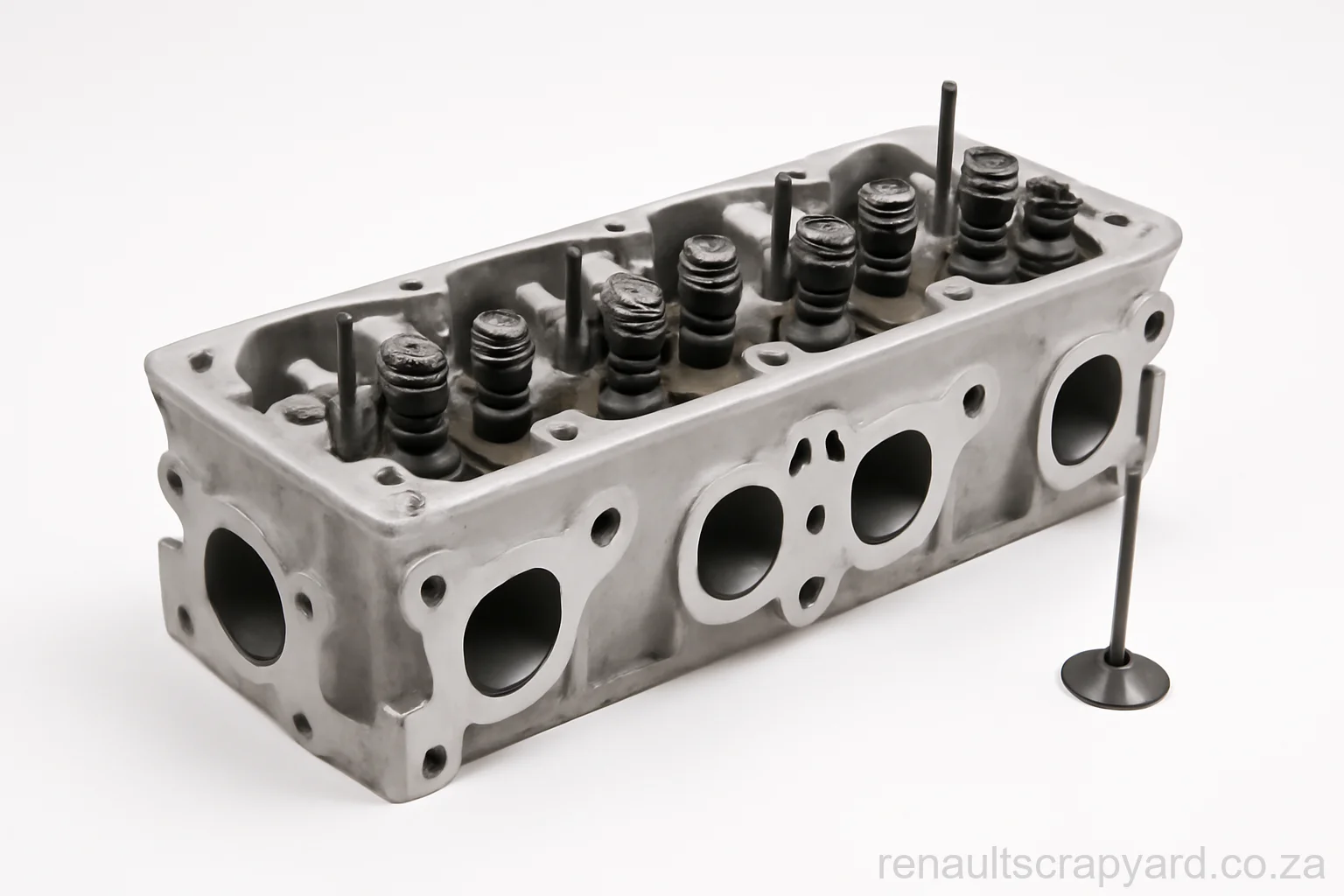
Cylinder Head — When the Belt's Already Snapped
If you're reading this after the fact, you'll likely need a refurbished or used cylinder head with new valves and seats. We can source used and reconditioned TU5, DV6, DW10 and BlueHDi 1.6 heads — send your engine code for a quote.
DIY vs Workshop — Our Honest View
A timing belt on a TU5 206 is one of the simplest belt jobs in the industry: accessible, well-documented, and cheap enough in parts that a competent home mechanic with a Haynes manual and the right locking tools can manage it in a weekend.
Everything else? Workshop. Here's why:
- BlueHDi engines require specific PSA timing locking tools (0194, 0197 sets) and the crankshaft hub has to be aligned with a special jig. Get it one tooth out and you'll lose compression, throw codes, and potentially damage the engine within minutes of starting.
- THP / EP6 chain replacement involves resetting the variable valve timing actuators. This is genuinely dealer-level work.
- 1.2 PureTech wet belt service requires dropping the sump, cleaning the pickup strainer, and a complete sump flush — not just a belt swap. Skip any of these steps and the rubber debris left behind will ruin the job.
- Torque specs on tensioners are critical. Too loose and the belt whips; too tight and the bearing fails within 10,000 km.
- Water pump replacement is always part of a proper job, and the pump has to be fitted with fresh coolant, bled correctly, and pressure-tested.
If you're already paying R4,000+ for parts on a job that can kill the engine if done wrong, the R1,500 – R3,000 you save on DIY labour isn't worth the risk. Use an independent Peugeot specialist if the dealer price scares you — most SA cities have at least one indie workshop that's cheaper than the main dealer and just as competent.
FAQ
How do I know if my Peugeot has a belt or a chain? Check the engine code on the service sticker under the bonnet or on the VIN plate. The 1.6 THP/VTi EP6 and the 107/108 1.0 (Toyota 1KR-FE) are chain-driven. TU3 1.4, TU5 1.6, all HDi diesels (DV6, DW10) and the 2.0 BlueHDi (DW10) are dry-belt engines, while the 1.5 BlueHDi (DV5) uses a timing chain. Every 1.0 and 1.2 PureTech/VTi built from 2012 to 2023 — turbo or naturally aspirated — runs a wet belt inside the oil sump, which is a critical service item and not the same as a chain. If in doubt, WhatsApp us your VIN and we'll confirm.
How often should I replace the timing belt on a Peugeot TU5 (206/207 1.6)? Every 80,000 km or 5 years, whichever comes first. Always replace the water pump at the same time. This is a non-negotiable service item on that engine — missing it is the most common cause of TU5 engine failure in SA.
Does the Peugeot 208 have a timing belt or chain? It depends on the engine code. The naturally aspirated 1.2 VTi 82 (EB2/EB2FA) and every turbo 1.2 PureTech (EB2DT, EB2ADTD, EB2ADTS) use a wet belt inside the oil sump — a critical 80,000–100,000 km service. Only the Gen-3 48V mild-hybrid PureTech (EB2LTED / EB2LTEDH2, 2023 production onward) has a chain, so a 2023-or-later build date on its own does not mean you have one. The 1.6 BlueHDi uses a conventional dry belt (160,000 km / 10 years).
How often should I replace the timing belt on a Peugeot 208 1.6 BlueHDi? Every 160,000 km or 10 years, whichever comes first. The BlueHDi uses a conventional dry external belt — not the wet-belt system. This is a workshop-only job requiring PSA timing tools.
Does the Peugeot 308 1.6 HDi have a timing belt or chain? The 308 1.6 HDi (DV6 engine) uses a timing belt. Interval: 100,000–120,000 km or 5–7 years for the older DV6 variant; 160,000 km or 10 years for the later BlueHDi 1.6 (DV6FC).
Is the 1.6 THP timing chain a known problem? Early EP6 1.6 THP engines (roughly 2010-2015, in the 308, 3008, 5008, RCZ and 207 GTi) have a documented history of chain stretch, usually showing up as a cold-start rattle. Post-2016 units are improved. If you hear rattle on startup, don't ignore it — get it diagnosed and ask for a quote; labour varies by workshop.
Can I keep driving if my Peugeot timing belt is overdue? Not recommended. Once the belt is past its service interval, failure can happen at any kilometre — often without warning. If yours is overdue, park it until you've booked a replacement. The risk of an engine rebuild is not worth the few hundred rand of fuel you'd save.
Does the 1.2 PureTech really have a wet belt, and what's the problem with it? Yes — the pre-2023 1.2 PureTech (EB2DT and variants in the 208, 2008, 308, 3008 and 301) runs a rubber timing belt that sits inside the oil sump, lubricated by engine oil. The belt was originally specced at roughly 175,000–180,000 km / 10 years, but in real-world SA conditions — heat, longer service intervals, occasional oil-quality compromises — it sheds rubber particles that clog the oil pickup strainer. The classic failure mode is oil starvation, then the engine wipes its main bearings. If you own a PureTech of this era, change the oil every 10,000 km on 0W-30 carrying the PSA B71 2312 approval (ACEA C2) and budget for a wet-belt service around 80,000–100,000 km.
When did the 1.2 PureTech switch from a wet belt to a chain? Stellantis introduced the chain-driven Gen-3 PureTech (engine codes EB2LTED / EB2LTEDH2) in 2023 production, but only on the 48V mild-hybrid versions. Plain non-hybrid PureTech 100 and 130 cars have continued to ship with the wet belt into 2024 and 2025, and everything built before 2023 is a wet-belt car. Do not judge by the build date on the door pillar — get the engine code confirmed.
How often should the wet belt actually be changed on a Peugeot 1.2 PureTech? PSA's original schedule was roughly 175,000–180,000 km / 10 years, but after the failures piled up they revised it down to 100,000 km or 6 years, whichever comes first. The job includes the belt, oil pump pickup strainer, sump clean-out, fresh oil and filter, and a tensioner kit. Ask for a quote — labour varies by workshop.
Does the Peugeot 2008 1.6 HDi also have the wet belt issue? No — the 2008 1.6 HDi (DV6 and BlueHDi 1.6 diesel) uses a conventional dry timing belt running outside the oil bath. It's mechanically far more straightforward than the 1.2 PureTech wet belt and follows a normal 160,000 km / 10-year interval on the BlueHDi, or 100,000 – 120,000 km on the older DV6. The "wet belt" problem is specific to the 1.2 PureTech petrol engine, not the diesel Peugeots — so don't confuse the two when reading horror stories online.
Can a stretched timing chain leave me stranded? Yes, and that's the real risk on the early EP6 1.6 THP. As the chain wears it retards the camshaft relative to the crankshaft — first a cold-start rattle and a P0016 cam/crank correlation code, then rough running, and eventually enough slack for the chain to jump a tooth without warning. PSA's own check is a link-span measurement against a reference dimension, not something you can eyeball. In an interference engine a jumped tooth means the same valve-and-piston damage as a snapped belt. If your 3008, 5008, RCZ or 308 1.6 THP has developed cold-start rattle lasting more than two seconds, get it diagnosed before the next long drive — replacing a stretched chain costs far less than replacing the engine.
Does the Peugeot 301 1.6 BlueHDi have a timing belt or chain? The 301 1.6 BlueHDi uses a conventional dry timing belt (DV6FC engine). Interval: 160,000 km or 10 years. This is not a wet-belt engine — the wet belt is only in the 1.2 PureTech petrol.
What is the timing belt interval for the Peugeot Expert 2.0 BlueHDi? The Expert 2.0 BlueHDi (DW10C engine) uses a timing belt at 160,000 km or 10 years. Budget more for labour than a passenger car — the commercial body makes access significantly harder and the job takes longer. Older Expert 2.0 HDi (pre-BlueHDi): 100,000 km or 5 years.
Sources
- Haynes Manual: Peugeot 207 (2006–2009), Peugeot 308 (2007–2012), Peugeot 208 (2012–2019) — engine service and timing belt procedures for TU3, TU5, DV6 and EP6 families
- AA South Africa — timing belt maintenance guidance — https://www.aa.co.za/
- PSA Group service data — DV6FC BlueHDi 1.6 belt interval 160,000 km / 10 years, DW10C BlueHDi 2.0 belt interval 160,000 km / 10 years — referenced in multiple independent workshop guides and owner manuals
- Peugeot Forums UK (peugeotforums.com) — EP6 1.6 THP chain stretch documented reports (2010–2015 production), cold-start rattle — https://www.peugeotforums.com/
- MyCitroën / MyPeugeot owner portal — 1.2 PureTech scheduled maintenance confirmation for EB2DT engine code
Important Disclaimer
This content is for informational purposes only and is based on research from automotive industry sources. Pro Peugeot Spares is not a certified automotive repair facility. Always consult with qualified automotive professionals before performing any repairs or maintenance. Improper repairs can result in personal injury, property damage, or vehicle malfunction. We assume no responsibility for actions taken based on this information.