
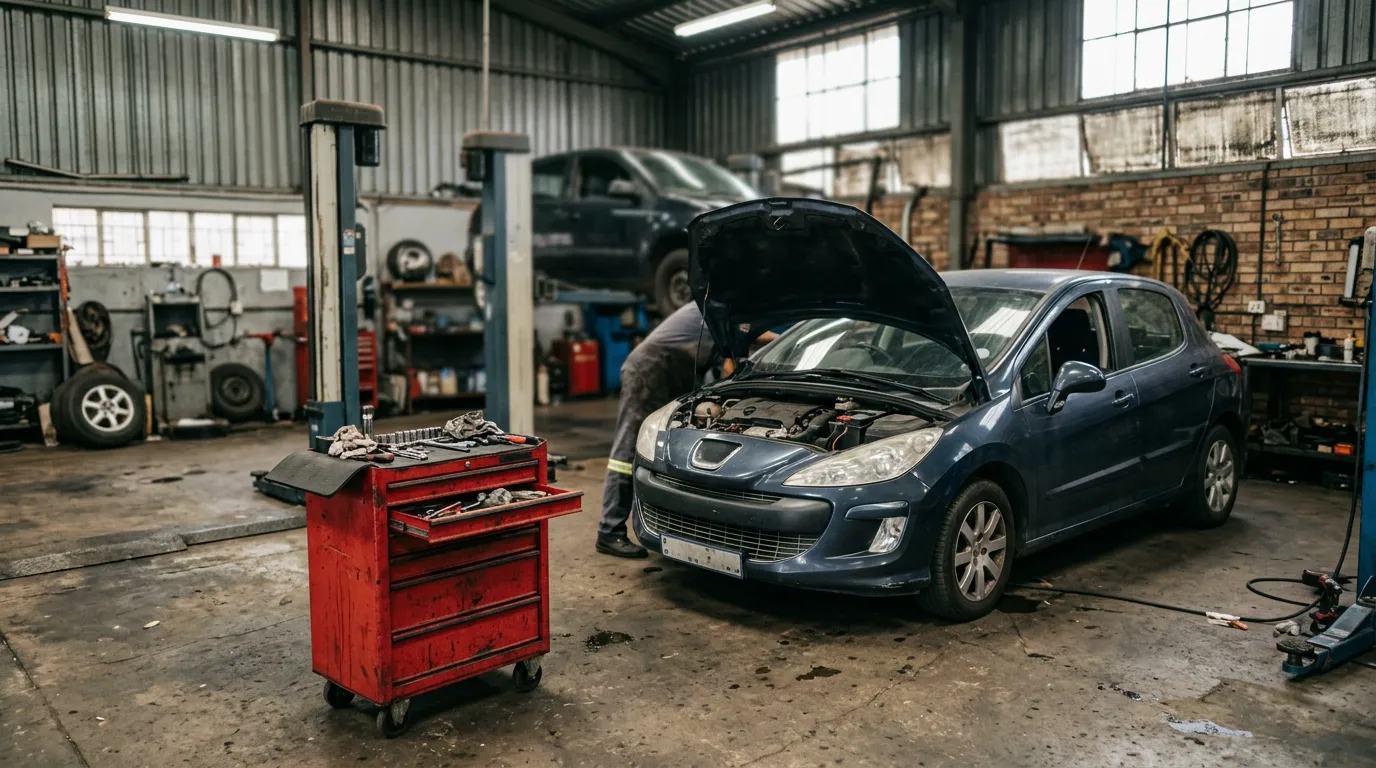
Peugeot 1.2 PureTech Wet Belt Failure: The Complete SA Owner's Guide

Key Takeaways
| Aspect | Details | Indicative cost (not a quote) |
|---|---|---|
| Affected engine | 1.0 and 1.2 PureTech petrol, turbo and naturally aspirated — EB0 / EB2 / EB2F / EB2FA (68-83 hp NA), EB2DT (110 hp), EB2DTS (130 hp), EB2ADT / EB2ADTS / EB2ADTD (100-136 hp turbo) | — |
| Affected models in SA | 208, 2008, 308, 3008, 5008, Partner — built 2014 onwards, including some 2023-2025 non-hybrid cars | — |
| Revised service interval | 100,000 km / 6 years (down from an original schedule quoted at roughly 175,000-180,000 km / 10 years) | — |
| Belt + oil-pump strainer + water pump fitted | Preventive replacement at independent specialist | Ask for a quote |
| Post-failure, no consequential damage | Belt let go before the strainer fully blocked | Ask for a quote |
| Post-failure rebuild | If oil pump starved and bearings damaged | Ask for a quote — our listed price for a 1.2 PureTech engine is R18,000 – R38,000 |
| SA Stellantis compensation | None — EU / UK customers only | R0 recovered |
| Safe used-buy cut-off | None by model year — verify the engine code is EB2LTED or EB2LTEDH2 (chain) | — |
If you own a petrol Peugeot with a 1.0 or 1.2 PureTech engine built from 2014 onwards, there's a strong chance you have a wet timing belt. The 1.2 PureTech wet belt is the single biggest reliability liability on the modern Peugeot range. It destroys engines, the compensation scheme that covers European owners is not offered in South Africa, and the original service interval in your owner's manual — roughly 175,000-180,000 km / 10 years — has been cut to 100,000 km / 6 years. This is the full owner's guide — what it is, which cars are affected, what it costs to fix in SA rands, and what to look for before that oil-pressure light comes on.
What Is a Wet Belt and Why Did Peugeot Use One?
A "wet belt" is a toothed rubber timing belt that runs submerged in engine oil instead of in a dry timing-belt cover. Peugeot's PSA division adopted the design to reduce friction and engine noise and to hit ever-tighter emissions targets. The 1.2 PureTech three-cylinder turbo was Peugeot's volume engine from 2014 onwards — fitted to the 208, the 2008 crossover, the 308 hatchback, the 3008 SUV, the 5008 seven-seater, the Partner van, and across the Citroen, DS and Opel range that shares Stellantis platforms [1][2].
The theory works on paper. In practice, three things go wrong:
- Fuel dilution. On cars used for infrequent, mostly city driving, fine droplets of unburnt fuel run down the cylinder walls and mix with the oil in the sump [12].
- Belt wear. The fuel-diluted oil is abrasive to the belt, which gradually disintegrates and sheds particles into the oil [3][12].
- Oil starvation. The particles can clog the oil pump's screen or the variable valve timing solenoids, leading to a loss of oil pressure. The bearings, camshafts and turbocharger — all fed by that pressurised oil — start to die [4][12].
The first thing the owner usually notices is the oil-pressure warning light. By then, microscopic damage is already done. By the time the engine ticks and rattles at idle, the repair has gone from "belt service" to "engine rebuild."
South African Context
Short-commute city driving is the worst duty cycle for a PureTech: NTN-SNR's bulletin ties the belt wear to cars used infrequently (under 15,000 km a year) and mostly in town [12]. If your weekly mileage is mostly short trips, treat your wet belt as urgent regardless of the kilometres on the clock.
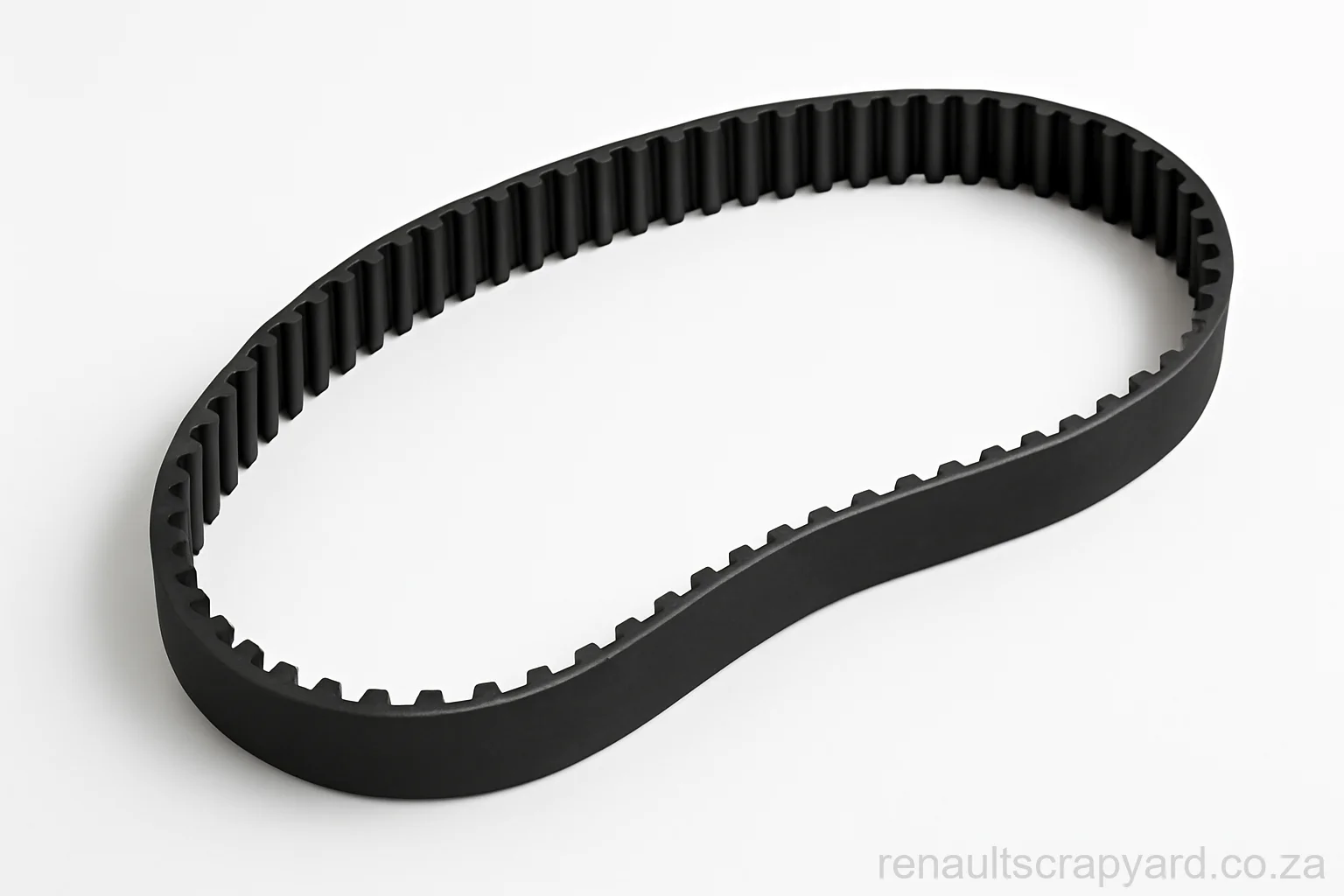
Need a wet belt kit for your PureTech?
We can source OEM and quality aftermarket wet-belt kits — belt, tensioner, idler, oil-pump pickup strainer and water pump — for the 208, 2008, 308, 3008, 5008 and Partner 1.2 PureTech and courier them nationwide.
Get Quote →Which Peugeot Models in SA Are Affected?
Every petrol Peugeot sold in South Africa from 2014 onwards fitted with the 1.0 or 1.2 PureTech — turbo or naturally aspirated — is on the list, and that includes cars registered in 2023, 2024 and 2025. The chain-driven Gen3 engine arrived in 2023, but the changeover was gradual and the chain went mainly into the 48V mild-hybrid versions, which South Africa does not get in volume [11]. That covers:
- Peugeot 208 Mk1 and Mk2 (2014 onwards)
- Peugeot 2008 Mk1 and Mk2 (2014 onwards)
- Peugeot 308 Mk2 T9 (2013-2021)
- Peugeot 3008 P84 (2016-2024)
- Peugeot 5008 P87 (2017-2024)
- Peugeot Partner / Rifter (2014 onwards)
The naturally aspirated 1.2 VTi / PureTech 82 (EB2, EB2F, EB2FA) is not an exception — it has used the same belt-in-oil design from launch, it suffers the same belt disintegration, and its replacement interval was cut to the same 100,000 km / 6 years [12]. The engine code on the cam cover sticker is the definitive answer: EB2LTED and EB2LTEDH2 are the Gen3 chain engines, and every other EB0 or EB2 code — EB2, EB2F, EB2FA, EB2DT, EB2DTS, EB2ADT, EB2ADTS, EB2ADTD — runs a wet belt. The model year and the badge do not settle it [11].
Note that this is exactly the same engine family fitted to Citroen C3, C4 Cactus, Berlingo, DS3, DS4 and Opel Crossland — if you bought a Stellantis SUV thinking "at least it isn't a Peugeot," you may still have the same belt.
Symptoms — How You Know Your Wet Belt Is Failing
The fault is sneaky. The belt itself does not snap suddenly the way a dry cam belt does. Instead, three patterns appear, usually in this order [4][5]:
- Oil consumption. The engine starts using more oil than it should — 0.5 litre between services becomes 1 litre, then 1.5. Carbon-fouled spark plugs follow.
- Oil pressure warning light. Intermittent at first, usually at hot idle. Easy to write off as a sensor — it isn't.
- Ticking / rattling from the timing cover. Belt debris is now in the oil pump and bearings.
- Hard brake pedal. Material detaching from the timing belt can affect the brake vacuum pump — the defect behind Peugeot campaign JZR (UK recall R/2020/326) [3][13].
- EML with cam/crank timing codes. Typically P0016 (crankshaft-to-camshaft position not plausible), P0011 and P0014 (camshaft timing over-advanced).
The killer diagnostic is to drop the sump plug and inspect the oil that comes out. Fine rubbery black specks in the oil mean the belt is shedding now. Get the car off the road.
The SA Cost Problem
In Europe, Stellantis runs an active compensation portal. UK and EU customers who incurred wet-belt or oil-consumption repair bills between 1 January 2022 and 31 December 2024 can submit a claim through Stellantis's compensation platform at stellantis-support.com, also reachable from the Peugeot, Citroen, DS and Vauxhall brand sites — provided the car's maintenance plan was followed and the diagnosis and repair were done through the authorised network [10]. Stellantis's official policy covers 100% of parts and labour on those cars for up to 10 years or 112,000 miles (roughly 180,000 km) [10].
South African owners get none of that. The Stellantis compensation scheme is a European programme — offered to consumers in EU markets and the UK, with no South African equivalent. The Peugeot SA factory warranty is 5 years / 100,000 km [15] — under it, you are covered. Over it, you are buying parts. Section 56 of the Consumer Protection Act — the implied warranty of quality — only runs for six months from delivery, so it will not help on a car that is years old. Outside the factory warranty your realistic routes are a goodwill request to Peugeot SA backed by a full service-history paper trail and, failing that, a complaint to the National Consumer Commission. Take legal advice before relying on any specific section of the Act. We cover the recall and warranty landscape across the Peugeot 208 problems guide in more depth.
What the work involves — ask for a quote, because labour varies by workshop:
- Preventive belt service at the revised 100,000 km / 6 year interval — kit (belt, tensioner, idler, oil-pump pickup strainer), water pump, oil + filter.
- Post-failure with no consequential damage — belt let go before the oil pump strainer fully blocked; the job includes a full sump drop and clean.
- Engine rebuild — oil starvation already damaged the cam bearings or turbo. For an older hatchback it can make more financial sense to source a used or reconditioned engine. Our listed price for a 1.2 PureTech engine is R18,000 – R38,000, depending on mileage and condition.

PureTech long-block or oil-pump strainer?
Used and reconditioned 1.2 PureTech engines, oil pumps, strainers and turbos for 208, 2008, 308, 3008, 5008 and Partner — sourced and couriered nationwide.
Get Quote →The Revised Service Interval — and Why You Should Halve It Anyway
Peugeot's original wet-belt schedule is not published in one authoritative place, and secondary sources disagree — the figures in circulation cluster at roughly 175,000-180,000 km / 10 years. After the failure pattern became impossible to ignore, Stellantis revised the practical interval down to 100,000 km / 6 years [1][3][12]. That is the figure to go by.
For a short-trip city car, treating 80,000 km / 5 years as the limit is a defensible margin. Failures well before the official interval are common: one 2020 5008 owner reported belt failure at 40,000 miles (about 64,000 km), just outside warranty [7].
Two more discipline rules:
- Oil interval: 10,000 km maximum is a sensible margin. Fresh oil limits the fuel dilution that wears the belt — NTN-SNR's bulletin says the only way to protect the belt on infrequently used cars is to change the oil annually [12]. Use the right oil — a fully synthetic oil carrying the Stellantis/PSA approval printed on your oil filler cap or in the handbook. PSA B71 2312 is a 0W-30 approval and B71 2290 is a 5W-30, so check which one your car calls for. Do not substitute a generic 5W-30 or 5W-40.
- Replace as a kit. Belt alone is false economy. The oil-pump pickup strainer is almost always partially contaminated by the time you change the belt — change it, change the water pump while you're in there, change the oil and filter.
What to Check Before You Buy a Used 1.2 PureTech
Five non-negotiable checks before signing:
- Engine code. Lift the bonnet, find the cam cover. EB2LTED and EB2LTEDH2 = chain. Every other EB0 or EB2 code = wet belt, and that includes plenty of cars registered in 2023, 2024 and 2025 — the year on the licence disc does not settle it. If it is wet-belt, price a belt service into your offer.
- Service-history paperwork. Look for a wet-belt service invoice with a part number on it. Verbal "yes it was done" is not paperwork.
- Sump-plug oil check. Drop the plug, run a finger through the oil onto a white tissue. Black flecks = belt shedding now.
- Cold-start oil pressure. First cold-start of the day. Watch for the oil-pressure warning to extinguish within 1-2 seconds. Slow extinguish or flicker at idle = budget for the engine.
- VIN check. The Peugeot SA recall checker at peugeot.co.za/owners/maintain-your-car/recall.html checks the VIN for open recall campaigns, such as the related JZR brake vacuum pump campaign if the car is in scope.
Don't Skip the Brake Vacuum Pump
Peugeot campaign JZR (UK recall R/2020/326) covers the 208, 2008, 308, 3008, 5008 and Partner built 17 June 2013 to 1 April 2017: the brake vacuum pump may be affected by material detaching from the timing belt. The published remedy is a software update, an inspection and, if necessary, a new vacuum pump and timing belt — free at the dealer if your VIN is in scope [13]. The 208 problems guide linked above covers it in more detail.
Cross-Linked Faults — The Wet Belt Cascade
The wet belt is rarely the only problem on a neglected PureTech. The failure pattern is often reported alongside a cascade of related faults:
- Oil consumption — covered above. Often the first sign.
- Coolant leaks — from the cracked plastic thermostat housing on the 1.2 PureTech [8]. Different fault, same age group.
- Coil pack misfires — heat-cycling kills the coil-on-plug units, especially when spark plugs are oil-fouled from a failing belt [9].
- Timing chain stretch — on the older 1.6 THP Prince engine, the next-most-common SA Peugeot engine fault. Covered separately in our 1.6 THP timing chain guide.
For the gearbox side — EAT6 / EAT8 jerky shifts — see our EAT6 / EAT8 transmission guide.

Water pump, thermostat, coil packs
The PureTech cascade — water pump, plastic thermostat housing, coil-on-plug units, spark plugs. Replace them at the same time as the belt while the cover is off and save labour twice.
Get Quote →Frequently Asked Questions
Does my Peugeot have a wet belt?
If it has a 1.0 or 1.2 PureTech petrol engine — turbo or naturally aspirated — built from 2014 onwards, assume yes. The switch to the chain-driven Gen3 engine began in 2023 but was gradual: the chain went mainly into the 48V mild-hybrid versions, and non-hybrid 100 hp and 130 hp 1.2 petrols were still being built with a wet belt into 2024-2025. Model year and badge do not settle it — check the engine code on the cam cover sticker. EB2LTED and EB2LTEDH2 are chain; every other EB0 or EB2 code (EB2, EB2F, EB2FA, EB2DT, EB2DTS, EB2ADT, EB2ADTS, EB2ADTD) runs a wet belt.
How long does a Peugeot wet belt last in South Africa?
Stellantis revised the interval down to 100,000 km / 6 years, from an original schedule quoted at roughly 175,000-180,000 km / 10 years. Short-trip city driving accelerates wear, because fuel-diluted oil is abrasive to the belt, so on a car used mostly for short trips consider changing it earlier.
How much does a 1.2 PureTech wet belt change cost in SA?
Ask for a quote — labour varies by workshop. Replace the full kit: belt, tensioner, idler, oil-pump pickup strainer, water pump, oil and filter. After a failure with consequential damage the bill is far higher; our listed price for a 1.2 PureTech engine is R18,000 – R38,000.
Can I claim back wet belt repair costs from Peugeot SA?
Officially no — the Stellantis compensation portal covers EU and UK customers only [3][6]. South African owners can claim under the 5-year / 100,000 km factory warranty if the car is still in scope. Section 56 of the Consumer Protection Act runs for only six months from delivery, so outside the warranty the realistic routes are a goodwill request to Peugeot SA backed by full service history and, failing that, a complaint to the National Consumer Commission. Call Peugeot SA customer care on 0860 738 472 as the first step.
Is the chain-driven 2023 PureTech reliable?
The Gen3 chain-driven PureTech (EB2LTED / EB2LTEDH2) does away with the wet belt and has not attracted the same failure reports, but it is still too new to have a long-term record. What it is not is a safe used-buy cut-off by year: the changeover was gradual and the chain went mainly into 48V mild-hybrid versions, so many 2023-2025 non-hybrid 208, 2008, 308, 3008 and 5008 models still have the wet belt. Check the engine code, not the model year.
Can I convert my PureTech from wet belt to chain?
Aftermarket chain-conversion kits are now offered in Europe by a specialist company; ItalPassion reported one in April 2026, with separate kits for the naturally aspirated and turbo engines and fitting described as similar to a conventional belt replacement [14]. It is an aftermarket product, not a Stellantis upgrade, and we are not aware of an SA fitter. Practical reality for most SA owners: replace the wet belt on the revised 100,000 km / 6 year interval, drive sensibly, change oil every 10,000 km. Cheaper and faster than a conversion.
What oil should I use in a 1.2 PureTech?
A fully synthetic oil carrying the Stellantis/PSA approval printed on your oil filler cap or in the handbook. PSA B71 2312 is a 0W-30 approval and B71 2290 is a 5W-30, so check which one your car calls for. Cheap mineral oil will accelerate belt degradation. Keep the oil interval short — 10,000 km is a sensible maximum [4][12].
Sources
- Timing Belt Issues and Recalls — owner thread index (Peugeot Forums)
- Timing belt crumbling 1.2 VTi / EB2 PureTech — 208, 308, 3008 (Peugeot Forums — cross-model evidence)
- JZR PureTech 110/130 recall campaign in the UK (Peugeot Forums)
- Oil pressure fault caused by timing belt (wet belt) degrading (Peugeot Forums)
- Disintegrating wet belt — 2008 owner thread (2008 Owners Club)
- Wet belt issue — how to handle next and deal with Peugeot (Peugeot Forums)
- 2020 Peugeot 5008 timing belt failure at 40k miles, out of warranty (MoneySavingExpert)
- Another coolant leak — plastic thermostat housing (208 Owners Club)
- Repeated coil pack failures (Peugeot Forums)
- Stellantis extends compensation policy for PureTech 1.0/1.2 engines (Stellantis Media UK — official press release)
- Stellantis 1.2 PureTech engine: list of belt-driven and chain-driven models (ItalPassion — model-by-model engine codes; chain on the third-generation EB2LTED / EB2LTEDH2, belt still listed on current non-hybrid PureTech 75/100/130 versions)
- TECHinfo — 1.2 PureTech Atmo timing belt wear (PDF) (NTN-SNR, OE supplier technical bulletin — belt disintegration, oil dilution on infrequent city use, clogged oil-pump screen, revised 100,000 km / 6-year interval)
- All recalls since 1992 — full recall dataset (CSV) (DVSA — recall R/2020/326, manufacturer code JZR: models, build dates, defect and remedy)
- 1.2 Puretech engine: this company offers a chain conversion kit (ItalPassion, 30 April 2026)
- Manufacturer warranty (Peugeot South Africa — 5 years or 100 000 km, whichever comes first)
Important Disclaimer
This guide is informational and reflects forum, specialist and owner-reported patterns. It is not a substitute for diagnosis by a qualified Peugeot specialist. SA rand pricing is indicative and varies by region, supplier and parts source. Always confirm parts compatibility against your VIN before purchase. Pro Peugeot Spares is a parts supplier, not a workshop — we do not perform installation.
Important Disclaimer
This content is for informational purposes only and is based on research from automotive industry sources. Pro Peugeot Spares is not a certified automotive repair facility. Always consult with qualified automotive professionals before performing any repairs or maintenance. Improper repairs can result in personal injury, property damage, or vehicle malfunction. We assume no responsibility for actions taken based on this information.