
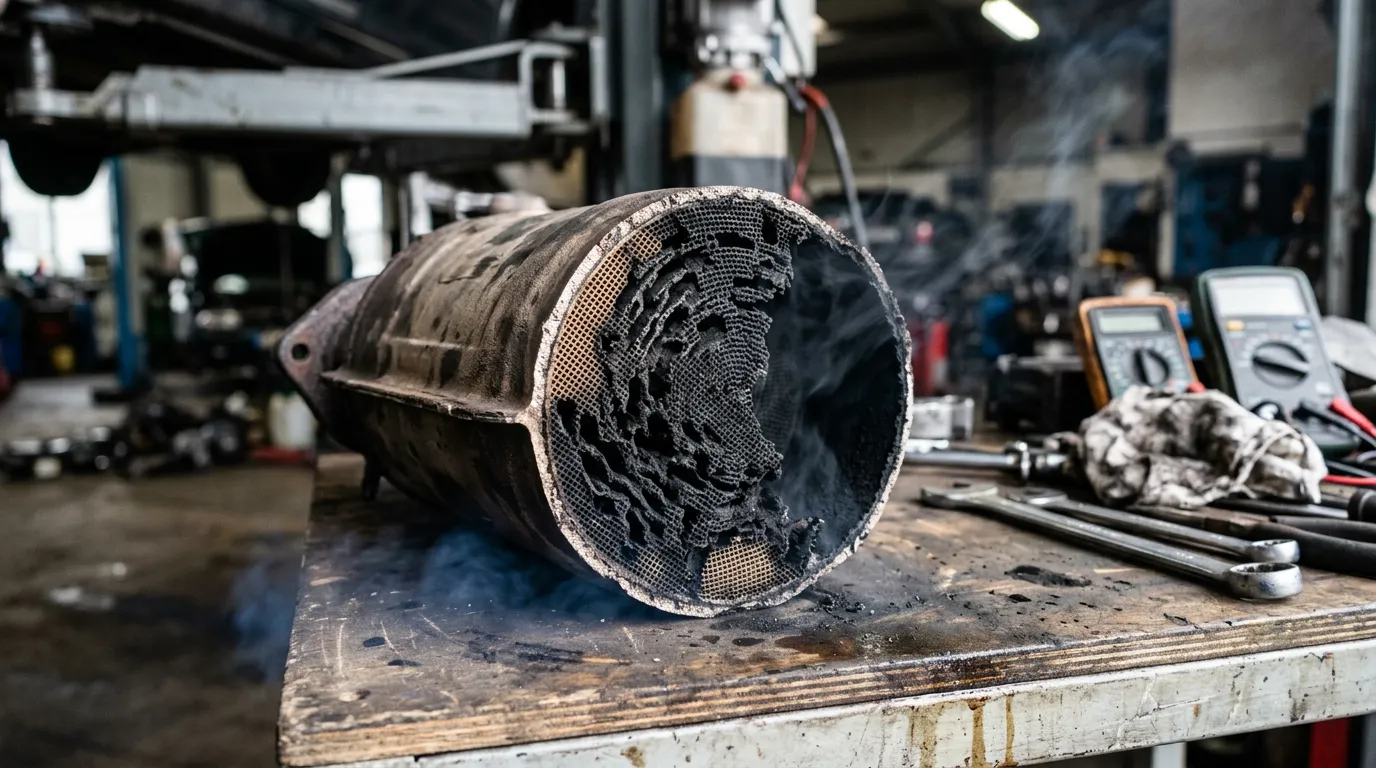
Peugeot 1.6 HDi DPF, EGR & Eolys Problems: SA Diagnosis Guide

Key Takeaways
| Aspect | Details | Indicative cost (not a quote) |
|---|---|---|
| Engine | 1.6 HDi — codes DV6 / DV6C / DV6TED4 (75, 90, 92, 110, 115 hp diesel) | — |
| Affected SA models | 207, 208, 2008, 307, 308, 3008, 5008, Partner — 2004 to 2018 | — |
| Forced DPF regen on diagnostics | If soot < 80% — non-destructive | Ask for a quote |
| DPF chemical / ultrasonic clean | If soot 80-150% — off-car | Ask for a quote |
| Replacement DPF | Cracked or ash-loaded — last resort | R1,500 – R8,000 — our listed price for a 1.6 HDi (Euro 5) DPF, part only |
| EGR valve replacement fitted | Carbon-seized stepper motor | Ask for a quote |
| Eolys additive refill + reset | Pre-BlueHDi FAP-equipped cars only — 3-litre reservoir | R2,500 – R4,500 |
| "Black death" injector seizure | Any cylinder, head-off in worst cases | R2,500 – R5,000 per injector to free it; R8,000 – R15,000 to extract a stuck one |
| Reman turbo (VGT on 110/115 hp, fixed-geometry on 90 hp and vans) | Stuck vanes from soot on VGT units | Our listed price for a 1.6 HDi turbo is R3,500 – R9,000; ask for a quote on fitting |
The Peugeot 1.6 HDi diesel (engine code DV6) was Peugeot's volume diesel from 2004 to 2018. It powered everything from the 207 hatchback to the 5008 seven-seater. It is also the engine that produced the legendary "black death" injector seizure, the DPF blockage that puts a car into limp mode on a school run, and the EGR valve that clogs because nobody told you to take it on the motorway once a week. This is the SA owner's diagnosis and prevention guide — the five interlocking failure modes, what diagnostic codes tell you which one is failing, and what each costs to fix in rands.
What Is the 1.6 HDi (DV6)?
The DV6 is a 1.6-litre turbocharged common-rail diesel, jointly developed by PSA (Peugeot/Citroen) and Ford in the early 2000s. Ford fitted it to the Fiesta TDCi and Focus TDCi; Peugeot fitted it to almost everything below the 508. SA-market models include:
- Peugeot 207 — 1.6 HDi 90/110 hp (2006-2014) — the 207's 1.4 HDi is the DV4, a different engine family
- Peugeot 208 — 1.6 HDi DV6C (Mk1 2012-2017)
- Peugeot 2008 — 1.6 HDi (Mk1 2013-2019)
- Peugeot 307 — 1.6 HDi (2004-2008) — the 307's 2.0 HDi is the DW10, a different engine family
- Peugeot 308 — 1.6 HDi DV6C (T7 and T9, 2007-2018)
- Peugeot 3008 — 1.6 HDi (T84 2009-2016)
- Peugeot 5008 — 1.6 HDi (T87 2010-2016)
- Peugeot Partner — 1.6 HDi (2008-2018)
- Peugeot 407 — 1.6 HDi (2004-2010)
The DV6 is mechanically sound — it can reach 300,000 km if serviced strictly. The faults are almost all in the emissions and intake systems, and almost all are made worse by short-trip SA city driving.
South African Context
Long, hot motorway runs keep the DPF and EGR clean. Short-trip city duty is the opposite: short school runs and commutes with plenty of idling, so the exhaust never reaches the regeneration temperature it needs.
Problem 1 — DPF (Diesel Particulate Filter) Blockage
The Diesel Particulate Filter sits in the exhaust and traps soot particles. To clean itself, the DPF needs to reach ~600 °C — this happens passively on long motorway runs, or actively when the ECU injects extra fuel into the exhaust to burn the soot off [2].
Symptoms
- "Risk of DPF clogging" or "Particle filter additive minimum level" dash warning
- Sudden loss of power, limp mode at ~65-80 km/h max
- Glow-plug light flashing on the cluster
- Black smoke under acceleration
- Diesel-fuel smell in the engine oil; oil level rising on the dipstick (fuel dilution from failed regens)
- Engine fan running long after shut-down
Causes
- Short trips preventing passive regen
- Failed differential-pressure sensor misreading soot load
- Stuck EGR valve dumping too much soot into the filter (Problem 2 below)
- Wrong oil grade — non-low-ash oil clogs the filter chemically
- Eolys (cerine) additive tank empty on pre-BlueHDi cars (Problem 4 below)
Solution
- Scan with DiagBox / Lexia / iCarsoft CR Pro. Pull DPF differential-pressure, EGR position, additive-system and boost codes. Pre-BlueHDi cars have no NOx sensor, so there are no NOx codes to read — those exist only on the later SCR / AdBlue engines.
- Forced regen if soot load is under 80%. Run the regen on the diagnostic tool with the engine warm and the car on a 30-minute motorway run. Ask for a quote — labour varies by workshop.
- Off-car chemical or ultrasonic clean if soot is 80-150%. The DPF is removed and either chemically washed or oven-baked at a specialist. Ask for a quote.
- Replacement DPF if cracked, ash-loaded over 150 g, or substrate broken. Our listed price for a 1.6 HDi (Euro 5) DPF is R1,500 – R8,000, before fitting.
- Replace the differential-pressure sensor (cheap) before quoting a new DPF (expensive) — sensor failures look identical and are often the real fault [2][3].
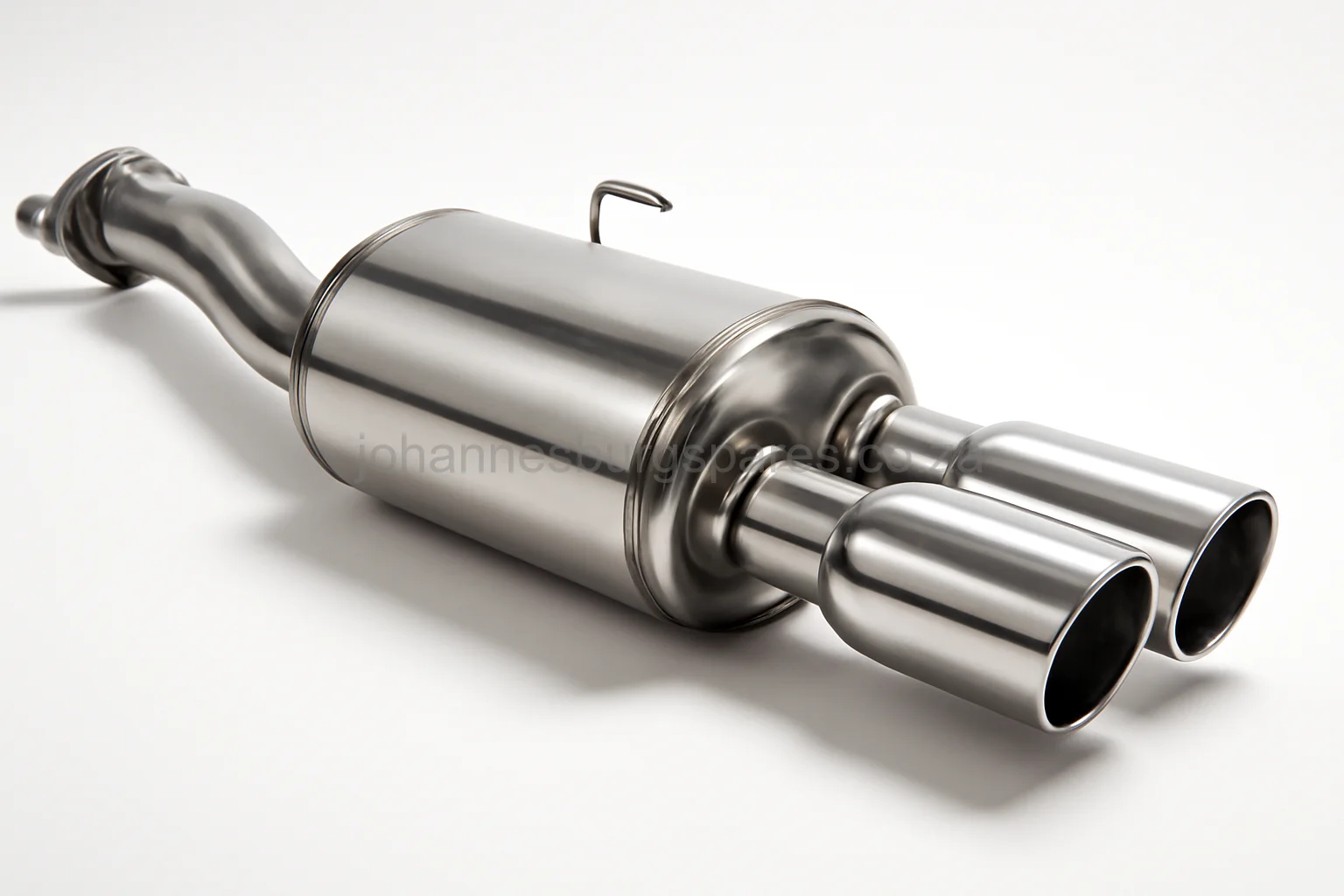
DPF, pressure sensor or full exhaust?
Reman DPF units, differential pressure sensors, Eolys additive and, where fitted, oxygen sensors for 1.6 HDi DV6 Peugeots sold in SA — 207, 208, 2008, 307, 308, 3008, 5008, Partner.
Get Quote →Problem 2 — EGR Valve Carbon Seizure
The Exhaust Gas Recirculation (EGR) valve routes some exhaust back into the intake to reduce NOx emissions. On the 1.6 HDi, the EGR is electronically controlled by a stepper motor on the 110/115 hp variants and vacuum-controlled on the 90 hp [4].
Symptoms
- Engine stalls at idle or at traffic lights
- Rough idle, hunting RPM
- Loss of power above 3,000 rpm
- EML with codes P0401 or P0402
- Black smoke under load
- "Anti-pollution fault" or "Depollution system faulty" dash message
Causes
The EGR valve seizes part-open with carbon and soot deposits. Short-distance urban driving prevents the valve burning itself clean. The EGR cooler passages also coke up over time. On the 307, a sticking EGR valve is one of the most frequently reported causes of the "anti-pollution fault" / limp-mode warning in owner forums — but the same message is also triggered by accelerator-pedal-signal, brake-switch and turbo faults, so scan before you buy parts [5][6].
Solution
- Remove and clean the EGR with carb cleaner — works once or twice but is not a permanent fix. R200 in product, free DIY labour [4].
- Replace EGR valve and clean the intake manifold of soot. Ask for a quote — the part differs between the vacuum-controlled 90 hp and electronic 110 hp variants.
- Preventive Italian tune-up monthly — sustained 3,500+ rpm for 10 minutes burns off light deposits [7].
Problem 3 — Turbocharger Sludging and VGT Vane Seizure
The higher-output 1.6 HDi (110/115 hp) uses a variable-geometry turbo (VGT) with small movable vanes inside the turbine housing; the 90 hp and most van applications use a simpler fixed-geometry wastegated turbo with no vanes. On the VGT cars, soot from the EGR coats the vanes and they stick — usually closed at first (overboost, then limp mode) and then stuck open at low rpm (no boost). On the fixed-geometry units the failure is the bearing and the oil feed, not the vanes [8].
Symptoms
- Whining or rattling turbo noise from the engine bay
- Sudden loss of boost and "Anti-Pollution Fault"
- Boost-pressure fault code P0299 underboost
- Oil in the intercooler hose or pooling at the intake elbow
- Blue smoke under acceleration — turbo oil seal failure
- Excessive engine oil consumption
Causes
The most consequential cause is oil-feed pipe blockage. The turbo oil feed pipe contains a fine gauze filter inside the banjo bolt. It progressively clogs with carbon sludge if oil changes are stretched or non-spec (non-ACEA C2) oil is used. With shaft speeds of the order of 200,000 rpm, even brief oil starvation kills the turbo bearings [1][8].
Solution
- Replace the turbo oil-feed pipe and remove the gauze filter when fitting any reman or new turbo. Skipping this kills the new turbo within 5,000 km.
- Drop the sump and clean the oil pickup strainer at the same time.
- Turbo: our listed price for a 1.6 HDi turbo is R3,500 – R9,000; ask for a quote on fitting.
- Switch to 10,000 km oil intervals on ACEA C2 5W-30 fully synthetic as the primary preventive.
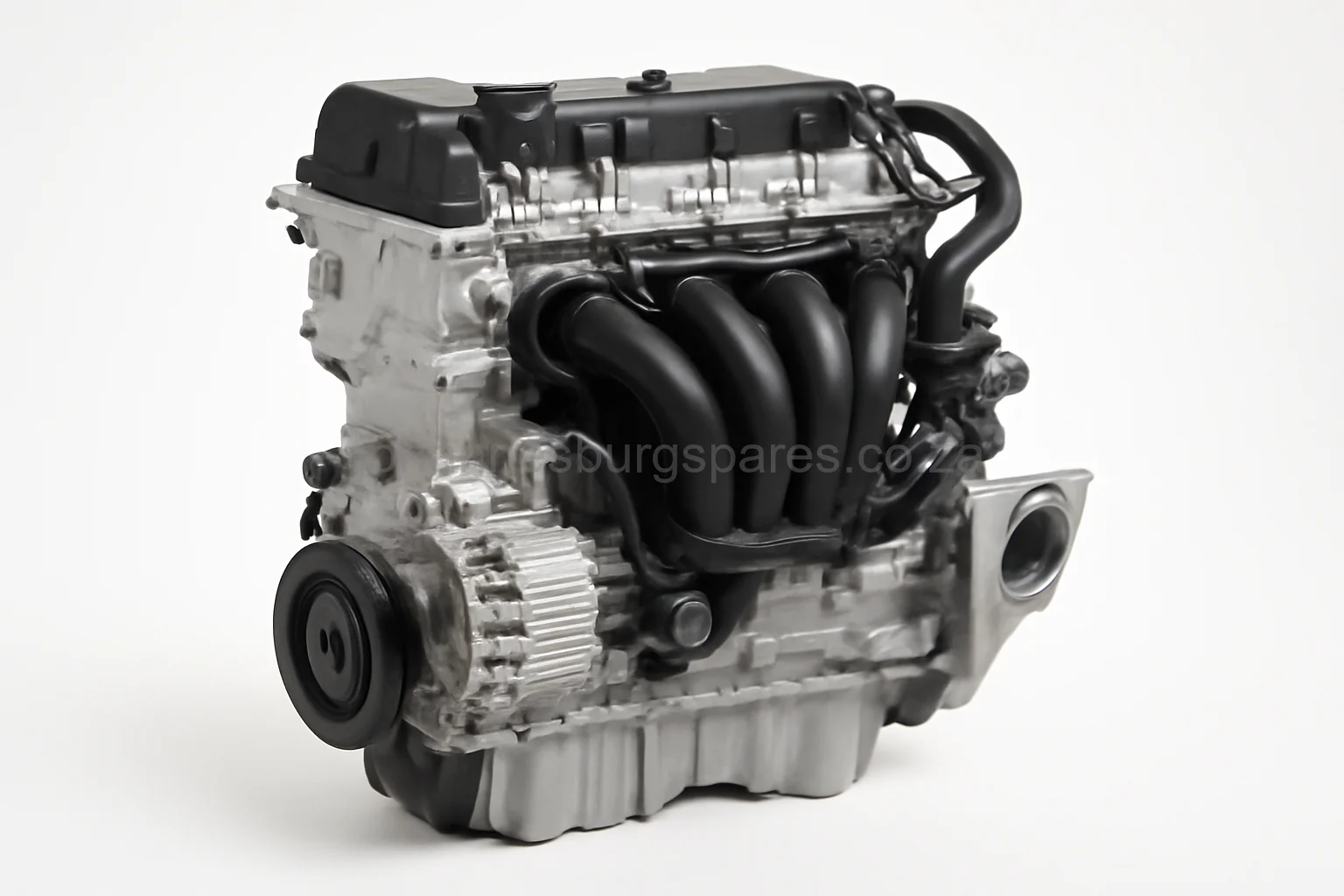
Reman turbo with new oil feed pipe?
We can source reman and new Garrett turbochargers, oil feed pipes, banjo bolts and oil pickup strainers for 1.6 HDi DV6 models — supplied as a kit so the new turbo lives long — and courier them nationwide.
Get Quote →Problem 4 — Eolys (FAP) Additive Depletion (Pre-BlueHDi Cars)
Pre-BlueHDi DV6 engines that were fitted with a particulate filter (broadly 2004-2012) use a cerium-based additive called Eolys (also written FAP) injected into the diesel to lower the soot burn-off temperature in the DPF. Not every 1.6 HDi has the system — many Euro-4 90 hp cars and Partner / Berlingo vans were built with no particulate filter and no additive tank at all. On a car that does have the filter, without Eolys it can't regenerate at the temperatures a 1.6 HDi reaches in normal driving [9][10].
Symptoms
- "Particle Filter Additive Level Too Low" dashboard warning
- Increasingly frequent DPF clogging warnings
- Active regen cycles starting more often
- Combined "anti-pollution fault" and DPF warning together
- EML with code P1435 (Eolys/FAP additive pump circuit)
Causes
The Eolys reservoir holds about 3 litres and is consumed at roughly 1 litre per 40,000 km. If the refill is missed at service, the reservoir eventually runs dry. The DPF then can't regenerate properly and starts down the cascade in Problem 1.
Solution
- Refill the Eolys additive with the correct PSA part number and reset the Eolys counter with DiagBox / Lexia. R2,500 – R4,500 in SA.
- On BlueHDi cars (2013 onwards) the Eolys system is replaced by AdBlue / SCR — different failure mode covered in our Peugeot BlueHDi AdBlue & SCR guide.
Problem 5 — Injector "Black Death" Seizure
The DV6's injector copper sealing washers harden and shrink with heat cycling. Combustion gas blows back up around the injector body, carbon builds rapidly, and the injector physically seizes in the cylinder head. This is the legendary "black death" of the 1.6 HDi [11][12].
Symptoms
- Black soot / carbon "chimney" visible around the base of one or more injectors (lift the engine cover and look)
- Misfire / rough idle traceable to one cylinder
- Whistling or chuffing noise from the top of the engine on acceleration
- Heavy black smoke and high injector correction values on the scanner
- Failed leak-off test — one injector returning far more fuel than the others
Causes
- Skipped or extended oil service intervals — the biggest single accelerator
- Wrong oil specification — oils without the ACEA C2 / PSA approval your handbook calls for
- Worn copper washer allowing combustion gas to escape and bake on
- Cheap aftermarket injectors with poor seat finish leak from new
Solution
- Best case — free the injector with diesel/heat and replace copper washers and clamp. R2,500 – R5,000 fitted per injector.
- Worst case — injector seized in the head, requires hydraulic puller or thermal lance, often head removal. R8,000 – R15,000 to extract one stuck injector. A full four-injector replacement plus head clean: ask for a quote.
- Always code new injectors to the ECU with DiagBox using the IMA codes printed on each injector — or the car will run badly even with new parts.
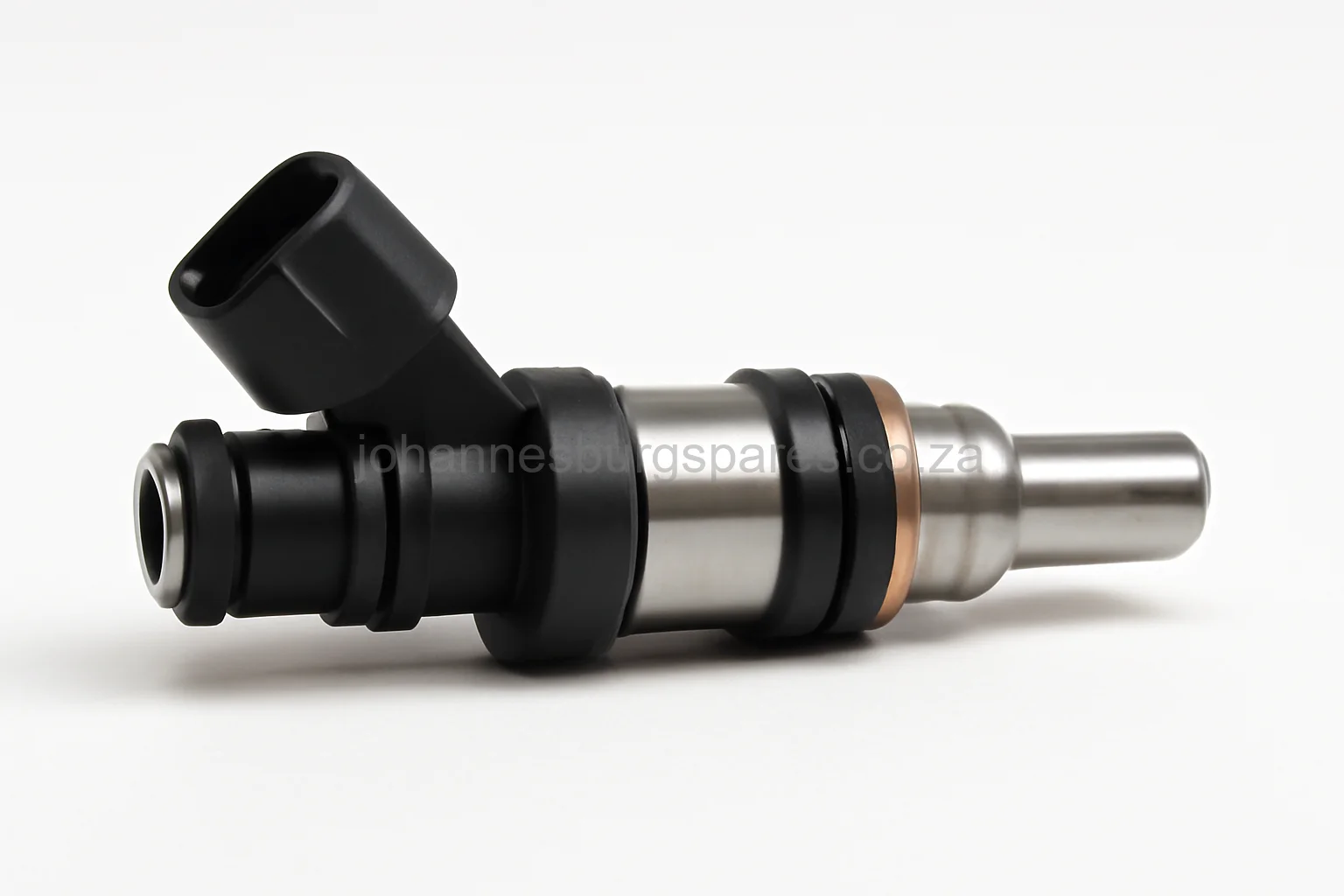
Bosch / Siemens reman injectors
Reman 1.6 HDi DV6 injectors, copper washer kits and fuel filters — 207, 208, 2008, 307, 308, 3008, 5008, Partner.
Get Quote →Preventive Maintenance — Keeping a 1.6 HDi Alive in SA
The DV6 rewards strict service discipline. The routine that keeps one healthy:
- Oil + filter every 10,000 km, never longer. ACEA C2 5W-30 only. Wrong oil destroys the DPF chemically [2][4].
- Drive on the motorway for 30+ minutes weekly at over 100 km/h in 4th gear. The single most important habit. Triggers passive DPF regen and clears EGR/turbo carbon.
- Replace the fuel filter every 30,000 km. SA diesel sulphur and cetane variability shortens injector life — clean fuel is cheap insurance.
- Refill Eolys at every major service (pre-2013 cars that have the additive system). Confirm with the workshop that it was done.
- EGR clean every 60,000 km as preventive. Better than waiting for limp mode.
- Walnut-blast or chemical clean the inlet manifold at 100,000 km. Soot accumulates regardless of habits; clean it before the EGR seizes.
- Listen for cold-start tick around the injectors. Catches blow-by before it becomes black death.
For the broader picture of which Peugeot engines suffer which faults, see our Peugeot timing belt vs chain guide and the wider engine landscape on the Peugeot 208 problems guide.
Short-Trip Owner Warning
If your weekly diesel driving is all short trips, the 1.6 HDi's emissions hardware will suffer. The cure is one 30-minute motorway run every weekend at 100-plus km/h in 4th gear, holding the engine above 2,500 rpm so the DPF hits regen temperature.
Frequently Asked Questions
Is the Peugeot 1.6 HDi diesel reliable?
Mechanically yes — the bottom end can reach 300,000 km with strict servicing. But the emissions stack (DPF, EGR, Eolys, injectors, VGT turbo) is fragile on short-trip duty. Short-trip city cars typically need emissions-system work far earlier than motorway-driven ones.
What is "black death" on a Peugeot 1.6 HDi?
Black death is the carbon and oil sludge that builds up around the injectors when the copper sealing washers shrink with age. The injector physically seizes in the cylinder head and often needs the head removed to extract. Standard fix is to replace the copper washers every time an injector is removed — easy preventive that most workshops skip [11][12].
How much does a Peugeot 1.6 HDi DPF clean cost in SA?
Forced regen on the diagnostic tool and off-car chemical or ultrasonic cleaning: ask for a quote — labour varies by workshop. Replacement DPF: our listed price for a 1.6 HDi (Euro 5) DPF is R1,500 – R8,000, before fitting. Always replace the differential-pressure sensor (R1,500 part) before condemning the DPF — sensor failures look identical.
Can I just delete the DPF on my 1.6 HDi?
Technically possible (the ECU remap removes the DPF function), and there is an active SA DPF-delete / ECU-remap trade. Legally you are removing emissions equipment, which can fail roadworthy and invalidate warranty / insurance claims. Practically a deleted DPF accelerates EGR carbon and turbo wear. We do not recommend it. We do not stock DPF-delete kits.
What is Eolys fluid and does my 1.6 HDi need it?
Eolys (also called FAP or Cerine) is a cerium-based diesel additive used on pre-BlueHDi cars that were fitted with a particulate filter (broadly 2004-2012) to lower DPF regen temperature. Not every 1.6 HDi has it — many Euro-4 90 hp cars and Partner / Berlingo vans were built with no particulate filter and no additive tank at all. Where the system is fitted, the 3-litre reservoir is consumed at about 1 litre per 40,000 km and must be topped up at the major service intervals; if your dash has ever shown "Particle filter additive minimum level", your car has one. Check for the reservoir or confirm by VIN before buying additive. BlueHDi cars (2013+) use AdBlue instead. The same DV6 powers the Partner and Expert vans, where DPF-equipped examples on short delivery cycles block even faster — see our Partner and Expert van repair guide.
How long does an EGR valve last on a Peugeot 1.6 HDi?
On purely motorway-driven cars, 200,000 km. On SA city duty, often only 60,000-100,000 km before carbon seizes the stepper motor. Preventive cleaning every 60,000 km extends life significantly.
My 1.6 HDi shares parts with which other cars?
The DV6 family was a PSA-Ford joint development. Same engine in Ford Fiesta TDCi (1.6), Focus TDCi (1.6), Volvo S40 1.6D, Mini Cooper D (early), and across the Citroen and DS range — C2, C3, C4, Berlingo, DS3, DS4. Parts are widely available and SA breakers stock interchangeable units, but always confirm the engine code (DV6, DV6C, DV6TED4) before ordering.
Sources
- The 1.6 HDi engine — reliability now (Peugeot Forums)
- DPF problems 1.6 HDi BlueHDi 120 2016 — 2008 thread (2008 Owners Club)
- Risk of particulate filter blocking — 5008 owner thread (Peugeot Forums)
- Power loss above 3000 rpm — EGR calibration / carbon build-up (Peugeot Forums)
- Anti-pollution fault and limp mode — 307 2.0 HDi 90 bhp (Peugeot Forums)
- Anti pollution fault — accelerator pedal signal and brake switch (Peugeot Central)
- 307 / 407 EGR stuck valve — diagnosis thread (French Car Forum)
- 407 1.6 HDi turbo problems (Peugeot Forums)
- 2011 308 1.6 HDi DV6C engine particle filter cleaning (French Car Forum)
- 407 particle filter problems — Eolys evidence (Peugeot Forums)
- Injector removal and washer/seal replacement 1.6 HDi (Peugeot Forums)
- HDi fuel injector problem — 207 thread (Peugeot Forums)
These are the most commonly reported Peugeot 1.6 HDi DPF, EGR and Eolys problems — most are preventable with a monthly highway run and disciplined oil and additive servicing.
Important Disclaimer
This guide is informational and reflects forum, specialist and owner-reported patterns. It is not a substitute for diagnosis by a qualified Peugeot specialist. SA rand pricing is indicative and varies by region, supplier and parts source — the rand figures in this guide are indicative ranges only, not quotes; prices vary by condition, mileage, supplier and labour rate. Always confirm parts compatibility against your VIN before purchase. Pro Peugeot Spares is a parts supplier, not a workshop — we do not perform installation.
Important Disclaimer
This content is for informational purposes only and is based on research from automotive industry sources. Pro Peugeot Spares is not a certified automotive repair facility. Always consult with qualified automotive professionals before performing any repairs or maintenance. Improper repairs can result in personal injury, property damage, or vehicle malfunction. We assume no responsibility for actions taken based on this information.