
Peugeot BlueHDi AdBlue & SCR System Failures: Fix the No-Restart

Key Takeaways
| Aspect | Details | SA Cost |
|---|---|---|
| What it is | BlueHDi = HDi diesel with SCR + AdBlue (urea injection) for NOx reduction | — |
| Affected SA models | 308, 3008, 5008, 508 BlueHDi — 2013 onwards | — |
| Critical warning | "AdBlue: 1,100 km to no-restart" — engine WILL refuse to start at zero | — |
| NOx sensor replacement | Common fault, throws phantom warnings | R5,500 – R9,500 |
| AdBlue injector replacement | Crystallised urea blocks the dosing line | Ask for a quote |
| AdBlue pump replacement | Seized from urea contamination | Ask for a quote |
| Full AdBlue tank assembly | If the tank itself or the heater has failed | R28,000 – R45,000 |
| DPF cracking recall (Safety Gate A12/00271/23) | 2.0-litre diesel 308, 3008, 5008 and 508 (plus the DS7 Crossback); build window runs Jan 2017 to Jan 2022 and varies by model | R0 in scope |
If your Peugeot diesel has a "BlueHDi" badge on the boot, an AdBlue filler cap next to the diesel filler, and a dashboard warning telling you the engine will refuse to restart in 1,100 km — this guide is for you. BlueHDi is Peugeot's post-2013 diesel technology, replacing the older Eolys / FAP system with an AdBlue-injected Selective Catalytic Reduction (SCR) catalyst. It cuts NOx emissions dramatically. It also introduces a new set of expensive failure modes that can leave a 5-year-old car immobilised on the side of the road. This is the SA owner's diagnosis guide — what the no-restart warning actually means, which component has actually failed (it's almost never the AdBlue you just added), and what each repair costs in rands.
What Is BlueHDi?
BlueHDi is the marketing name for the second-generation HDi diesel introduced from 2013, paired with a Selective Catalytic Reduction (SCR) emissions system. The engine itself is still the DV6 or DW10 / DW12 diesel family. The new bits are downstream of the engine [1][2]:
- SCR catalyst — an additional catalyst behind the DPF that uses ammonia to break NOx into nitrogen and water
- AdBlue tank — a 17-litre urea solution reservoir, refilled by the owner roughly every 15,000-20,000 km
- AdBlue pump and injector — meters AdBlue into the exhaust upstream of the SCR
- NOx sensor (upstream) — measures engine-out NOx before the SCR
- NOx sensor (downstream) — measures NOx after the SCR to confirm AdBlue is doing its job
- DPF — still present and still needs regeneration, but the old Eolys fuel additive is gone. AdBlue does not touch the DPF; it is injected further down the exhaust to feed the SCR catalyst
The pre-BlueHDi DV6 used Eolys (a cerium-based additive) — that's the engine covered in our 1.6 HDi DPF and EGR guide. BlueHDi cars replaced that with AdBlue. Same exhaust pipe, completely different chemistry, completely different failure modes.
SA-spec BlueHDi cars include the 308 (T9 BlueHDi from 2013), 3008 (P84 from 2016), 5008 (P87 from 2017), and 508 (Mk1 facelift from 2014, Mk2 from 2018). The 1.5 BlueHDi (DV5) and the 2.0 BlueHDi (DW10F) are the two engines most SA owners have.
South African Context
AdBlue supply chain in SA is patchier than in the UK and EU. Generic urea fluid from a hardware store is easy to pick up by mistake instead of OEM-spec ISO 22241 AdBlue from a Peugeot dealer or a recognised fuel-station forecourt pump. Off-spec fluid can damage the SCR catalyst, so the saving on a refill is a false economy.
The No-Restart Warning — What It Actually Means
The dashboard warning that scares every BlueHDi owner reads something like:
"Risk of no start in 1,100 km" → "Risk of no start in 100 km" → "Risk of no start in 0 km — engine will not restart"
Once the countdown hits zero and you switch off, the engine genuinely will not start until the fault is cleared at a workshop. This is mandated by European emissions legislation — Peugeot is not allowed to let you defeat the SCR system. SA-market cars are built on the same European platforms and owners here report the same behaviour, though Peugeot South Africa does not publish its emissions calibration.
The warning text says "AdBlue" but the underlying fault is usually NOT low AdBlue. Five things that commonly trigger it:
- Faulty NOx sensor — the downstream NOx sensor reads incorrectly, the ECU thinks the SCR isn't working, the countdown starts
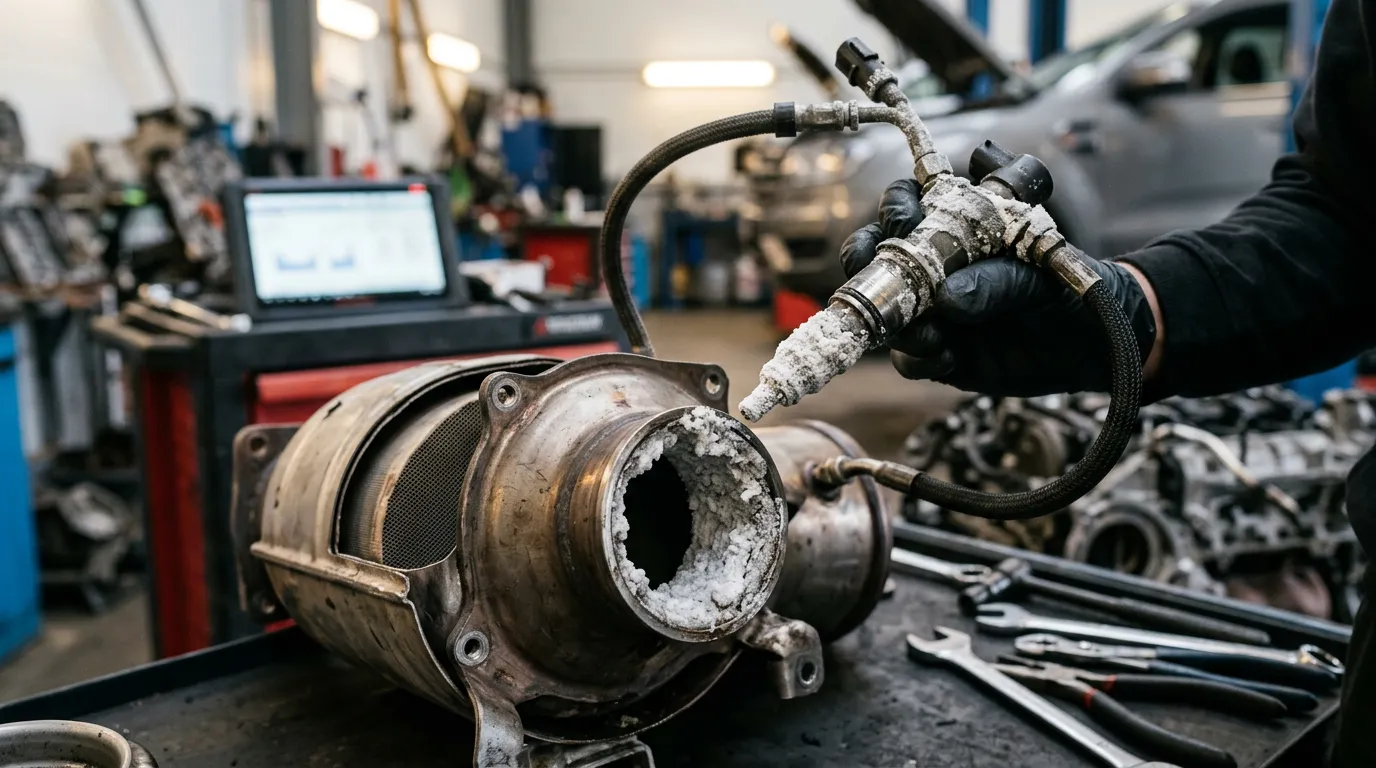
- AdBlue injector failure — urea crystallises in the dosing line, AdBlue cannot be metered, SCR conversion fails
- AdBlue level sensor fault — the tank reads empty even after a refill
- AdBlue pump seizure — generic urea contamination kills the pump
- Genuinely low AdBlue — and you've ignored four prior warnings to refill
If you've just topped up to full and the warning is still escalating, the fault is one of the first four — not the fluid level. Adding more AdBlue will not help.
Symptoms by Component
NOx Sensor Failure
- Recurring "AdBlue" warnings even after refills
- Limp mode after a long highway run
- "Anti-pollution fault — service immediately"
NOx sensors are wear items — they sit in the exhaust at temperatures up to 800 °C and progressively fail past 100,000 km. R5,500 – R9,500 fitted for the upstream or downstream sensor [5]. Always pull the codes to identify which sensor — replacing both pre-emptively wastes money.
AdBlue Injector Failure
- AdBlue level visibly drops but warnings continue
- Crystallised urea deposits visible around the injector body
- Black or white deposits inside the exhaust around the injector mount
- Fault code P20F6 (urea injection valve fault) [6]
The injector is a frequent physical failure on the SCR side. Ask for a quote — labour varies by workshop. Almost always caused by using generic urea instead of ISO 22241 AdBlue.
AdBlue Pump Failure
- AdBlue level never drops between fills
- No measurable AdBlue dosing on diagnostics
- Buzzing or clicking from the AdBlue tank when ignition on
- Pump motor reads as electrically failed on the scanner
Ask for a quote — labour varies by workshop. Often paired with injector failure — replace both as a service kit.
AdBlue Tank / Level Sensor Failure
- Level reads empty after a fresh fill
- "Refill AdBlue" warning at 50% indicated level
- Visible AdBlue leaking under the car from a cracked tank
- Frozen tank in cold weather (the tank has an electric heater — when it fails, the AdBlue thickens)
Tank assembly with integrated sensor and heater is the most expensive single component. R28,000 – R45,000 fitted — at this cost most SA owners explore reman tank options or used parts [7].
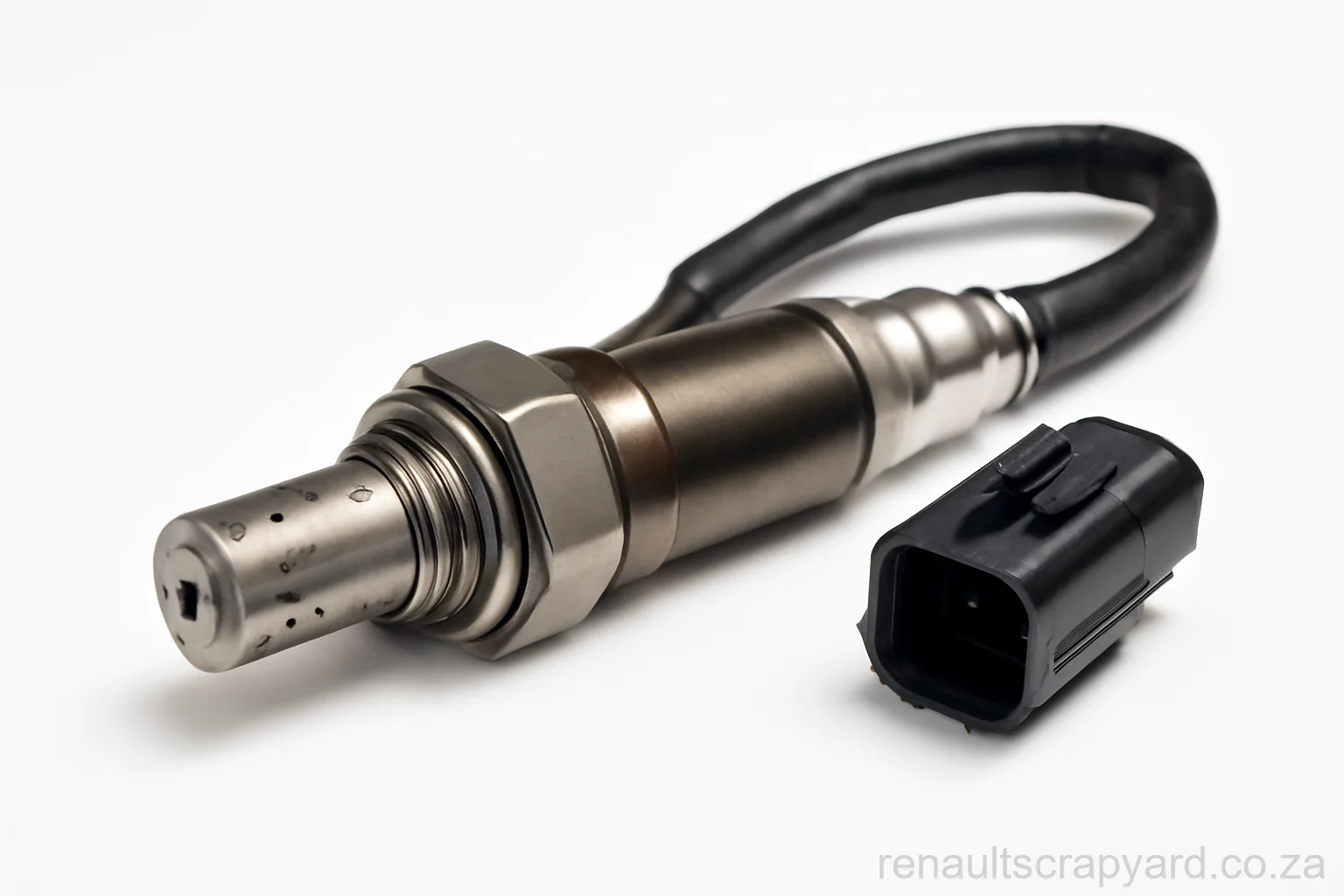
NOx sensor, AdBlue injector or pump?
Upstream and downstream NOx sensors, AdBlue injectors, pumps, level senders and tank heaters for every BlueHDi Peugeot in SA — 308, 3008, 5008, 508.
Get Quote →The DPF Cracking Recall — Check Your VIN
The alert covers four Peugeot models fitted with the 2.0-litre diesel, each with its own build window: the 308 built 12 January 2017 to 20 July 2020, the 3008 built 29 March 2017 to 19 January 2022, the 5008 built 26 April 2017 to 31 January 2022, and the 508 built 11 January 2018 to 12 October 2021. If your car falls inside its model's window it may be in scope for EU Safety Gate recall A12/00271/23, which also covers the DS7 Crossback [8] — check the VIN before assuming either way. The fault, as the French recall notice states it: the diesel particulate filter may overheat and develop cracks, which could have a negative impact on the environment [8].
To check your VIN against the campaign, go to peugeot.co.za/owners/maintain-your-car/recall.html and enter your 17-character VIN. Repairs under recall are FREE regardless of mileage or warranty status. The BlueHDi diesels also power the Partner and Expert vans, which carry their own recall and DPF issues — see our guide to common Partner and Expert problems.
DPF and AdBlue — How They Interact
The DPF and the AdBlue / SCR system sit in series in the exhaust. They influence each other:
- City driving prevents passive DPF regen → frequent active regens dilute the sump with diesel → fuel-in-oil → engine wear accelerates
- A clogging DPF → exhaust back-pressure rises → the AdBlue injector struggles to spray → SCR conversion fails → "AdBlue" warning even with full AdBlue
- An AdBlue NOx sensor fault → engine ECU richens the mixture → more soot to the DPF → faster DPF clogging
This is why BlueHDi diagnosis must be done with the full picture. A workshop that condemns "the DPF" without checking AdBlue dosing, or replaces the AdBlue pump without testing the DPF differential pressure, often replaces the wrong part [3][9].
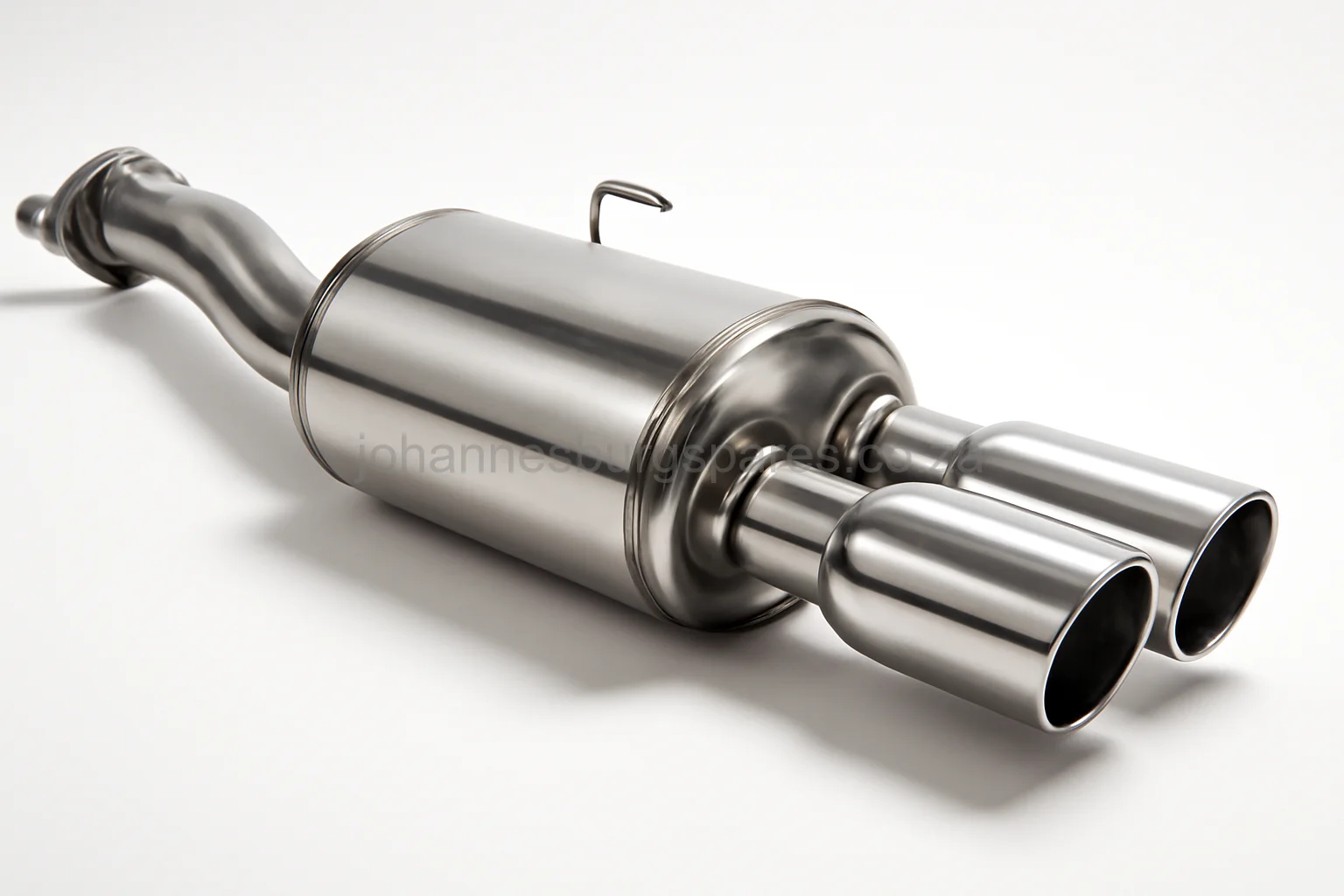
DPF, SCR catalyst or full exhaust?
Reman DPF units, SCR catalysts, AdBlue tank assemblies and exhaust manifold rebuilds for every 308, 3008, 5008 and 508 BlueHDi sold in SA.
Get Quote →Diagnosis Order of Operations
The right way to diagnose a BlueHDi "AdBlue" warning, in cost-saving order:
- Top up to full with OEM-spec ISO 22241 AdBlue. R150-R250 per 10-litre bottle. If the warning clears and stays clear for 1,000 km, you were just genuinely low.
- Scan with DiagBox / iCarsoft CR Pro. Pull the codes — they tell you which component to focus on.
- VIN-check at peugeot.co.za. The Safety Gate DPF recall A12/00271/23 may apply — free repair if in scope [8].
- Replace the upstream NOx sensor first — a common failure, and the codes will tell you whether it is the upstream or downstream sensor. R5,500 – R9,500.
- Replace the downstream NOx sensor if codes persist. Same price.
- Replace the AdBlue injector if urea crystallisation is visible.
- Replace the AdBlue pump if dosing tests show no fluid delivery.
- Replace the tank assembly only as a last resort — if the tank heater has failed or the tank is leaking. R28,000 – R45,000.
A BlueHDi specialist follows this order. A general workshop without DiagBox will guess and sell you the wrong part. Always insist on a code scan before approving parts.
The Big Misdiagnoses
Three faults that look like AdBlue but aren't:
- Failing 12V battery. A weak battery causes voltage dips at start-up that confuse the BlueHDi ECU and trigger phantom AdBlue warnings. Always test the battery first — it costs R0 to rule out [10].
- DPF overdue regeneration. If the DPF is 80%+ loaded with soot, the back-pressure interferes with AdBlue dosing. Active regen on a 30-minute motorway run clears both warnings.
- BSI water ingress. The BSI gateways CAN-bus traffic between modules — if it's water-damaged, AdBlue warnings can appear without any AdBlue fault. See the BSI water ingress guide.
Preventive Maintenance
- Use ONLY ISO 22241 AdBlue. Buy from a Peugeot dealer, an OEM-branded bottle (BASF, Yara, AdBlue-Pak), or a recognised fuel-station forecourt pump. Never generic urea. Never DIY-mixed urea-and-water. Off-spec fluid can damage the SCR catalyst.
- Top up at the first warning, not the last. There are two different countdowns. If the tank is genuinely running low, the car warns you when roughly 2,400 km of range is left in it and again as it nears empty, and a top-up clears it. If the ECU has logged an SCR fault it runs a separate no-restart countdown that a top-up will not clear — that one needs a diagnostic scan. If the number keeps falling after you have filled the tank, you are in the second case.
- 30-minute motorway run weekly at over 80 km/h in 4th gear, holding 2,500+ rpm. Keeps the DPF in passive regen, keeps the SCR catalyst at light-off temperature.
- Oil + filter every 10,000 km maximum. ACEA C2 / C3 low-SAPS 5W-30 only. Wrong oil chemically poisons the DPF.
- Annual NOx sensor test at the same workshop visit as the DPF differential pressure scan. Catches sensor degradation before limp mode.
- VIN-check annually for new recalls.
If You're Stranded with a No-Restart
Do not keep cranking — you'll just flatten the battery. Call Peugeot Assist on 0860 738 472 (in SA) for a tow to an authorised dealer. If the car is in scope for the DPF recall, the recall fix may cover the no-restart cause for free. Have your VIN ready before the call. For the broader Peugeot SA support landscape and the 5-year / 100,000 km warranty terms, see the Peugeot 208 maintenance schedule.
Frequently Asked Questions
What does BlueHDi mean on a Peugeot?
BlueHDi is Peugeot's diesel emissions technology introduced in 2013 — combining a particulate filter (DPF) with AdBlue-injected Selective Catalytic Reduction (SCR). It replaced the older Eolys / FAP cerium-additive system. Fitted to 308, 3008, 5008 and 508 diesel models from 2013-2014 onwards [1].
Why is my Peugeot AdBlue warning still on after refilling?
Because the warning text is misleading — the underlying fault is almost never AdBlue level. Most commonly it's a NOx sensor, AdBlue injector, AdBlue pump, or level sensor fault [3][4]. Add a top-up to confirm; if the warning persists, scan for fault codes to identify the real culprit.
How much does AdBlue system repair cost in SA?
NOx sensor: R5,500 – R9,500. AdBlue injector and AdBlue pump: ask for a quote. Full tank assembly: R28,000 – R45,000. Always rule out the cheap fixes (battery, DPF regen, recall VIN-check) before approving parts.
Will my BlueHDi Peugeot really refuse to start?
Yes. Once the no-restart countdown hits zero and you switch off the engine, it will not crank. This is hard-coded into the ECU and required by EU emissions legislation. SA-market cars are built on the same European platforms and owners here report the same behaviour. Call Peugeot Assist for a tow; do not keep cranking.
Can I use generic urea instead of AdBlue?
No. Off-spec fluid can damage the SCR catalyst. The required spec is ISO 22241 AdBlue — buy from a Peugeot dealer, an OEM-branded bottle, or a recognised fuel-station forecourt pump only.
Is there a recall on my BlueHDi Peugeot?
Possibly. EU Safety Gate recall A12/00271/23 covers DPF cracking on 2.0-litre diesel 308, 3008, 5008 and 508 models built between January 2017 and January 2022 — the exact window varies by model [8]. VIN-check at peugeot.co.za/owners/maintain-your-car/recall.html — free fix if in scope.
How long do AdBlue components last?
NOx sensors typically last 80,000-150,000 km; AdBlue injectors 100,000+ km on clean ISO 22241 AdBlue, much shorter on generic urea; AdBlue pumps 100,000-150,000 km. The AdBlue tank itself rarely fails — usually the integrated level sensor or heater is the problem at high mileage. Cars run on OEM-spec AdBlue with strict 10,000 km oil intervals reach 200,000 km routinely without major AdBlue work.
Can I delete the AdBlue system on my Peugeot?
Technically possible via ECU remap (sometimes called "AdBlue delete" or "SCR delete"). Legally you are removing emissions equipment — fail roadworthy, invalidate warranty and insurance claims, and may struggle to resell. Practically: the SCR fault you're trying to bypass usually reappears as a DPF cracking issue six months later. We do not stock delete kits and do not recommend the route.
Sources
- BlueHDi — AdBlue introduction thread (Peugeot Forums)
- Risk of particle filter clogging — DPF AdBlue issues (Peugeot Forums)
- AdBlue emissions fault — engine fault repair needed (Peugeot Forums)
- 508 AdBlue and DPF problems — combined fault codes (Peugeot Forums)
- AdBlue issues — 5008 owner thread (Peugeot Forums)
- 508 2.0 BlueHDi AdBlue error code thread (French Car Forum)
- Failure of AdBlue tank and injector — 3008 thread (3008 Forums)
- Rappel A12/00271/23 — DS7 Crossback, 3008, 308, 5008, 508 with 2-litre diesel: diesel particulate filter may overheat and crack (Rappel Conso, French government recall register, 17 February 2023)
- Peugeot FAP / DPF additive system — technician forum (MHH Auto)
- Peugeot 5008 won't restart after adding AdBlue (JustAnswer)
Keep to OEM-spec AdBlue and 10,000 km oil intervals to avoid the no-restart countdown.
Important Disclaimer
This guide is informational and reflects forum, specialist and owner-reported patterns. It is not a substitute for diagnosis by a qualified Peugeot specialist. SA rand pricing is indicative and varies by region, supplier and parts source. Always confirm parts compatibility against your VIN before purchase. Pro Peugeot Spares is a parts supplier, not a workshop — we do not perform installation.
Important Disclaimer
This content is for informational purposes only and is based on research from automotive industry sources. Pro Peugeot Spares is not a certified automotive repair facility. Always consult with qualified automotive professionals before performing any repairs or maintenance. Improper repairs can result in personal injury, property damage, or vehicle malfunction. We assume no responsibility for actions taken based on this information.