
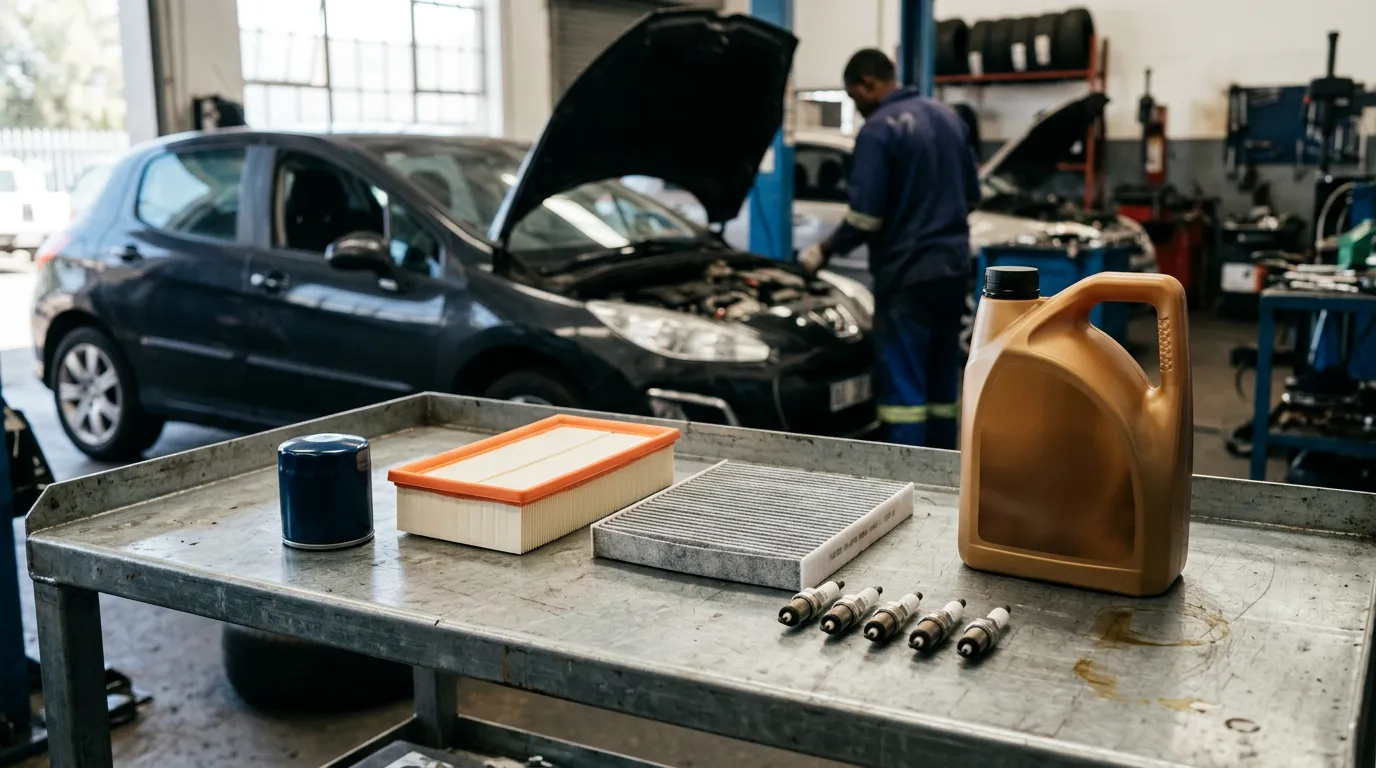
Peugeot Service Schedule, Intervals & Costs — All Models (South Africa 2026)

Key Takeaways
| Topic | Detail | Indicative SA cost (not a quote) |
|---|---|---|
| Standard service interval (most models) | 15,000 km or 12 months — whichever comes first | — |
| Expert / Partner diesel interval | 20,000 km / 12 months on newer BlueHDi variants | — |
| Minor service (petrol) | Oil + oil filter + multi-point inspection + service reset | Ask for a quote |
| Minor service (diesel HDi/BlueHDi) | As above + DPF check, AdBlue level check on SCR engines (top-up billed separately) | Ask for a quote |
| Major service (every 2nd interval) | Adds air filter, cabin filter, fuel filter, spark plugs, brake fluid | Ask for a quote |
| Timing belt (diesel) | DV6 1.6 HDi/BlueHDi and 2.0 BlueHDi: 160,000 km / 10 years. Older DW10 2.0 HDi (Expert, 308 T7, first-generation 508): 100,000 km / 5 years — interference engines, no skipping | Ask for a quote |
| Independent vs dealer | Independent specialists are often cheaper using OEM-spec parts | Ask for a quote |
Peugeot's service philosophy is consistent across the range but the numbers shift meaningfully depending on whether you're driving a 1.2 PureTech hatchback in Sandton or a BlueHDi Expert van doing highway kilometres between Johannesburg and Durban. Get the interval right and a Peugeot will clear 300,000 km without drama; stretch it on the wrong oil or skip a brake-fluid flush for two years and you're looking at preventable five-figure repair bills. This guide covers the full service interval and cost picture for every Peugeot model currently on South African roads — passenger cars, SUVs and light commercial vans — with diesel and petrol split out, and indicative pricing (not quotes) for independent specialists and franchised dealers.
For the Peugeot 208 specifically (its own interval quirks, the wet PureTech belt, and i-Cockpit-specific items), see our dedicated Peugeot 208 maintenance schedule and service costs guide.
Get a Quote on Peugeot Service Parts
Peugeot's Service Philosophy — What You're Actually Paying For
Peugeot SA builds two levels of service into every car sold here:
Minor service (every 15,000 km or 12 months, whichever comes first)
- Engine oil drain and refill — correct PSA specification (see model table below)
- Oil filter replacement
- Multi-point visual inspection (brakes, lights, tyres, fluid levels)
- Pollen/cabin air filter check (replace if blocked)
- Service interval indicator reset
- Brake-pad thickness measurement
- Electrical system scan for stored fault codes
Major service (every second minor interval — typically 30,000 km, 60,000 km, 90,000 km) Everything in the minor, plus:
- Engine air filter replacement
- Pollen/cabin air filter replacement (mandatory, not just a check)
- Fuel filter replacement (diesel models)
- Spark plugs at 60,000 km (petrol models; iridium plugs used on PureTech)
- Brake fluid flush (mandatory every 2 years regardless of km)
- Coolant strength check (replace at 4 years / 60,000 km)
- Drive belts inspection
Out-of-cycle items (mileage triggers regardless of annual service timing)
- Timing belt replacement (diesel DV6 engines) — 160,000 km / 10 years
- AdBlue/DEF top-up (BlueHDi SCR engines) — roughly every 10,000–15,000 km or on warning light
- DPF regeneration checks on diesel engines used predominantly in stop-start traffic
- Carbon cleaning on PureTech direct-injection petrols — 80,000–100,000 km
- Gearbox fluid (EAT6/EAT8 automatic) — Peugeot SA specifies "sealed for life" on many units but independent specialists recommend a check at 80,000–100,000 km in SA heat
SA Tip — Two-Year Rule on Brake Fluid: Peugeot's brake fluid is hygroscopic — it absorbs moisture from the air and its boiling point drops over time. SA's intense summer heat (especially in Gauteng and the Western Cape) accelerates this. The 2-year flush is non-negotiable regardless of mileage. Cost: R650 – R950 at a specialist. Skipping it is cheap until your brakes fade descending Huguenot Pass in summer.
Service Interval Table — All Peugeot Models Sold in SA
The table below summarises the primary service interval and key fluid specifications for every Peugeot model currently on SA roads, plus recently discontinued models still active in the used-car market. These figures are house-compiled reference data, not a single published source, so always confirm the exact interval and oil spec for your specific VIN against your service book or the oil-filler cap before booking a service.
| Model | Engine | Type | Interval (km / months) | Oil Spec | Notes |
|---|---|---|---|---|---|
| 208 (2012–present) | 1.2 PureTech (EB2) | Petrol | 15,000 km / 12 mo | 0W-30 PSA B71 2312 | Wet timing belt — replace at 100,000 km or 6 years; use only a PSA-approved oil, no substitutes |
| 208 (2012–2019) | 1.6 BlueHDi (DV6) | Diesel | 15,000 km / 12 mo | Check the oil-filler cap or handbook | Timing belt at 160,000 km / 10 yr; DPF check every 15,000 km |
| 2008 (2013–present) | 1.2 PureTech | Petrol | 15,000 km / 12 mo | 0W-30 PSA B71 2312 | Same wet belt as the 208 — replace at 100,000 km or 6 years; no independent interval extension |
| 2008 (2013–2019) | 1.6 BlueHDi (DV6) | Diesel | 15,000 km / 12 mo | Check the oil-filler cap or handbook | Timing belt at 160,000 km / 10 yr |
| 308 (2007–2014, T7) | 1.6 THP / EP6 petrol | Petrol | 20,000 km / 12 mo* | 5W-40 PSA B71 2296 | *Variable interval service (VIS) — oil quality sensor determines exact change; can be as low as 10,000 km under city use. Timing chain (early EP6 prone to stretch — watch cold-start rattle) |
| 308 (2007–2014, T7) | 1.6 HDi / 2.0 HDi (DV6/DW10) | Diesel | 20,000 km / 12 mo* | Check the oil-filler cap or handbook | *VIS system; timing belt at 160,000 km / 10 yr on DV6; DW10 (2.0 HDi) belt at 100,000 km / 5 yr |
| 308 (2014–2021, T9) | 1.2 PureTech | Petrol | 15,000 km / 12 mo | 0W-30 PSA B71 2312 | Wet belt — replace at 100,000 km or 6 years; a PSA-approved oil is mandatory; carbon clean recommended at 80,000 km |
| 308 (2014–2021, T9) | 1.6 BlueHDi (DV6) | Diesel | 15,000 km / 12 mo | Check the oil-filler cap or handbook | Timing belt at 160,000 km / 10 yr; EAT6 gearbox fluid check at 80,000 km |
| 3008 (2017–present, P84) | 1.2 PureTech 130 | Petrol | 15,000 km / 12 mo | 0W-30 PSA B71 2312 | Wet belt — replace at 100,000 km or 6 years; EAT6 or EAT8 gearbox; DPF absent (petrol) — no regen cycle needed |
| 3008 (2017–present, P84) | 1.5 BlueHDi / 2.0 BlueHDi | Diesel | 15,000 km / 12 mo | 0W-30 PSA B71 2312 | AdBlue SCR system; AdBlue refill every 10,000–15,000 km; DPF + DOC; timing belt on 2.0 BlueHDi at 160,000 km / 10 yr |
| 508 (2011–2018, W23) | 1.6 THP / 2.0 petrol | Petrol | 20,000 km / 12 mo* | 5W-40 PSA B71 2296 | *VIS; timing chain on 1.6 THP (EP6) — early chain stretch issue same as T7 308 |
| 508 (2011–2018, W23) | 2.0 HDi / BlueHDi (DW10) | Diesel | 20,000 km / 12 mo* | Check the oil-filler cap or handbook | *VIS; belt 160,000 km / 10 yr (BlueHDi) or 100,000 km / 5 yr (older 2.0 HDi); DPF mandatory highway run if city driven |
| 508 (2018–present, R8) | 1.6 PureTech 225 | Petrol | 15,000 km / 12 mo | 5W-30 PSA B71 2290 | Turbocharged 1.6 PureTech (EP6 family) — chain-driven, not a wet belt; watch for cold-start rattle. EAT8 gearbox check at 80,000 km |
| 5008 (2017–present) | 1.2 PureTech / 1.6 PureTech | Petrol | 15,000 km / 12 mo | 0W-30 PSA B71 2312 (1.2 PureTech) — check the cap for the 1.6 | Wet belt on the 1.2 PureTech — replace at 100,000 km or 6 years. The 1.6 PureTech is the chain-driven EP6. SUV weight increases brake-pad wear rate vs 208/308 |
| 5008 (2017–present) | 1.5 BlueHDi / 2.0 BlueHDi | Diesel | 15,000 km / 12 mo | 0W-30 PSA B71 2312 | AdBlue SCR; same DPF/DOC setup as 3008 BlueHDi |
| Partner (2008–2018, B9) | 1.6 HDi (DV6) | Diesel | 15,000 km / 12 mo | Check the oil-filler cap or handbook | Commercial use pushes DPF regeneration frequency; timing belt at 160,000 km / 10 yr. EGR valve attention at 80,000 km |
| Partner (2018–present, K9) | 1.5 BlueHDi 100 | Diesel | 20,000 km / 12 mo | 0W-30 PSA B71 2312 | Extended interval on newer platform; AdBlue SCR — do not confuse with the older HDi. The 1.5 BlueHDi is the DV5, which is chain-driven (see the belt-vs-chain section — its camshaft drive is covered by a Stellantis recall campaign) |
| Expert (2007–2016, G9) | 2.0 HDi (DW10) | Diesel | 15,000 km / 12 mo | Check the oil-filler cap or handbook | High-km commercial; EGR clogging common; timing belt at 100,000 km / 5 yr |
| Expert (2016–present, K0) | 1.5 BlueHDi / 2.0 BlueHDi | Diesel | 20,000 km / 12 mo | 0W-30 PSA B71 2312 | Extended commercial interval; AdBlue tank (fill at every 2nd service or on warning light); DPF; timing chain on 1.5 BlueHDi; belt on 2.0 BlueHDi at 160,000 km / 10 yr |
*Variable Interval Service (VIS): older 308, 508 and pre-2014 models use an oil-quality sensor to determine the exact change point. The 20,000 km figure is the maximum — in SA traffic conditions with short trips and cold starts, the system often requests an oil change sooner (from 10,000 km). Always follow the dashboard indicator, never assume the max interval applies.
Critical — PSA Oil Specification is Not Optional: PSA's engine oil standards (B71 2290, B71 2296, B71 2312) are not just marketing — they determine the chemistry compatible with the PureTech's wet timing belt and the BlueHDi's DPF catalyst coating. A non-PSA-spec oil on a PureTech accelerates belt degradation. A high-sulphur or non-PSA-approved oil on a BlueHDi kills the DPF catalyst. Both failures are expensive and both are specifically excluded from warranty cover. Check the cap and the service book — if your workshop can't tell you the PSA spec of the oil they're pouring in, that's a red flag.
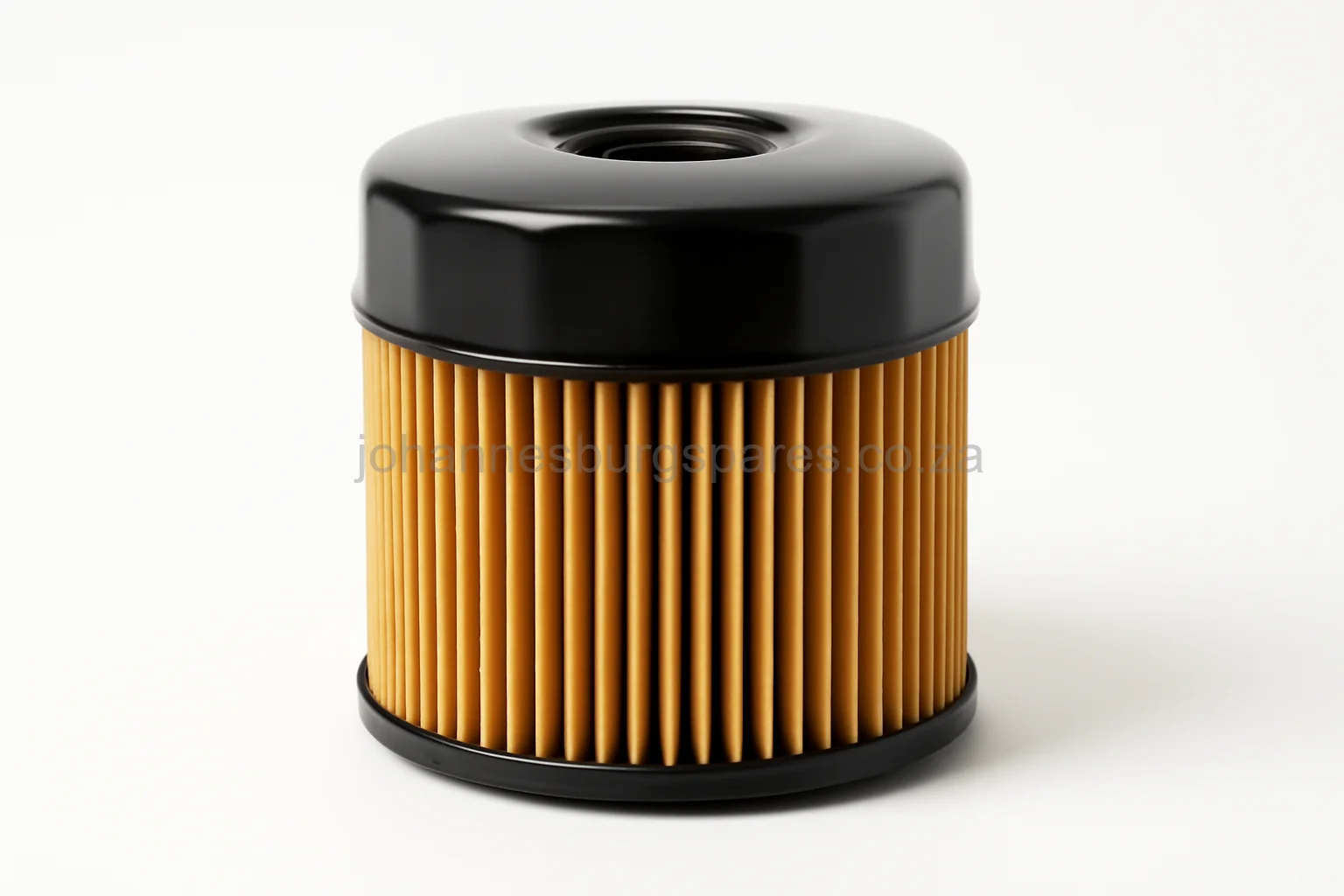
Peugeot Service Oil Filters
OEM-spec cartridge oil filters for the full Peugeot range — PureTech 1.2/1.6, HDi 1.6/2.0 and BlueHDi 1.5/2.0. Get the right filter matched to your engine code and we'll confirm PSA specification in the quote.
What's Inside a Peugeot Service — Part by Part
Understanding what goes into the service lets you check whether your workshop is doing the job properly and decide which items you can reasonably DIY.
Engine Oil & Oil Filter
The single most important consumable. PSA approvals are engine- and era-specific, and each comes in a single viscosity: B71 2290 is a 5W-30 approval, B71 2312 is a 0W-30 approval, and B71 2296 is the ACEA A3/B4 approval used on older petrol engines. They are not interchangeable — verify the spec against your model's oil cap or handbook. Oil capacity varies by engine and by whether the filter is changed, so check the handbook figure before you buy.
Air Filter
Engine air filter replacement is a major-service item (every 30,000 km / every 2nd minor service). In dusty inland conditions — Gauteng, Limpopo, Free State gravel — independent workshops often recommend checking at every service and replacing annually regardless of km. SA dust is abrasive; a clogged filter hurts throttle response and fuel economy measurably. Cost of filter alone: R320 – R650 depending on model.
Cabin (Pollen) Filter
Also a 30,000 km replacement on the schedule, but again worth checking at every service in high-pollen or high-dust environments. Gauteng's summer thunderstorm season plus Highveld grass pollen makes for rapid filter clogging. A blocked cabin filter also strains the A/C blower motor. Filter cost: R150 – R380.
Fuel Filter (Diesel only)
Diesel BlueHDi and HDi models carry an inline fuel filter that requires replacement at the major service. Water contamination in SA diesel (especially at remote fuel stops) can reach the filter faster than the schedule assumes — if you notice rough cold-start behaviour or increased smoke, a fuel filter check is the first stop. Cost of filter: R280 – R480.
Spark Plugs (Petrol only)
Peugeot PureTech engines use iridium-tipped spark plugs that last 60,000 km under the SA schedule. Copper plugs are not an acceptable substitute on direct-injection turbocharged engines — the heat range differs and misfires follow. The 1.2 PureTech three-cylinder takes three plugs; the 1.6 PureTech four-cylinder takes four. Set cost (NGK iridium OEM-equivalent): R960 – R1,450.
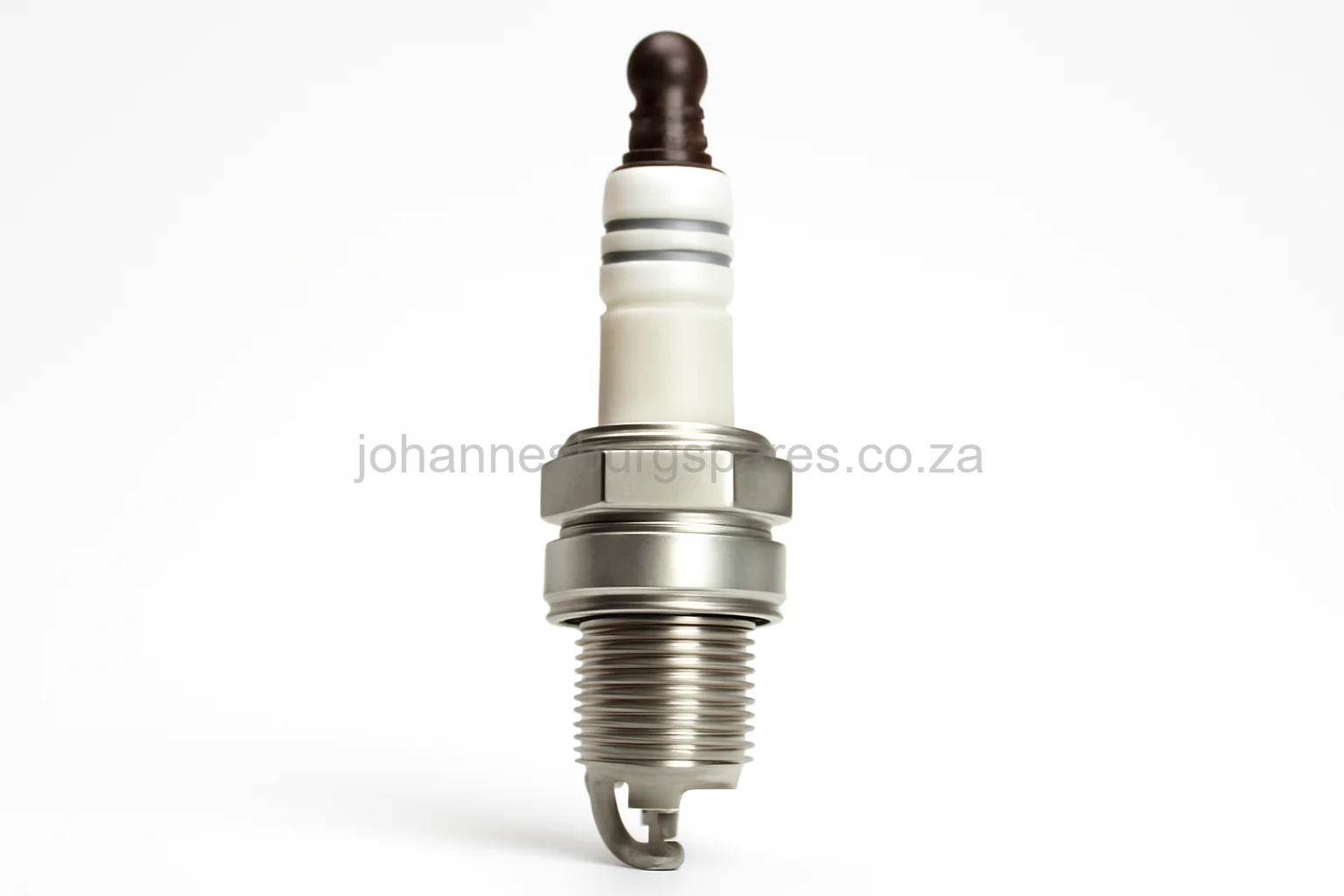
Peugeot PureTech Spark Plugs
Iridium OEM-equivalent plugs for the 1.2 PureTech (set of 3) and 1.6 PureTech (set of 4). Correct heat range for direct-injection turbocharged engines — do not substitute copper.
Brake Fluid
Mandatory every 2 years regardless of mileage on all Peugeot models. The standard is DOT 4 for most models; the 308 GTi and high-performance variants may specify DOT 4+ or DOT 5.1 — check the reservoir cap. A contaminated, water-laden DOT 4 in an ABS pump is an expensive repair; the flush costs R650 – R950 and is not negotiable.
Coolant
Peugeot SA specifies coolant replacement at 4 years or 60,000 km, whichever comes first. Use only OAT (Organic Acid Technology) coolant — PSA recommends TOTAL Glacelf or equivalent pre-mixed concentrate. Mixing OAT with conventional green coolant causes gel formation and blocked radiators. Cost of coolant + flush: R850 – R1,500.
AdBlue (BlueHDi SCR engines — 2014 and newer diesel models)
The 3008, 5008, newer Partner and Expert Vans with the BlueHDi SCR (Selective Catalytic Reduction) system use AdBlue (diesel exhaust fluid) to reduce NOx. Consumption varies with load and driving style — roughly 1 litre of AdBlue per 1,000 km travelled is a reasonable planning figure, though it is not a Peugeot-published number, so check your handbook. Emissions regulations require the low-AdBlue warning to appear with at least 2,400 km of range left before the tank runs dry; ignore it and the engine will eventually refuse to restart. Top up at the service or sooner if the light appears. Cost: R18 – R28 per litre, typically 3–7 litres added per service. Never use tap water, window-cleaner fluid or diesel as a substitute — SCR catalyst damage runs R12,000 – R35,000 to repair.
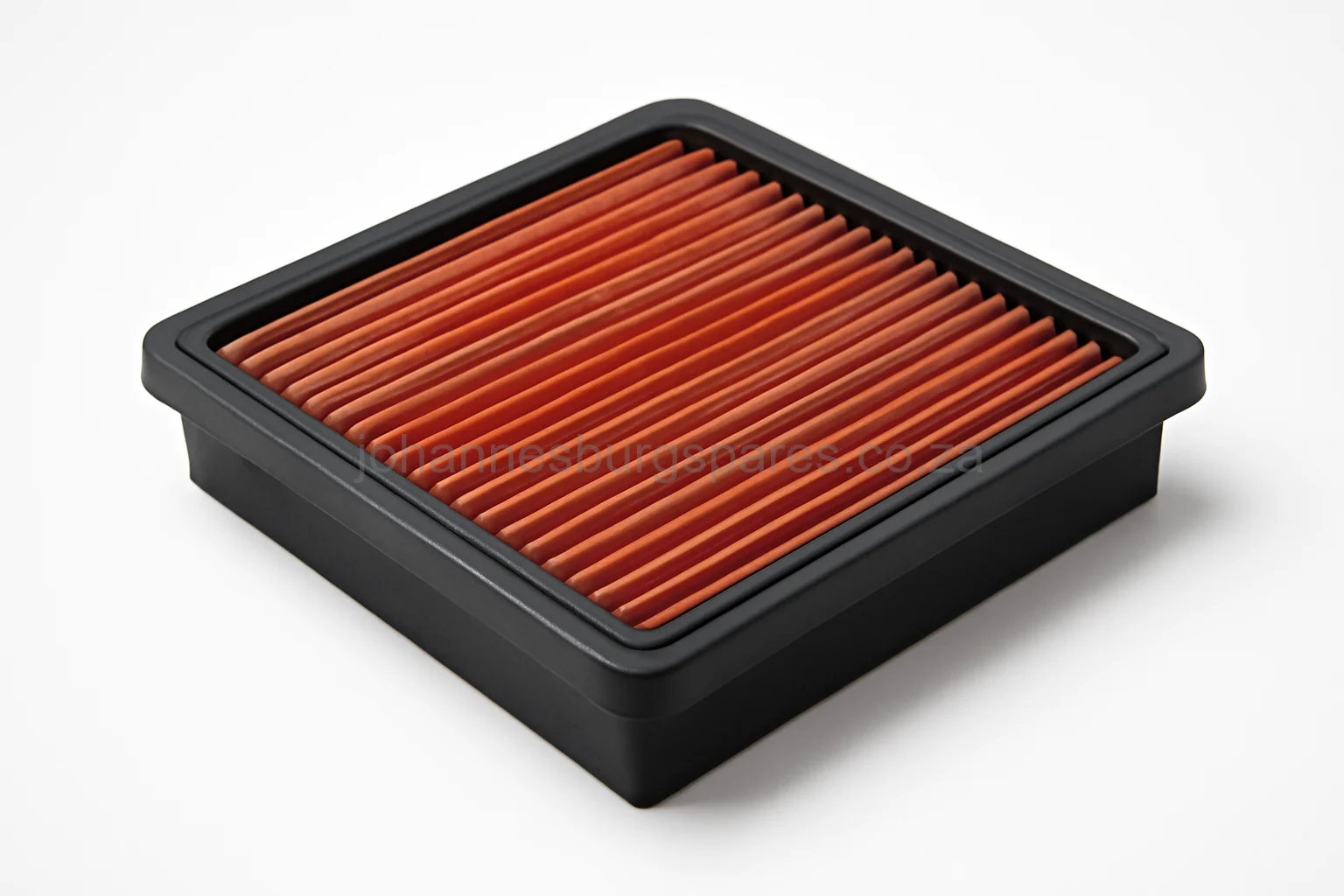
Peugeot Air & Cabin Filter Set
Engine air filter and pollen cabin filter for the 208, 2008, 308, 3008, 508, Partner and Expert. Specify your model and year and we'll match the correct OEM-equivalent set.
Service Costs in South Africa — By Service Type
These are indicative ranges only, not quotes; prices vary by condition, mileage, supplier and labour rate. Prices do not include AdBlue top-up or any unexpected parts.
| Service Type | Dealer (franchise) | Independent specialist | DIY parts only |
|---|---|---|---|
| Minor service — petrol (1.2/1.6 PureTech) | Ask for a quote | Ask for a quote | Ask for a quote |
| Minor service — diesel (1.5/1.6/2.0 HDi or BlueHDi) | Ask for a quote | Ask for a quote | Ask for a quote |
| Major service — petrol (adds filters + plugs every 60,000 km + brake fluid every 2 yr) | Ask for a quote | Ask for a quote | Ask for a quote |
| Major service — diesel (adds air/cabin/fuel filter + brake fluid; no plugs) | Ask for a quote | Ask for a quote | Ask for a quote |
| Brake fluid flush (standalone) | R950 – R1,400 | R650 – R950 | R280 – R450 (DIY not recommended) |
| Coolant replacement (standalone) | R1,200 – R1,800 | R850 – R1,500 | R380 – R650 |
| Timing belt — DV6 1.6 diesel (with water pump, tensioner, aux belt) | Ask for a quote | Ask for a quote | Not recommended |
| Timing belt — DW10 2.0 diesel (with water pump) | Ask for a quote | Ask for a quote | Not recommended |
| PureTech carbon clean (walnut-shell blast on intake valves) | Ask for a quote | Ask for a quote | Not possible DIY |
| DPF clean (forced regeneration or off-car chemical clean) | Ask for a quote | Ask for a quote | Partial DIY via additive (R350–R600) |
| Air-con re-gas (R134a or R1234yf) | Ask for a quote | Ask for a quote | Not legal to DIY (refrigerant handling) |
Out-of-Plan Owners Save Most: If your Peugeot came with a service plan, check what it actually covers — a service plan covers the scheduled services, not the timing belt, carbon cleaning, DPF work, clutches or aircon re-gas. Once the plan expires, franchised dealer pricing becomes very hard to justify for routine items. An SA Peugeot specialist in your area using PSA-spec consumables often offers comparable quality for less. Ask to see the oil spec on the invoice — any reputable independent will tell you what they're pouring in.
Peugeot Expert & Partner — Commercial Service Specifics
The Expert panel van and Partner van/kombi deserve their own section because their service patterns differ significantly from the passenger car range. These are working vehicles with higher average annual mileages, often running 40,000–80,000 km per year, which fundamentally changes the maintenance economics.
Key differences from passenger cars:
-
EGR valve clogging is the number-one high-cost failure on both the older 2.0 HDi Expert (DW10) and the 1.6 HDi Partner (DV6). Heavy urban driving — especially delivery routes in Joburg, CT or Durban — means the EGR sees maximum soot loading. An EGR valve clean runs R950 – R1,800 at a specialist; a replacement EGR costs more, so ask for a quote. Doing one EGR clean at 60,000 km can prevent a replacement at 90,000 km.
-
DPF forced regeneration. Commercial vans doing short urban deliveries rarely get the sustained 60–80 km/h drive cycle needed for passive DPF regeneration. Without it, the DPF blocks. A dealer can run a forced regen; letting it get to a full block means an off-car chemical clean or replacement (our listed DPF prices run R1,500 – R15,000 depending on engine). If your Expert or Partner is on short urban routes, a monthly 30–40 minute motorway run is cheap insurance.
-
The newer K9 Partner and K0 Expert (2018-onwards) run the 1.5 BlueHDi (DV5) with a timing chain, not a belt, so there is no cambelt job — but it is not maintenance-free: DVSA recall R/2025/246 covers premature camshaft drive chain wear on DV5R engines built up to 31 January 2023 — but the build-start date differs per model, so a blanket cut-off is misleading. The Partner and Rifter start 18 November 2017; the 3008 and 5008 start 11 October 2017; the 308 not until 13 January 2021. The Expert is not named in the register at all. Have your VIN checked at a dealer rather than working from the year. The extended 20,000 km service interval on these models reflects the better engine design, but still requires PSA B71 2312 oil and the AdBlue SCR system.
-
Clutch wear. Both van platforms are notoriously hard on clutches in stop-start delivery conditions. A clutch replacement on either van is a significant job, so ask for a quote. No schedule item — replace on slipping or juddering symptoms.

Peugeot EGR Valves — Expert, Partner & HDi Range
Clogged EGR is a common preventable failure on diesel Peugeots driven in stop-start urban conditions. We can source OEM and quality aftermarket EGR valves for the DW10 (2.0 HDi), DV6 (1.6 HDi) and DV5 (1.5 BlueHDi) engines.
Timing Belt vs Timing Chain — Which Peugeot Has Which?
This is the most consequential maintenance question for any Peugeot owner, because an interference-engine timing belt failure means bent valves and an expensive engine repair.
| Engine | Belt or Chain? | Replacement Interval | Found In |
|---|---|---|---|
| 1.2 PureTech (EB2 family — includes the naturally-aspirated 1.2 VTi / PureTech 82) | Wet belt-in-oil — not a chain, whatever the badge suggests | 100,000 km or 6 years, whichever comes first, and have the belt's condition checked through the oil filler port at every service in between. Do not wait for a rattle or an oil-pressure warning — on this engine those mean debris has already reached the oil pickup. | 208, 2008, 308, 3008, 5008, Partner (K9) |
| 1.6 THP / EP6 (petrol) | Timing chain | No scheduled replacement — but early EP6 had chain-stretch issues. Watch for cold-start rattle; use PSA B71 2296 oil. | 208 GTi, 308 (T7), 508 (W23), RCZ |
| 1.6 HDi / BlueHDi (DV6) | Timing belt | 160,000 km / 10 years — whichever comes first. Interference engine: belt failure = rebuild | 208, 2008, 308, Partner (B9) |
| 1.5 BlueHDi (DV5) | Timing chain | No belt to replace — but DVSA recall R/2025/246 covers premature camshaft drive chain wear on DV5R engines built up to 31 January 2023, with a different build-start date for each model (3008/5008 11 Oct 2017, Partner/Rifter 18 Nov 2017, 208 16 Apr 2019, 2008 8 Jul 2019, 308 13 Jan 2021). Have your VIN checked at a dealer. | 208 (late), 3008, 5008, Partner (K9), Expert (K0) |
| 2.0 HDi (DW10) | Timing belt | 100,000 km / 5 years | 308 (T7), 508 (W23), Expert (G9), older 407 |
| 2.0 BlueHDi (DW10F — DW10FC/FD) | Timing belt | 160,000 km / 10 years | 3008 (P84), 5008, 508 (R8), Expert (K0) |
For a full breakdown of the PureTech wet belt situation specifically — including the class actions, the European interval changes, and what SA independent mechanics recommend — see our dedicated Peugeot 1.2 PureTech wet belt guide.
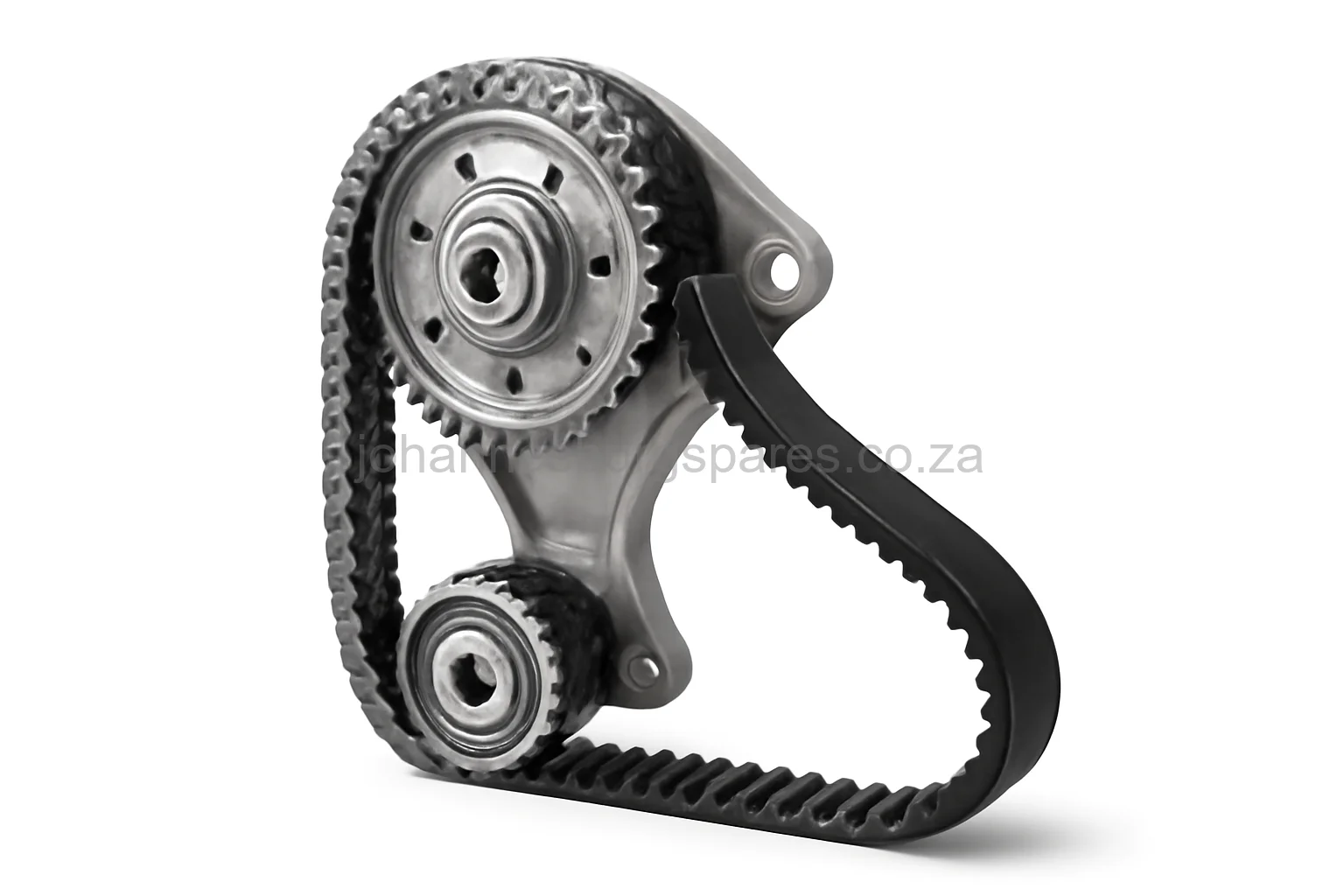
Peugeot Timing Belt Kits — DV6 & DW10 Diesel
Complete timing belt kits (belt, tensioner, idler pulley, water pump) for the DV6 1.6 HDi/BlueHDi (160,000 km / 10 yr) and DW10 2.0 HDi (100,000 km / 5 yr) / BlueHDi (160,000 km / 10 yr). Specify your model, year and engine code for an accurate quote.
DIY vs Professional — What You Can Realistically Do Yourself
| Job | DIY parts cost | Specialist total | DIY-able? |
|---|---|---|---|
| Engine oil + oil filter | Ask for a quote | Ask for a quote | Yes — with ramps and oil disposal plan |
| Cabin pollen filter | R150 – R380 | R350 – R650 | Yes — under dash, 10–20 minutes |
| Engine air filter | R320 – R650 | R550 – R950 | Yes — airbox clips, 5 minutes |
| Spark plugs (PureTech) | R960 – R1,450 (set) | R1,600 – R2,600 | Yes — torque to 25 Nm; iridium plugs only |
| Brake fluid flush | R280 – R450 | R650 – R1,400 | Partial — needs vacuum or pressure bleeder; ABS priming still requires scan tool |
| Front brake pads | R650 – R1,450 | R2,100 – R3,500 | Yes — intermediate; need torque wrench for caliper guide pins |
| Coolant flush | R380 – R650 | R850 – R1,500 | Possible — but bleeding trapped air needs care on pressurised systems |
| Fuel filter (diesel) | R280 – R480 | R650 – R1,200 | Possible — some models need fuel system prime via scan tool afterwards |
| Timing belt | Ask for a quote | Ask for a quote | No — camshaft locking tools, torque sequences, cam timing verification required |
| Carbon clean (PureTech intake valves) | N/A | Ask for a quote | No — walnut-shell blast equipment is specialist-only |
| DPF forced regeneration | R350 – R600 (additive, partial) | Ask for a quote | Partial — additive buys time; full forced regen needs diagnostic tool |
Used vs Aftermarket Parts — When It Makes Sense: For wear items like brake pads, air filters, spark plugs, and belts, quality aftermarket brands (Bosch, NGK, Dayco, Mahle, Purflux) deliver OEM-equivalent performance at 20–40% less than genuine Peugeot pricing. For safety-critical and engine-timing components — timing belt kits, water pumps, tensioners — do not compromise on quality. The saving on a cheap belt kit is not worth the rebuild bill a failure causes. Used OEM units (e.g., tested used EGR valves, tested used DPF assemblies, used engine sensors) are the smartest buy when new genuine pricing is prohibitive — provided the unit comes from a verified supply chain with the engine code confirmed.
Where to Source Peugeot Service Parts in SA
Three realistic options, in order of pricing:
-
Quality aftermarket (Mahle filters, NGK plugs, Bosch sensors, Dayco/Gates timing belt kits, Ferodo/ATE brake parts): 20–40% below genuine, appropriate for all wear and filter items. We can source across these brands for most Peugeot models in SA.
-
Genuine Peugeot / OEM crossover: For timing-critical components, fuel injection parts, and electrical sensors where fitment and specification tolerance is narrow.
-
Tested used OEM: Best value for high-cost assemblies — EGR valves, DPF assemblies, gearboxes, engine sensors — where new genuine pricing is prohibitive. Matched to your model and engine code.
Pro Peugeot Spares (SparesBoyz Group, Durban North) sells new and used Peugeot parts and couriers them nationwide. Send us your model, year and engine code and we'll come back with a quote.
Need Service Parts for Your Peugeot? Get Your Quote Today.
Oil filters, air filters, spark plugs, timing belt kits, EGR valves, DPF parts, brake pads — service parts for Peugeot models sold in SA, with OEM, aftermarket and used-OEM pricing in one quote. Nationwide delivery.
Frequently Asked Questions
What is the service interval for Peugeot vehicles in South Africa? For most Peugeot models sold in SA — the 208, 2008, 308, 3008, 5008 and 508 — Peugeot SA sets the interval at 15,000 km or 12 months, whichever comes first. Older variable-interval service (VIS) models (the pre-2014 308 and 508) use an oil-quality sensor to set a dynamic interval with a 20,000 km maximum, though SA traffic conditions often trigger a change sooner. Newer commercial models — the K9 Partner and K0 Expert with the 1.5 BlueHDi — have an extended 20,000 km / 12-month interval reflecting the more modern engine platform.
How much does a Peugeot service cost in South Africa? Prices vary by model, engine and workshop, so ask for a quote. A minor service covers oil, filter and inspection; a major service adds filters, spark plugs and brake fluid, so it costs more. Independent Peugeot specialists using PSA-spec consumables are often cheaper than a franchised dealer.
What is the Peugeot Expert service interval? The older Expert G9 (2007–2016) with the 2.0 HDi engine is on a 15,000 km / 12-month schedule. The newer Expert K0 (2016-present) with the 1.5 or 2.0 BlueHDi is on an extended 20,000 km / 12-month interval. Because commercial vans typically cover 40,000–80,000 km per year, Expert owners often service every 6 months on the 20,000 km platform — the 12-month time limit is the practical trigger for high-mileage operators.
What is the Peugeot Partner service schedule? The Partner B9 (2008–2018) with the 1.6 HDi runs on a 15,000 km / 12-month schedule identical to the 208/308 diesel. The K9 Partner (2018-present) with the 1.5 BlueHDi has an extended 20,000 km / 12-month interval and a timing chain instead of a belt. The chain is not maintenance-free: DVSA recall R/2025/246 covers premature camshaft drive chain wear on DV5R engines built up to 31 January 2023, with a different build-start date for each model — check the VIN rather than the year. Both platforms need DPF attention if used predominantly on short urban delivery routes.
Does a Peugeot need a service kit, and what's included? Yes. A Peugeot service kit for a minor service includes engine oil (4–5.5 litres depending on engine), an oil filter, and a drain plug washer. A major service kit adds an engine air filter, cabin pollen filter, fuel filter (diesel), spark plugs (petrol at 60,000 km), and brake fluid. Peugeot SA and aftermarket suppliers sell these as model-specific kits.
Can I service my Peugeot at an independent workshop without voiding the warranty? Yes — the Competition Commission's Guidelines for Competition in the South African Automotive Aftermarket (issued under the Competition Act 89 of 1998; current edition 2024) state that manufacturers shall recognise and not obstruct a consumer's choice of service provider, dealer or independent, provided the correct oil specification and genuine or OEM-equivalent parts are used and the workshop records the work in your service book. The manufacturer can still decline a claim for damage its assessment attributes to the independent's work. This means an independent Peugeot specialist who uses PSA B71 2290 or B71 2312 oil and the correct OEM-spec parts is a fully legal and cost-effective alternative to a Peugeot dealer after or even during the warranty period. Keep all invoices and oil spec confirmation.
How often does AdBlue need to be topped up on a Peugeot BlueHDi? Peugeot BlueHDi SCR models (3008, 5008, newer Partner and Expert) consume roughly 1 litre of AdBlue per 1,000 km of diesel fuel used under normal driving. AdBlue is topped up at every service (typically 2–5 litres) and on warning light. The first AdBlue warning gives approximately 2,400 km before a second, more urgent warning triggers reduced engine power, and eventually the engine will not restart once the tank is dry. AdBlue is widely available at SA fuel stations and auto parts stores at R18 – R28/litre. Do not dilute with water or substitute any other fluid — SCR catalyst damage is extremely expensive.
What oil does a Peugeot use in South Africa? It depends on the engine, and each PSA approval comes in a single viscosity. The 1.2 PureTech takes PSA B71 2312, which is a 0W-30 — non-spec oil accelerates the PureTech's wet timing belt degradation, so this is not substitutable. PSA B71 2290 is a 5W-30 approval used on older DPF diesels and petrol engines. Older EP6 THP petrol models used PSA B71 2296 (ACEA A3/B4, typically 5W-40). Always confirm the spec against your model's oil filler cap or handbook — these specifications are on the cap in most Peugeots made after 2012.
Important Disclaimer
This content is for informational purposes only and is based on research from automotive industry sources. Pro Peugeot Spares is not a certified automotive repair facility. Always consult with qualified automotive professionals before performing any repairs or maintenance. Improper repairs can result in personal injury, property damage, or vehicle malfunction. We assume no responsibility for actions taken based on this information.