
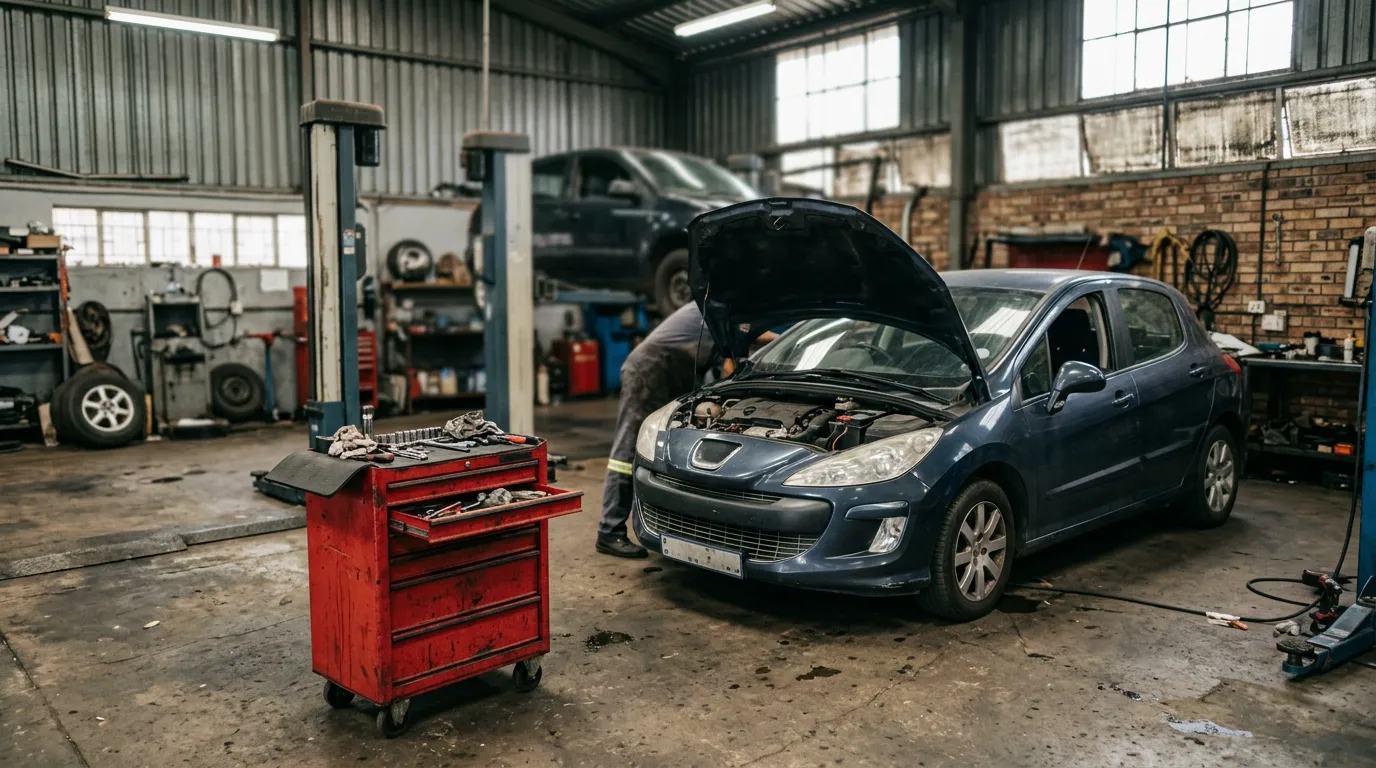
Peugeot 407 Problems: SA Owner's Repair Cost Guide

Key Takeaways
| Problem | Symptoms | Indicative SA Cost (not a quote) |
|---|---|---|
| 2.7 HDi V6 Turbo Oil-Line Blockage | Whine / whistle from turbo, blue smoke, oil light flicker, sudden seizure | Ask for a quote |
| FAP / DPF Blockage + Eolys Depletion | "Additive level too low" warning, depollution fault, black smoke, limp mode | R1,500 - R12,000 |
| Front Suspension Ball Joints & Bushes | Clunk over bumps, wandering steering, inner-edge tyre wear, knock under braking | R4,500 - R18,000 |
| Heater Blend-Flap Actuator Failure | One side hot, other cold; stuck on hot or cold regardless of dial; clicking from dash | R15,000 - R42,500 |
| 2.0 HDi EGR Valve Failure | Depollution fault, limp mode under load, black smoke, EGR fault codes | R2,200 - R3,500 (clean); replacement: ask for a quote |
| Aisin AM6 Valve Body Wear | Harsh 1-2 / 2-3 shifts, slipping on upshifts, banging into reverse, 3rd-gear limp mode | R3,500 - R95,000 |
The Peugeot 407 sold in SA between 2004 and 2011 — sedan, SW estate and the Coupe. Two decades on, the survivors are split into two camps. The 1.6 HDi and 2.0 petrol cars are cheap usable transport with cheap-to-source parts; the 2.7 HDi V6 cars are the dangerous ones, where a single missed oil change can write off the engine. This is the SA owner's honest list — six recurring 407 faults we still quote parts for through our 407 model parts pages, with indicative rand pricing.
1. 2.7 HDi V6 Turbo Oil-Line Blockage
The 2.7 HDi V6 (DT17, twin-turbo, fitted to the Coupe and select sedans from 2006) is the catastrophic 407 fault — the one that can turn a cheap used buy into an engine-replacement bill if you ignore it. A fine gauze filter inside the banjo bolt on the turbo oil feed clogs progressively with carbon and sludge. With the turbo spinning at very high speed, even a short oil starvation event wrecks the bearings. On the V6 specifically, debris from a failed turbo can be sucked into the second turbo through the shared oil system — both turbos and the engine bottom-end can be ruined in a single drive [1][2].
Symptoms
- Whining or whistling turbo noise
- Sudden loss of power, limp mode
- Blue or black smoke from the exhaust
- Oil light flicker, low oil pressure on cold start
- Engine knock followed by complete turbo seizure
Causes
The turbo oil feed pipe contains a fine gauze filter inside the banjo bolt that clogs progressively if oil changes are stretched — the procedure is documented in detail on the 1.6 HDi, where owners are told to remove that gauze filter entirely and fit a new sump pickup along with the feed pipe [3]. Peugeot specifies ACEA C2 oil for these engines; using anything else shortens the safe interval further [1]. Combined with narrow oil galleries and the turbo's very high shaft speed, short oil starvation events destroy the bearings. On the 2.7 V6 specifically, the right-bank turbo is fed by a long oil line that is famous for blocking — debris from the failed turbo then ends up in the second turbo through the shared system [2]. The 1.6 HDi (DV6) and 2.0 HDi (DW10) are also vulnerable, but at smaller catastrophic stakes.
Solution
Replace the turbo (or both turbos on the V6), drop the sump and clean the oil pickup strainer, replace the oil feed pipe AND remove the gauze filter inside the new banjo bolt, fit a new oil return pipe with new gaskets, and change the oil pump if scored. Run a flush with cheap oil before the final fill with ACEA C2 5W-30 synthetic. Reset every 9,000-10,000 km thereafter — the original Peugeot interval is far too long.
2.7 V6 Buyer's Warning
Never buy a 2.7 HDi V6 407 without seeing the last three oil-change receipts. Owners who service annually with ACEA C2 oil generally get long, trouble-free turbo life; owners who stretched intervals on the wrong oil are typically on their second engine. A 407 V6 with no paperwork is an expensive gamble — walk away or budget for replacement.
DIY Difficulty & Cost in SA
Specialist work, 9/10 difficulty. Not DIY. Ask for a quote — labour varies by workshop, and the bill climbs steeply if both V6 turbos seized or the engine bottom-end is damaged.
Sources & User Reports
- peugeotforums.com '407 V6 2.7 diesel questions' thread — V6 turbo oil-line failure pattern [1].
- frenchcarforum.co.uk diagnostic thread — twin-turbo cross-contamination [2].
- peugeotforums.com '407 1.6L HDi turbo problems' thread — 1.6 HDi variant [3].
- peugeotforums.com '407 1.6 HDi blown turbo' thread — owner-reported case [4].
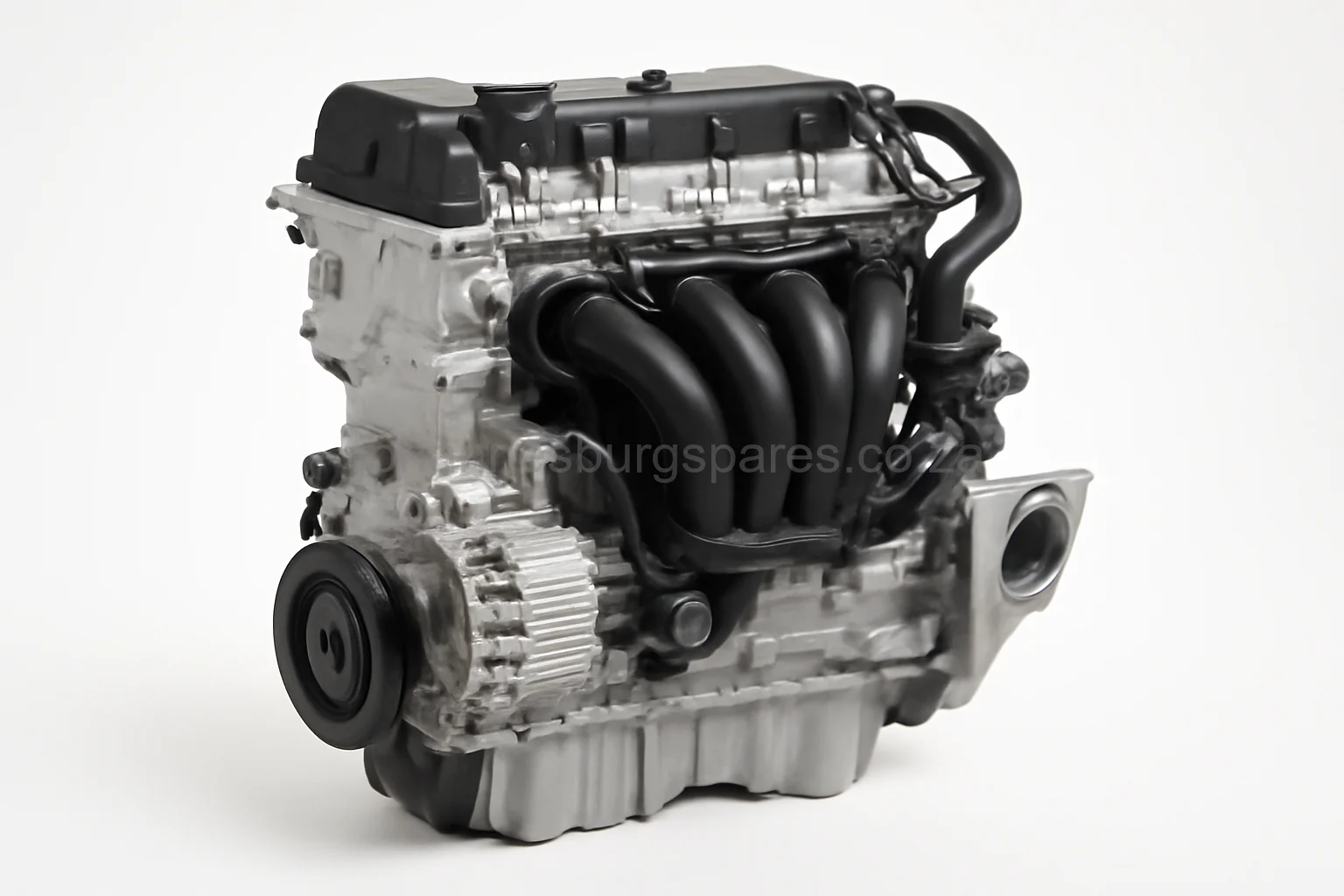
Turbo & Oil System Parts Available
Replacement turbos for the 2.7 HDi V6, 2.0 HDi and 1.6 HDi 407, plus oil feed pipes, banjo bolts, return pipes and complete oil-system service kits — quoted with ACEA C2 oil advice.
2. FAP / DPF Blockage + Eolys Depletion
Every HDi 407 (DV6 1.6, DW10 2.0, DT17 2.7 V6) uses a cerium-based Eolys additive injected into the diesel to lower the soot burn-off temperature in the FAP (the diesel particulate filter). The additive is used up gradually and is meant to be refilled at major services — but it is often never refilled. Once the additive drops below the floor, active regenerations no longer hit soot burn temperature and the FAP slowly clogs [5][6]. Short-trip SA city driving compounds the problem.
Symptoms
- "Particle Filter Additive Level Too Low" warning on the dash
- "Particle Filter Regeneration" fault / "Anti-Pollution" / "Depollution" warning
- Loss of power, limp mode after short trips
- Heavy black smoke under load
- Failed emissions / smoke test
Causes
The Eolys additive sits in its own reservoir and is metered into the fuel automatically. The reservoir is only meant to be refilled at major services — and in practice it is often never topped up [7]. Once the reservoir empties, the FAP cannot achieve regeneration temperature and soot accumulates. Short-journey SA city driving compounds the problem because the DPF never reaches passive regen temperature either [8].
Solution
Refill the Eolys additive (Cerium-based, available at SA Peugeot specialists for R900 – R1,800 per litre) and reset the additive counter with PP2000 or DiagBox. For a clogged DPF: forced regen via diagnostics, OR remove and chemical/water-jet clean off-car, OR replace. Replacement is the only fix once cleaning no longer restores it. Preventive: drive at 3,000 rpm in 4th gear for 15-20 minutes on a highway every month. Cross-reference our Peugeot 1.6 HDi DPF / EGR guide for the wider picture.
Highway Run Once a Month
If your 407 lives on a 7 km commute, the FAP cannot regenerate passively and the Eolys additive runs out before the reservoir warning even lights. Take the car onto the N1, N3 or N4 for at least 20 minutes a month at 3,000-plus rpm — this single habit prevents the entire DPF cascade and saves a DPF replacement.
DIY Difficulty & Cost in SA
Moderate for additive refill (3-4 hours, requires PP2000 / DiagBox); advanced for DPF removal and clean (9/10). Eolys refill + reset R3,500 – R7,500; off-car DPF clean: ask for a quote; replacement DPF — our listed price for a replacement DPF is R1,500 – R8,000 (1.6 HDi) or R2,000 – R12,000 (2.0 HDi), plus fitting.
Sources & User Reports
- peugeotforums.com '407 particle filter problems' thread — owner-reported FAP cascade [5].
- peugeotforums.com '407 SW HDi DPF problem' thread — symptom pattern [6].
- mhhauto.com '407 FAP DPF additive system' thread — Eolys mechanism technical [7].
- frenchcarforum.co.uk — additive depletion and limp mode [8].
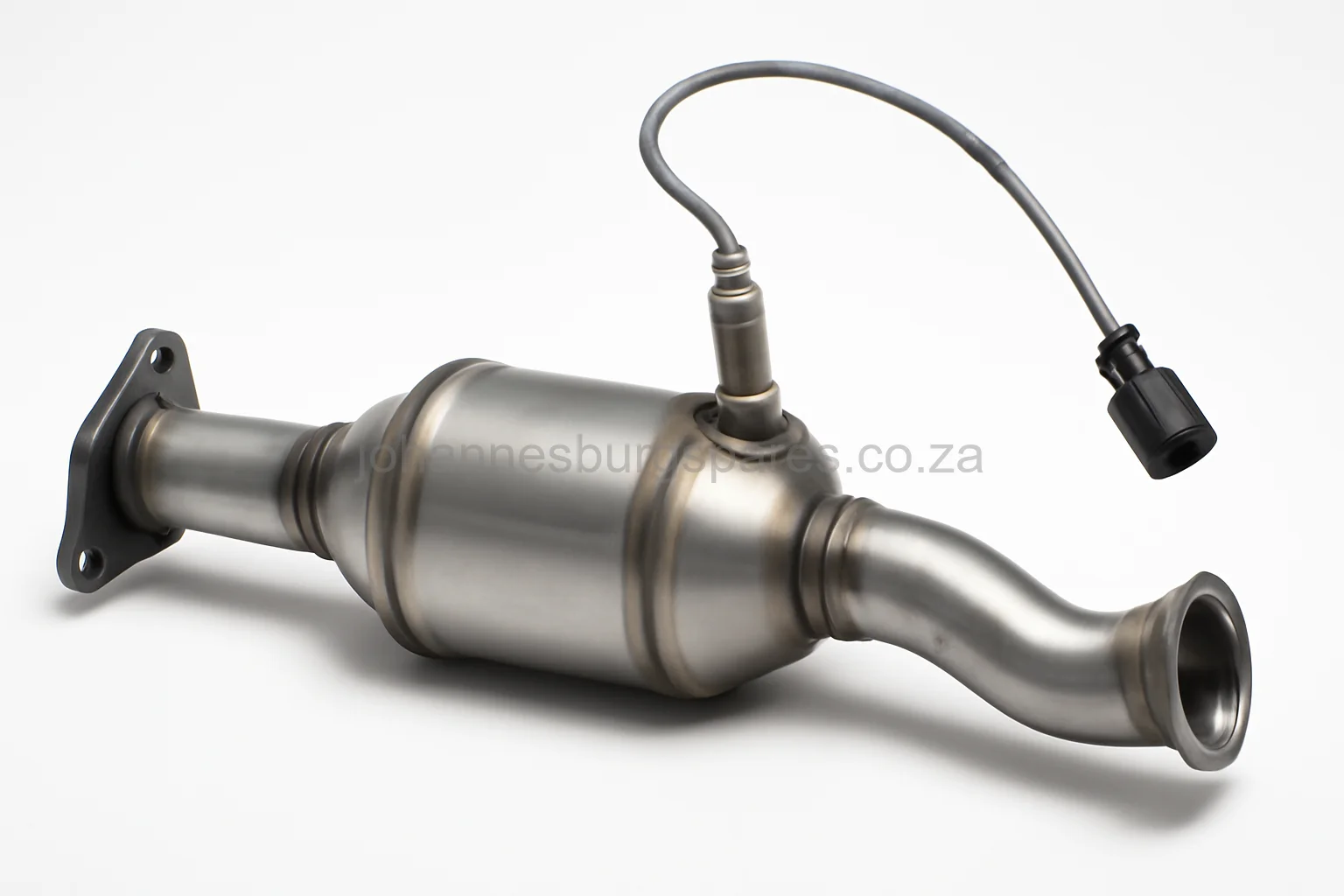
FAP / DPF & Eolys Parts Available
Replacement DPFs, Eolys cerium additive, differential-pressure sensors and full diesel exhaust assemblies for every HDi 407 sold in SA.
3. Front Suspension Ball Joints & Bushes
The 407's front suspension was a known weak point that Peugeot quietly modified mid-life. Early cars (2004-2008) suffer worst — the lower swivel/ball-joint pin corrodes in its bore and the joint moves excessively on its slide, while the front wishbone rear bushes wear and crack [9][10]. Anti-roll-bar bushes and drop links go at the same time.
Symptoms
- Loud clunk over speed bumps and potholes, especially from the front
- Knock under braking or take-off
- Vague steering, wandering on the highway
- Uneven inner-edge front tyre wear
- Play in the lower ball joint picked up at a roadworthy inspection
Causes
The lower ball-joint pin corrodes in its bore, allowing the joint to move on its slide instead of pivoting cleanly [9]. The anti-roll-bar bushes and the rear bushes of the front lower wishbone wear and crack too [11].
Solution
Replace lower ball joints in pairs (both sides), front wishbone rear bushes (or the whole wishbone for ease), anti-roll-bar drop links and bushes. Four-wheel alignment is mandatory after — the geometry shifts noticeably when these wear, and a fresh alignment recovers the steering feel.
Replace Both Sides Together
If one ball joint has worn out, the other has covered the same mileage on the same roads. Fixing one side and then coming back for the second means paying twice for the alignment. Replace both sides plus the drop links in one visit and budget R650 for the alignment after.
DIY Difficulty & Cost in SA
Moderate — 5/10. DIY-able for confident owners with a ball-joint splitter, a spring compressor and an alignment shop nearby. R4,500 – R8,500 per side parts + labour; R12,000 – R18,000 both sides plus alignment if wishbones are replaced complete.
Sources & User Reports
- peugeotforums.com 'clunking from front suspension' thread — 407 ball joint pattern [9].
- peugeotforums.com '407 lower ball joints' thread — wear mechanism [10].
- frenchcarforum.co.uk — wishbone bush failure thread [11].
- peugeotcentral.co.uk — corroborating owner reports [12].
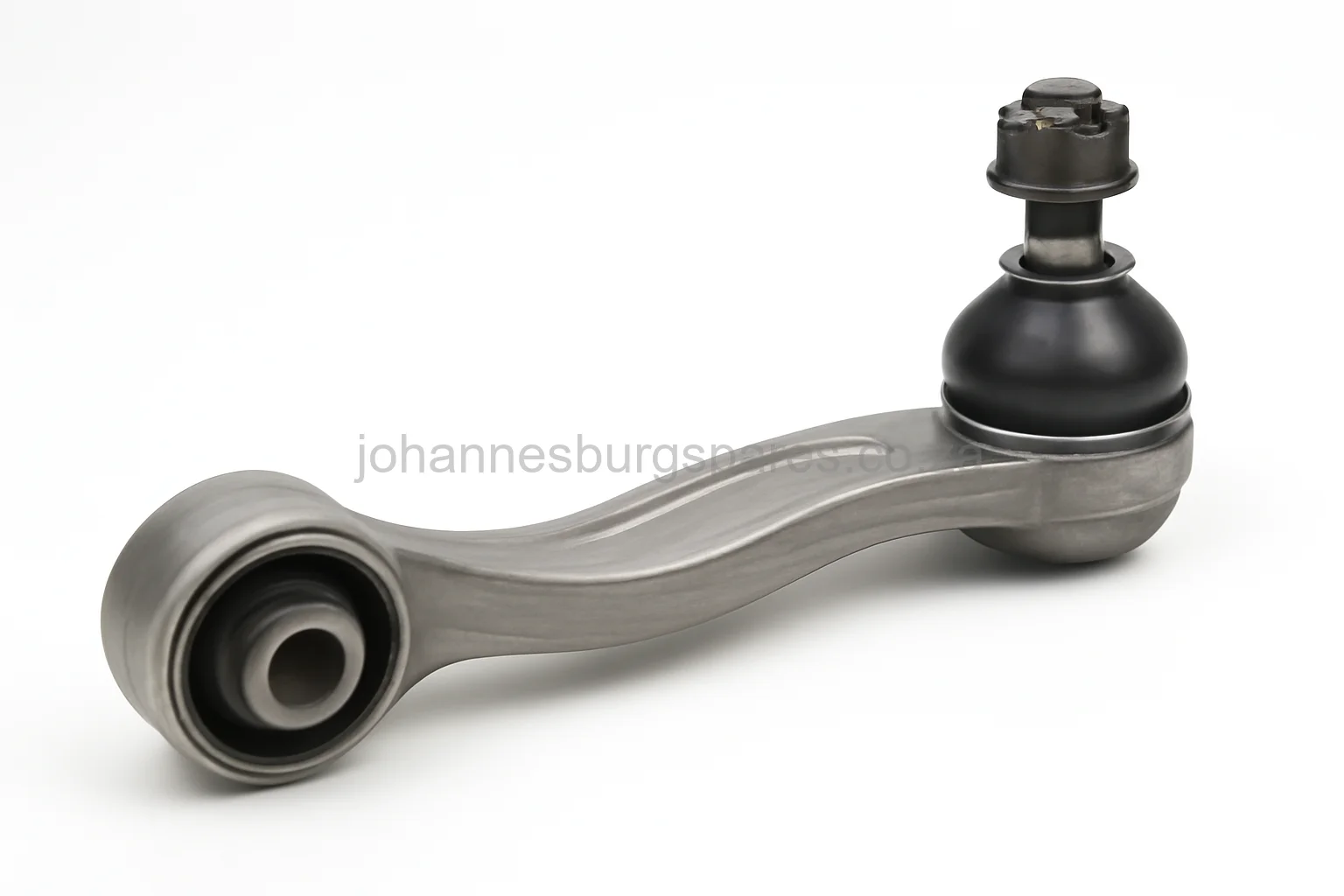
Front Suspension Parts Available
Lower ball joints, wishbone assemblies, wishbone rear bushes, anti-roll-bar drop links and bushes — sold as front-end refresh kits.
Need Peugeot 407 Parts? Get a Free Quote.
We supply new, used and quality aftermarket parts for every 407 generation sold in SA — V6 turbos, FAPs, Eolys additive, ball joints, EGR valves, AM6 valve bodies and heater flap kits, couriered nationwide.
4. Heater Blend-Flap Actuator Failure
If your 407 climate-control system is blowing hot on one side and cold on the other, or stuck blowing cold regardless of the dial, the plastic blend-door (heater flap) and its small actuator gear have fatigued and snapped inside the heater assembly behind the dashboard. The catch — owners report the flap is not sold as a separate Peugeot part, so the dealer fix is to replace the whole heater assembly, which means pulling the entire dashboard [14]. The 8-to-10-hour labour bill is the killer. Before you assume the flap, though, have the air-con pressures checked: low refrigerant produces the same one-side-cold symptom, and one 407 owner's suspected flap fault turned out to need nothing more than a regas [13].
Symptoms
- One side blows hot while the other blows cold (driver vs passenger)
- Heater stuck blowing cold or stuck blowing hot regardless of setting
- Clicking or tapping noise from behind the dashboard
- Fan speed correct but cabin temperature unresponsive
Causes
The plastic blend-door inside the heater assembly fatigues and snaps after a decade of cycling [16]. The small actuator gear that drives it strips its teeth shortly after, and the dashboard click is the actuator hunting for a flap that no longer responds. Owners report the flap is not sold separately by Peugeot, which is why aftermarket repair kits — around R1,600 — and in-place epoxy repairs both exist [15][16]. It is the labour, not the part, that turns this into a R15,000-R22,000 bill.
Solution
Three routes. First, rule out refrigerant — one owner chased a broken-flap diagnosis that turned out to be low gas, fixed by a regas [13]. Second (DIY): owners have reached the flaps by removing the dashboard top panel or working through the glovebox, and repaired them in place with epoxy — a patient weekend job rather than a dashboard-out strip [15][16]. Third (dealer route): replace the complete heater assembly with the dashboard out. Honest John's verdict on the 407's dual climate control failure is blunt — £1,300 – £1,700 in parts and labour, "which simply won't be worth it" on an older car [18]. While the dash is out, replace the cabin filter and inspect the rest of the HVAC ducting for cracks.
Cycle the Climate Control Monthly
Cars that spend SA summers running A/C only and SA winters never cycling the flaps to "hot" leave the heater flap stuck in one position long enough for the plastic to embrittle and snap. Cycle the climate control through full hot and full cold on both sides monthly to keep the flaps moving. Replace the cabin filter every 20,000 km to reduce actuator load.
DIY Difficulty & Cost in SA
Varies — around 4/10 for an in-place epoxy repair reached through the glovebox or the dashboard top panel, 8/10 with the dashboard out. Flap kit + labour R15,000 – R22,000 at a specialist; full heater unit + labour R32,000 – R42,500 at a dealer.
Sources & User Reports
- peugeotforums.com '407 2.0 HDi newish climate control problem' thread — symptom pattern [13].
- peugeotforums.com '407 HDi climate control problem' thread — corroboration [14].
- peugeot-407-heater-fix.weebly.com DIY site — flap kit installation walkthrough [15].
- frenchcarforum.co.uk — owner repair journey thread [16].
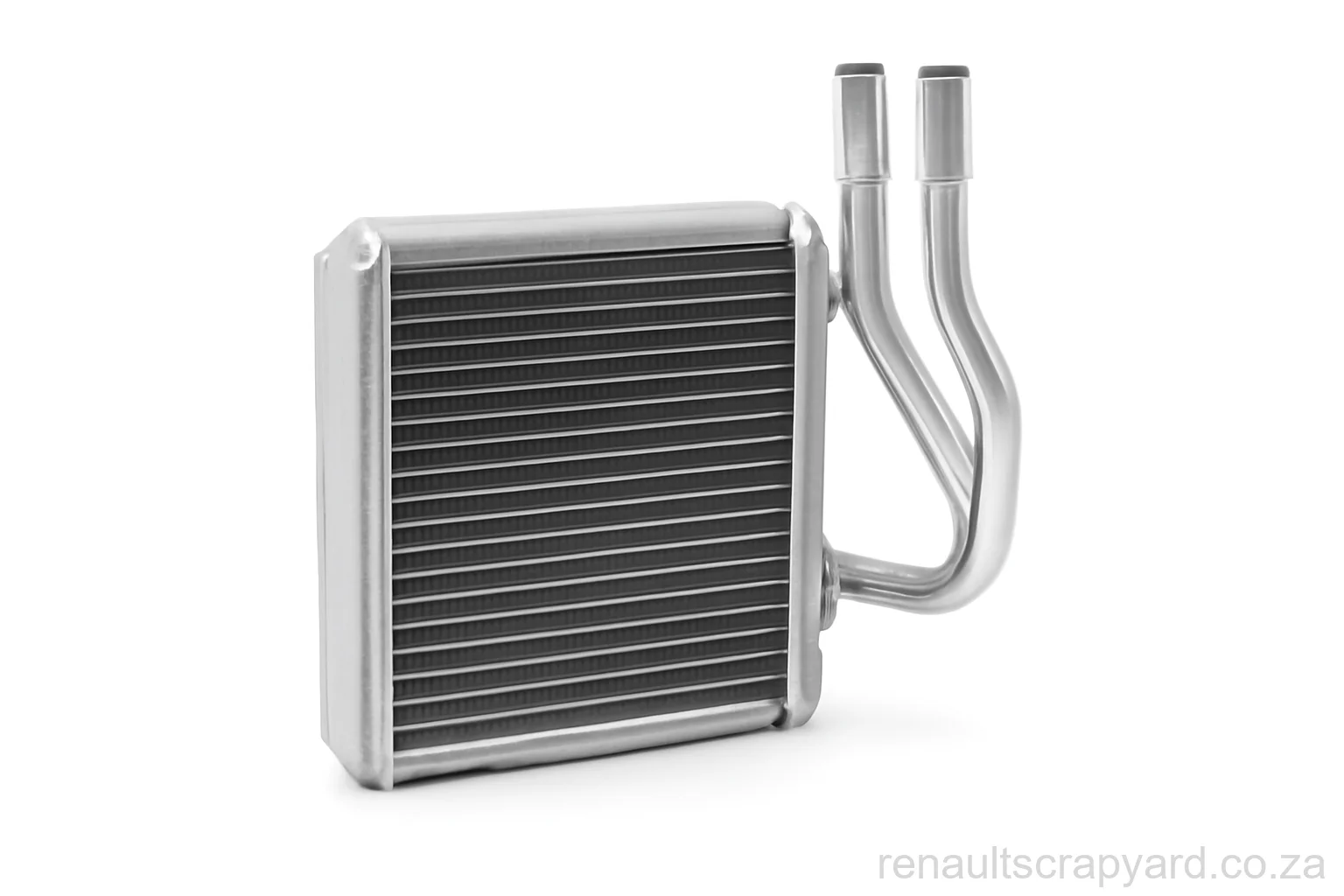
Heater & HVAC Parts Available
Aftermarket heater blend-flap repair kits, complete heater assemblies, actuator motors and cabin filters for every 407 sedan, SW estate and Coupe sold in SA.
5. 2.0 HDi EGR Valve Failure
The 2.0 HDi (DW10) 136 and 140 variants are the SA diesel volume sellers and they share one stubborn fault — soot from EGR-recirculated exhaust caking the EGR valve open or sticking the stepper motor. Owners hit "Depollution System Faulty" warnings on the dash and a sudden drop into limp mode, usually under load on a hill or freeway on-ramp [17][19]. Honest John specifically calls out repeated EGR failure on the 2.0 HDi 136 [18].
Symptoms
- "Depollution System Faulty" or "Anti-Pollution Fault" warning
- Sudden drop into limp-home mode, especially under load uphill
- Rough idle and hesitation from cold
- Black smoke under acceleration
- Fault codes in the P0402 / P0409 / P0488 / P0490 EGR family
Causes
Soot from EGR-recirculated exhaust gas cakes the valve open or jams the electrically actuated valve in position — owners on the RHR 2.0 HDi report P0490 (valve position incorrect) and P0409 (valve jammed closed) [17]. It worsens with SA city driving, where the engine never gets hot enough to clear the deposits naturally. Short-trip city duty without highway clearing cycles accelerates the failure.
Solution
Remove and clean the EGR with carb cleaner — works once or twice, but is not a permanent fix. Replace the EGR valve and clean the intake manifold of soot at the same time — soot accumulation in the intake worsens the next valve's life. Pierburg or Valeo aftermarket valves are acceptable. Clean the throttle body in the same visit. Preventive: an "Italian tune-up" monthly (sustained 3,500-plus rpm for 10 minutes on a highway).
Italian Tune-Up Monthly
A 407 that never sees a highway run will kill EGR valves far faster than one that does. A 20-minute blast at 3,500-plus rpm on the N1 or N4 every month clears soot, lifts DPF temperature for passive regen, and adds years to the EGR valve, turbo and DPF. Build it into your routine before it becomes an EGR replacement bill.
DIY Difficulty & Cost in SA
Moderate — 5/10. EGR removal and clean is a confident DIY weekend job. Replace + intake clean: ask for a quote; clean only R2,200 – R3,500.
Sources & User Reports
- peugeotforums.com '2.0 HDi EGR stuck valve' thread — owner symptom catalog [17].
- honestjohn.co.uk — 2.0 HDi 136 EGR repeat failure pattern [18].
- peugeotforums.com '407 with depollution faults' thread — broader limp-mode pattern [19].
- frenchcarforum.co.uk — 407 2.0 HDi EGR thread [20].

EGR & Intake Parts Available
Pierburg and Valeo EGR valves for the 2.0 HDi DW10 (136 and 140 hp), intake manifolds, throttle bodies and full diesel-side service kits.
6. Aisin AM6 Valve Body Wear
The 2.2 petrol, 2.7 HDi V6 and some 2.0 HDi 407 autos use the Aisin AM6 (AWTF-80 SC) six-speed gearbox — robust hardware undermined by a "fill for life" fluid policy that nobody believed even in 2008 [21][22]. In time the valve-body solenoids and accumulator pistons wear from heat-cycled fluid, and harsh shifts plus 3rd-gear limp mode become the new normal. SA traffic accelerates this dramatically.
Symptoms
- Harsh or jerky 1-2 and 2-3 shifts when warm
- Slipping or flaring on upshifts
- Banging into reverse
- Limp mode in 3rd gear with gearbox warning
- Delayed engagement of Drive
Causes
The AM6 valve-body solenoids wear their pistons and accumulators as heat-cycled fluid ages [21]. The original fluid was spec'd as "fill for life" — in practice it degrades over 100,000 km and the resulting metal and varnish in the fluid wear the solenoid bores [23]. Heat cycling in SA stop-start traffic accelerates the degradation further.
Solution
Recondition the valve body (replace all solenoids, accumulator pistons and sealing sleeves) plus a full fluid and filter change using the ATF specified for the AM6 — confirm the exact specification against your VIN before ordering — OR replace the valve body complete. Reset transmission adaptations with a diagnostic tool after. Preventive: an ATF and filter change every 80,000-100,000 km regardless of the "lifetime" label. Cross-reference for the parallel EAT6/EAT8 picture in our Peugeot EAT6 / EAT8 transmission guide.
SA Heat Kills "Fill for Life"
Gauteng summer temperatures and Durban humidity both shorten AM6 fluid life dramatically. Whatever the "fill for life" label says, we would not leave the fluid in an SA 407 that long — on a hard-driven car we suggest 60,000 km; the R3,500 – R6,500 flush every interval saves a valve body rebuild later.
DIY Difficulty & Cost in SA
Advanced — 8/10. Specialist work only. Valve-body recon + fluid + reset: ask for a quote; full gearbox rebuild R55,000 – R95,000 if too far gone.
Sources & User Reports
- peugeotforums.com '407 Coupe gearbox issue' thread — owner-reported valve body wear [21].
- frenchcarforum.co.uk AM6 valve body thread — failure pattern [22].
- mhhauto.com '407 AM6 gearbox faulty' — technician forum diagnostics [23].
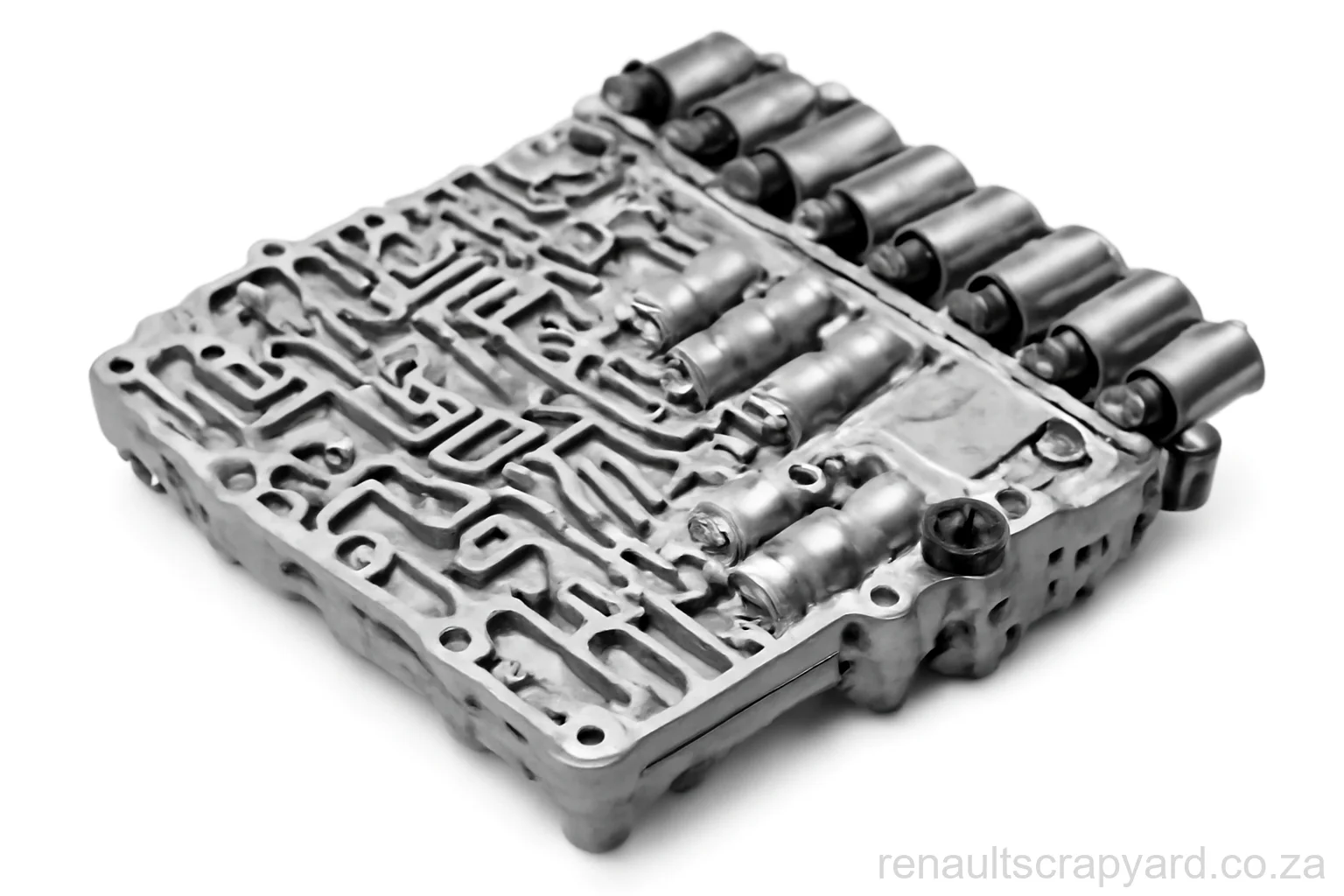
AM6 Transmission Parts Available
ATF and filter kits, reman valve bodies, solenoid packs and complete AM6 gearboxes for every 407 auto sold in SA.
Frequently Asked Questions
Is the Peugeot 407 reliable in South Africa?
Mixed. The 1.6 HDi and 2.0 petrol cars are usable older transport — service parts are still around at sensible money and most faults are predictable. The 2.7 HDi V6 is high-risk: a single stretched oil interval can write off the engine. As a used buy, the 1.6 HDi or 2.0 petrol sedan at under R65,000 with full service history is a sensible choice; the V6 Coupe without paperwork is a gamble.
How much does a Peugeot 407 V6 turbo cost in SA?
For the 2.7 HDi V6, ask a specialist for a quote on a single turbo plus oil pipes and labour — labour varies by workshop. If both turbos seized or the engine bottom-end is damaged from oil starvation, you are into an engine rebuild. The cheaper fix is preventive: ACEA C2 5W-30 oil at 9,000-10,000 km intervals, and annual inspection of the oil-feed banjo gauze filter.
What is the Eolys additive on a Peugeot 407?
Eolys is a cerium-based diesel additive injected from a dedicated reservoir into the fuel. It lowers the soot burn-off temperature in the FAP (diesel particulate filter) so regeneration succeeds at lower exhaust temperatures. The reservoir is meant to be refilled at a major service — and it is often never topped up. Once empty, the FAP cannot regenerate and the DPF starts to clog. Refill + reset costs R3,500 – R7,500 at a SA Peugeot specialist.
Why does my Peugeot 407 climate control blow hot on one side?
The plastic blend-door inside the heater assembly behind the dashboard has snapped, or the small actuator gear has stripped its teeth. Peugeot's official fix is a complete heater assembly replacement (dashboard out) at R32,000 – R42,500. A specialist fitting an aftermarket flap repair kit (around R1,600) charges R15,000 – R22,000. Have the air-con pressures checked first, though — low refrigerant causes the same symptom — and owners have reached the flaps through the glovebox or the dashboard top panel and repaired them in place with epoxy.
How long does a Peugeot 407 AM6 automatic gearbox last?
The Aisin AM6 is durable hardware; what shortens its life is the "fill for life" original fluid spec. Left unchanged, the valve body wears and you get harsh 1-2 and 2-3 shifts, 3rd-gear limp mode and bangs into reverse. Change the ATF and filter every 80,000-100,000 km — and on a hard-driven SA 407, every 60,000 km. R3,500 – R6,500 per flush can prevent a valve body rebuild.
Are Peugeot 407 parts still available in South Africa?
Most service items — filters, brakes, suspension bushes, EGR valves, alternator pulleys, ball joints — are readily available via SA parts suppliers and the Peugeot dealer network. Long-lead items: AM6 valve bodies, complete DPF assemblies, full heater units and panoramic roof glass for the SW estate. Used and reman gearboxes turn up through breaker networks. Always supply your VIN when ordering — engine and gearbox variants matter on the 407.
Should I buy a used Peugeot 407 V6 Coupe in South Africa?
Only with full service history. Three deal-breakers: no oil-change receipts (turbo oil-line gamble), no Eolys top-up record (FAP gamble) and no transmission fluid change history (gearbox gamble). A 407 V6 with all three documented and the recall checks closed can be a beautiful, fast and characterful executive coupe at half the price of an equivalent BMW 6 Series. Without the paperwork it is a money pit.
Sources
- 407 V6 2.7 diesel questions thread — peugeotforums.com
- 407 V6 twin-turbo diagnostic thread — frenchcarforum.co.uk
- 407 1.6L HDi turbo problems — peugeotforums.com
- 407 1.6 HDi blown turbo — peugeotforums.com
- 407 particle filter problems thread — peugeotforums.com
- 407 SW HDi DPF problem — peugeotforums.com
- Peugeot 407 FAP / DPF additive system — mhhauto.com
- 407 Eolys / additive depletion thread — frenchcarforum.co.uk
- Clunking from front suspension thread — peugeotforums.com
- 407 lower ball joints thread — peugeotforums.com
- 407 front suspension wishbone bushes — frenchcarforum.co.uk
- 407 lower ball joint thread — peugeotcentral.co.uk
- 407 2.0 HDi climate control problem — peugeotforums.com
- 407 HDi climate control problem — peugeotforums.com
- Peugeot 407 heater fix DIY — peugeot-407-heater-fix.weebly.com
- 407 heater flap thread — frenchcarforum.co.uk
- 2.0 HDi EGR stuck valve thread — peugeotforums.com
- Peugeot 407 carbycar review, archived snapshot (EGR, suspension, climate control) — honestjohn.co.uk
- 407 with depollution faults — peugeotforums.com
- 407 EGR / depollution thread — frenchcarforum.co.uk
- 407 Coupe gearbox issue thread — peugeotforums.com
- AM6 valve body thread — frenchcarforum.co.uk
- Peugeot 407 AM6 gearbox faulty — mhhauto.com
Important Disclaimer
This guide is provided for general information based on aggregated owner-forum reports, independent specialist write-ups and trade publications. Every Peugeot 407 has its own service history and condition — diagnostic figures, fault codes and repair costs vary by workshop, region and parts source. Always have faults professionally diagnosed before buying parts, and confirm any recall status with Peugeot SA customer care on 0860 738 472 or peugeot.co.za/owners/maintain-your-car/recall.html. Pro Peugeot Spares is not affiliated with Stellantis or Peugeot SA.
Important Disclaimer
This content is for informational purposes only and is based on research from automotive industry sources. Pro Peugeot Spares is not a certified automotive repair facility. Always consult with qualified automotive professionals before performing any repairs or maintenance. Improper repairs can result in personal injury, property damage, or vehicle malfunction. We assume no responsibility for actions taken based on this information.