
Peugeot Alternator Replacement: Symptoms, Costs & Model Guide (SA)

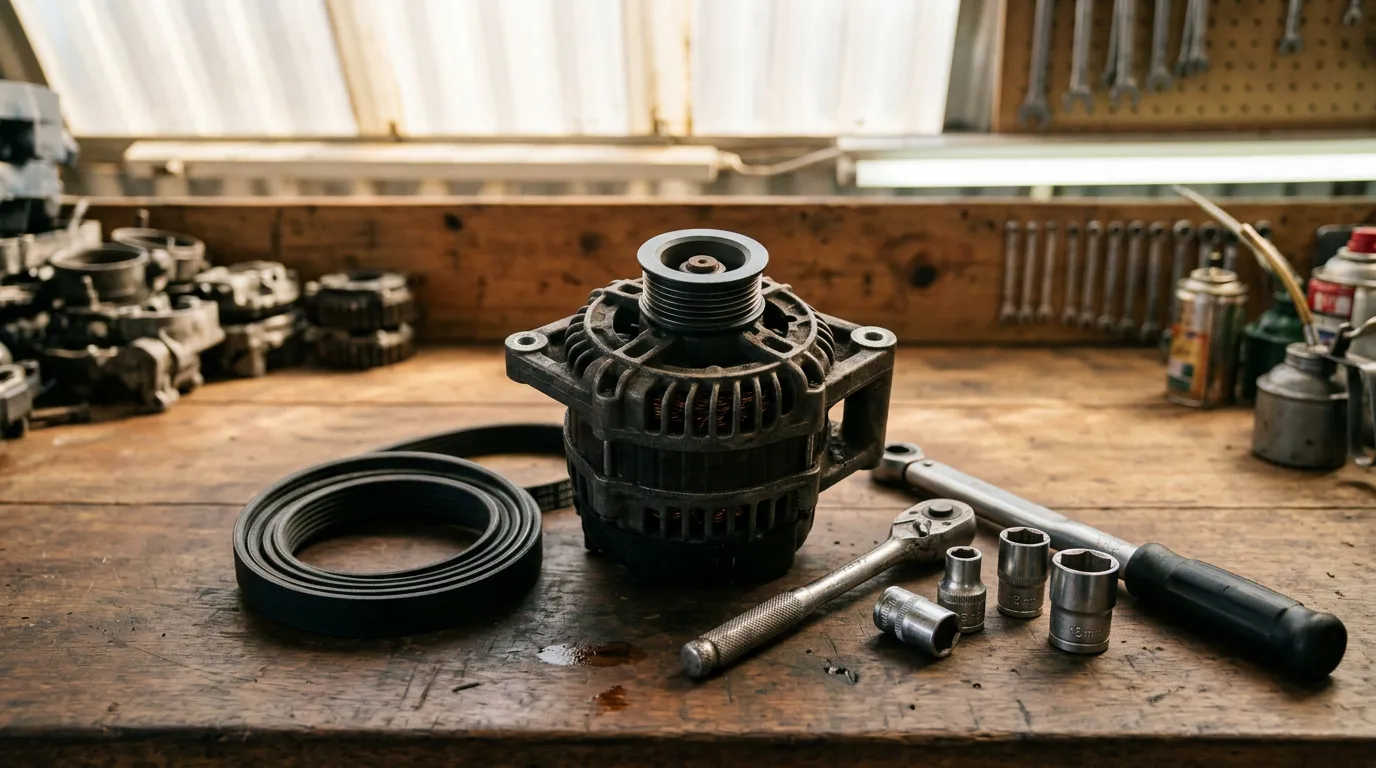
If your dashboard battery light has come on or your headlights are dimming at idle, there is a good chance you are staring down a Peugeot alternator replacement. The alternator is the small generator behind your serpentine belt that keeps the battery charged and feeds power to everything from the ECU to the air-con. When it starts to fail, it rarely fails quietly — you will see warning lights, hear whines, or find the car simply refuses to crank one morning. In this guide we cover the five warning signs, how the part actually works, realistic South African replacement costs, what to expect on the 107, 206, 208, 3008 and Partner, and where to source the unit without overpaying.
Before we go further — if you already know the alternator is gone and just want a price, skip to our alternator parts page or request a quote and we will come back with options for your specific model and engine code.
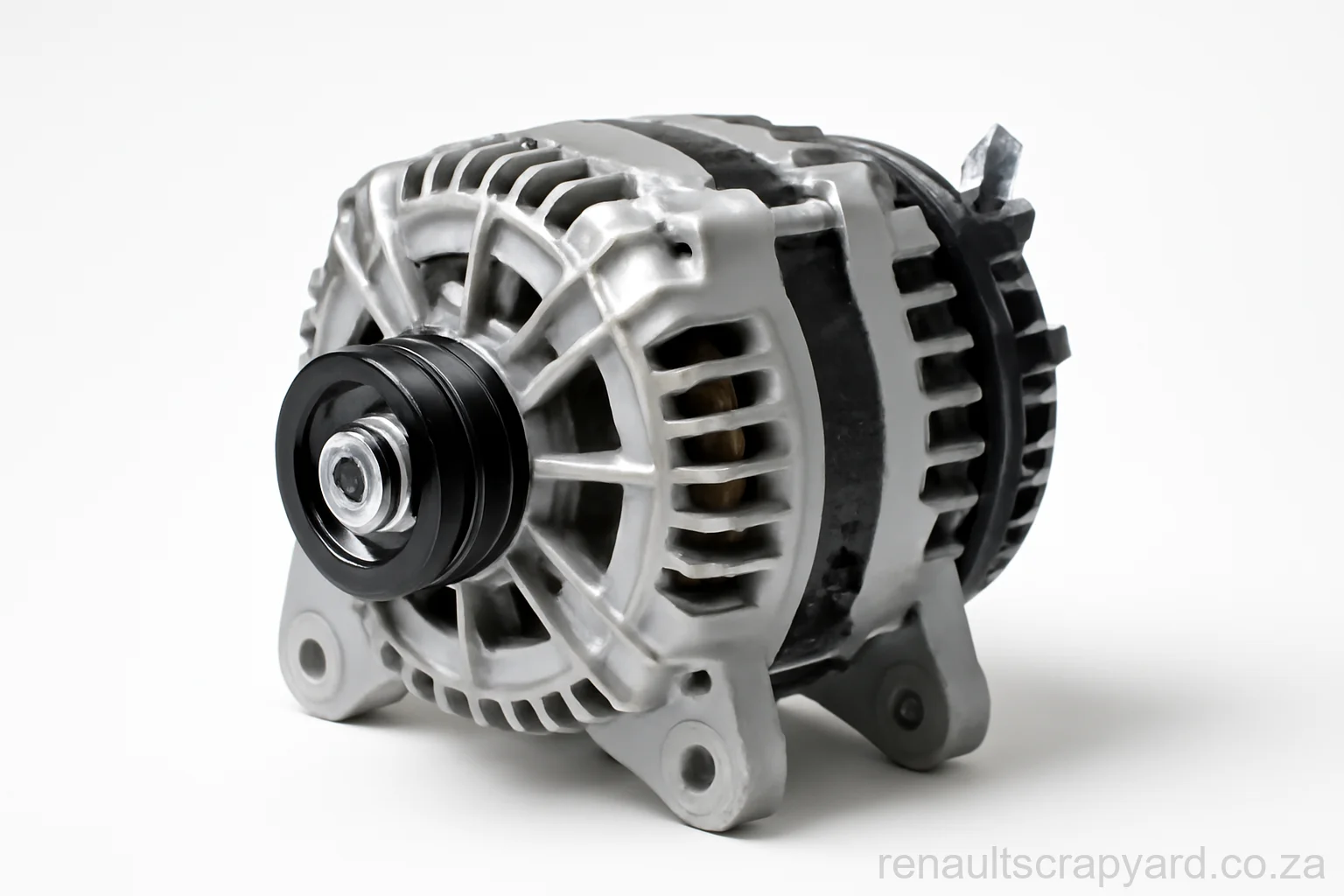
Peugeot Alternators Available
OEM, quality aftermarket (Bosch, Valeo, Denso) and used units for Peugeots sold in SA — including stop-start decoupler-pulley alternators on later 208 and 3008 variants.
5 Signs Your Peugeot Alternator Is Failing
Most alternator failures announce themselves well before the car dies on the side of the N3. Watch for these five symptoms:
- Battery warning light on the dash. This is the most reliable early sign. The little battery icon does not actually mean the battery is flat — it means the charging circuit is not sending enough voltage back. On an older Peugeot with a conventional alternator you should see 13.8 V to 14.4 V at the battery terminals with the engine running, and anything under 13.5 V with accessories on points to the alternator. Many modern Peugeots use a smart (ECU-regulated) charging system instead — if there is a sensor clamped to the negative battery terminal, yours is one of them, and a healthy reading while driving is 12.5 V to 13.5 V, with the voltage only spiking when you lift off the accelerator. On those cars a low reading on its own is not proof of a fault, so have the charging system tested properly before condemning the alternator.
- Dimming or flickering headlights. Particularly noticeable at idle or when the brake lights come on. Interior dash illumination that gets brighter as you rev the engine is a classic giveaway of a failing voltage regulator inside the alternator.
- A whine, grind or squeal from the engine bay. Alternator bearings wear out with mileage and heat. A high-pitched whine that rises with engine speed usually means the bearings are on the way out. A squeal on cold start often points to a glazed or slipping serpentine belt driving the alternator — sometimes the cheaper fix.
- Stalling, rough idle, or strange electrical behaviour. Modern Peugeot EP6 petrol and BlueHDi diesel engines rely on precise electrical supply for the fuel injectors, the stop-start system and, on turbocharged versions, the turbo actuators. When supply voltage drops, you can see rough idle, random dashboard warnings, and in bad cases the car cuts out completely once the battery reserve is used up.
- A flat battery every morning, even after replacing it. If a brand-new battery keeps going flat overnight, the alternator is not recharging it properly during your daily drive. Before you buy yet another battery, get the charging system tested.
Need a Peugeot Alternator? Get a Price Today.
We quote OEM, quality aftermarket and used alternators for the 107, 206, 208, 2008, 3008, 5008 and Partner — delivered nationwide in South Africa.
How a Peugeot Alternator Actually Works
Put simply, an alternator is a belt-driven generator. The serpentine belt spins a pulley on the front of the unit, which turns a rotor inside a stator. That rotating magnetic field produces alternating current (AC), which a built-in rectifier converts to the DC voltage your Peugeot's 12 V system actually uses. A voltage regulator — usually integrated into the alternator housing on modern Peugeots — keeps the output clamped at around 14 V so it charges the battery without cooking it.
On the EP6 family (208, 2008, 308, 3008 — sold as VTi naturally aspirated and THP turbocharged), the alternator also has to keep up with electronic thermostats, variable valve-timing actuators, the stop-start system and, on the turbocharged THP versions, the direct-injection solenoids. On BlueHDi and DV6 diesels, it additionally powers the glow plugs and the high-pressure fuel-pump control. That is why a weak alternator on a modern diesel often shows up first as rough running or injector warnings, not just dim lights.
Replacement Cost in South Africa (OEM vs Aftermarket vs Used)
Indicative ranges only, not quotes; prices vary by condition, mileage, supplier and labour rate. The exact figure also depends on the model, engine code, and whether your supplier charges separately for the old unit as a core exchange.
| Option | Part Price (estimate) | Labour (estimate) | Best For |
|---|---|---|---|
| Genuine Peugeot (OEM) | R4,500 – R6,500+ | R800 – R1,500 | Late-model 2008, 3008, 5008, Landtrek |
| Quality aftermarket (Bosch, Valeo, Denso) | R2,500 – R4,500 | R800 – R1,500 | Most 208, 206, 207, 308, Partner daily drivers |
| Tested used / reconditioned | R1,500 – R3,000 | R800 – R1,500 | Older 206, 207, 307, 1007, 107, budget repair |
These are indicative ranges, not quotes. BlueHDi models that need higher-output alternators tend to sit toward the upper end.
Watch Out: if a quote seems suspiciously cheap, ask whether it is a brand-new aftermarket unit, a refurbished one, or a used pull. All three are valid — but they come with very different warranties and expected lifespans.
Why labour is often cheaper than you expect
On most Peugeot hatches the alternator lives on the front of the engine and is accessible once the serpentine belt, tensioner and a few brackets are off. An experienced tech can have the old unit out and the new one fitted in 1.5 to 2.5 hours. On 3008 and 5008 diesels with the alternator tucked behind ancillaries, budget toward the upper end.
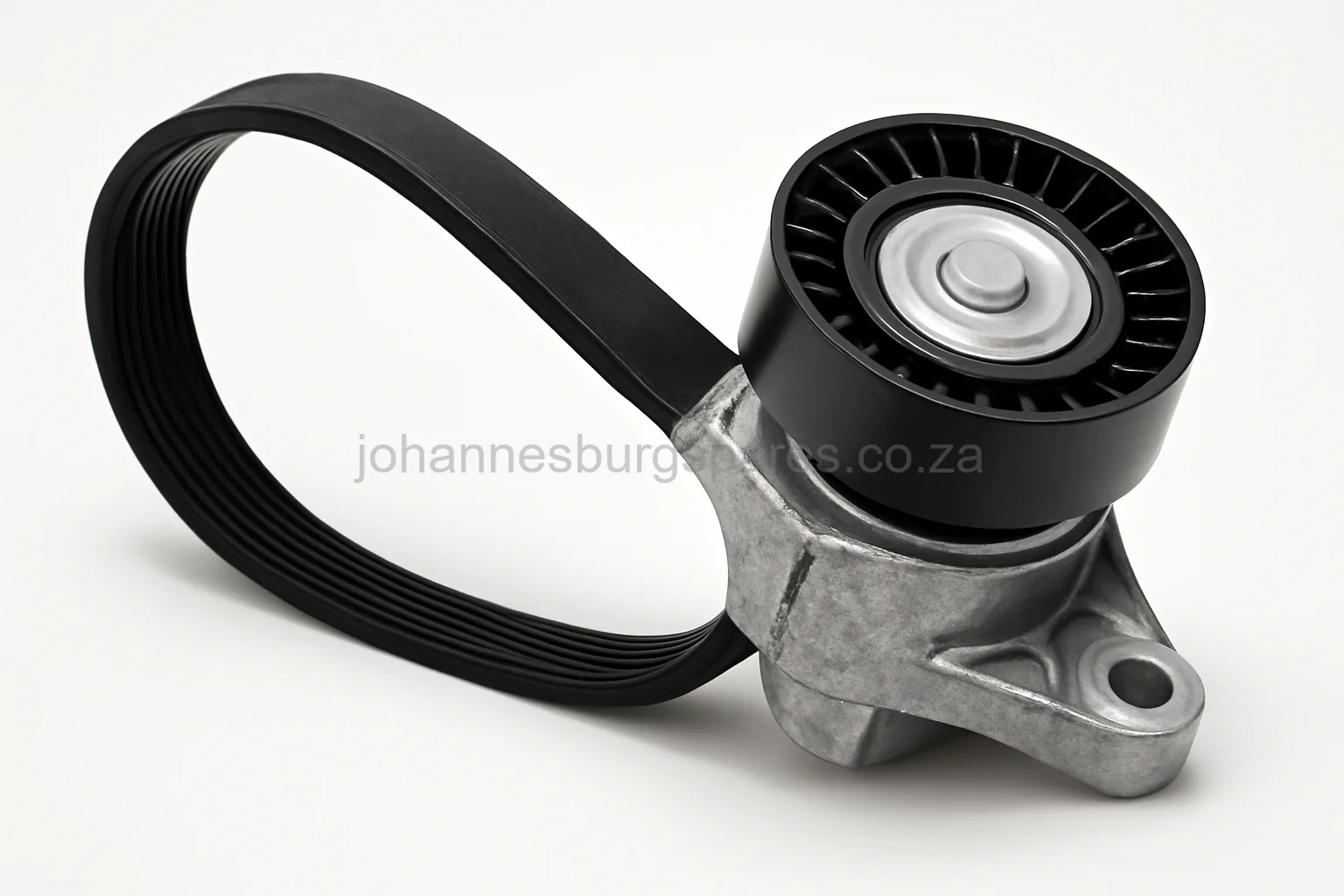
Serpentine Belt & Tensioner Kits
Since you are dropping the alternator anyway, this is the cheapest time to refresh the belt drive. Gates, Dayco and Continental kits for 206, 207, 208, 307, 308 and Partner — usually R400–R900 for the belt plus tensioner together.
Model-Specific Guidance
Peugeot has used several engine families across its SA range, and the alternator output varies with the electrical demand of that engine. Getting the amp rating right matters — fit a 90 A unit to a car that came with a 150 A unit and you will see charging warnings under load.
Peugeot 107 (2005–2014)
The 107 shares its 1.0 L three-cylinder petrol with the Toyota Aygo and Citroen C1. It is one of the simplest Peugeot alternators to replace — typically a 70–80 A unit with no stop-start complications. Used and reconditioned stock is generally easy to find given the shared platform. See our Peugeot 107 parts hub for common wear items on this model.
Peugeot 206 (1998–2010 in SA)
Still one of the most common Peugeots on SA roads thanks to strong aftermarket support. Depending on whether you have a 1.4 petrol, 1.6 16V petrol or 1.4 HDi diesel, the original alternator is a Valeo or Bosch unit of differing output — check the rating and part number stamped on your old unit before ordering. Browse the 206 alternator options for exact fitment.
Peugeot 208 (2012–present)
The best-seller in the current SA range, and a petrol car here: the 1.2 PureTech three-cylinder, plus the 1.6 VTi on earlier examples. Diesel 208s were a European derivative rather than an SA one, so if you are running one it will be an import. Alternator output varies between derivatives, so send us the engine code off the cam cover or your VIN and we will match the exact unit. Stop-start-equipped models use a reinforced alternator with a decoupler pulley — do not fit a basic unit from an earlier 208 in its place. Our 208 electrical parts range lists the variants.
Peugeot 3008 (1.6 THP / 1.6 / 2.0 BlueHDi)
The 3008 draws heavily on its electrical system — panoramic roof motors, electric tailgate, advanced driver aids, and on diesels the DPF regeneration load. Alternators here are higher-output units than on the small hatches, and OEM replacements sit at the upper end of the price table. Aftermarket Valeo and Bosch equivalents are widely available and generally more affordable.
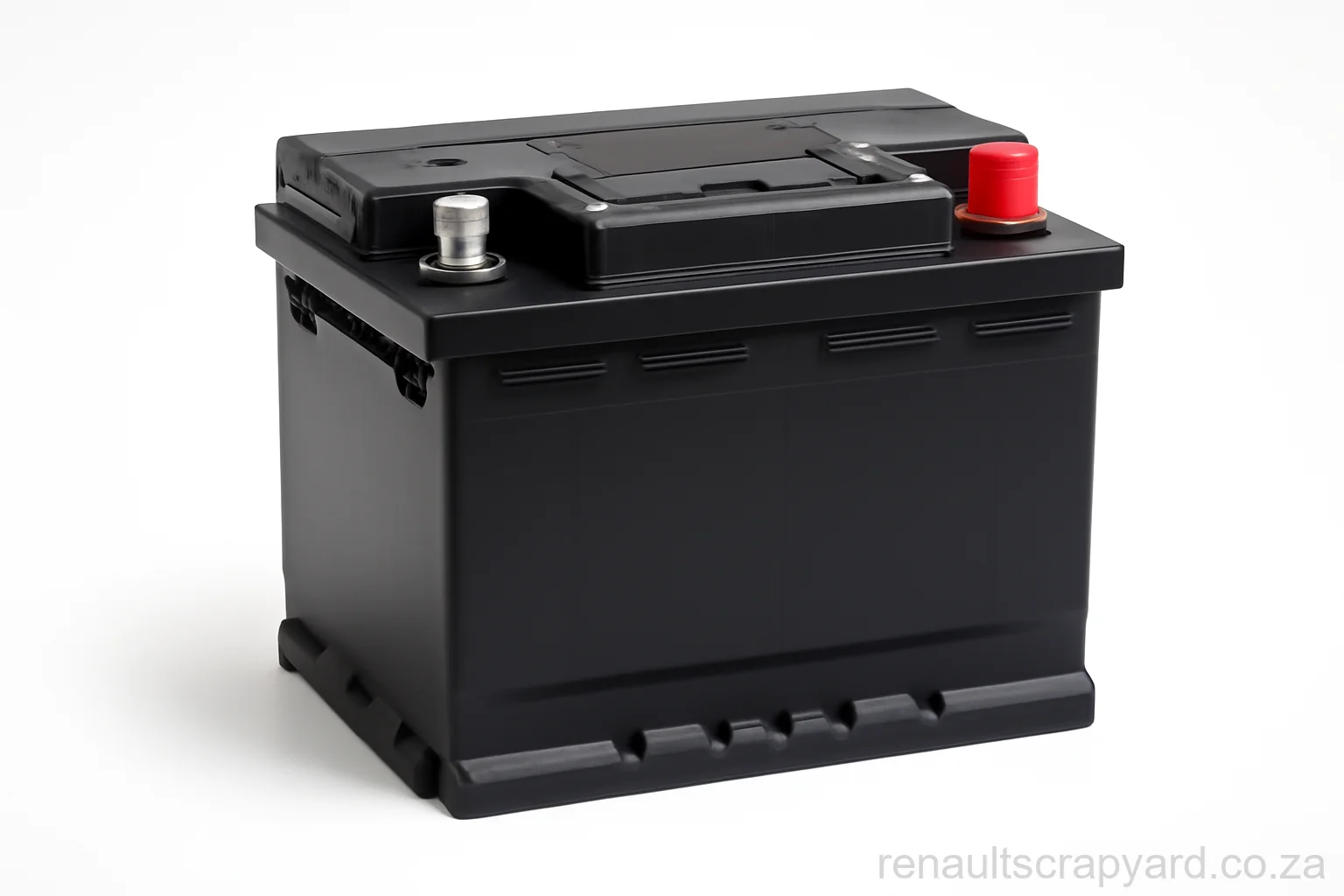
Peugeot 12V Batteries
A dying alternator usually takes the battery with it — and on stop-start 208 and 3008 variants you need a stop-start-rated battery: either AGM or EFB (Enhanced Flooded Battery), matching what your car left the factory with. An ordinary starter battery will not survive the cycling, and you should not swap one technology for the other. We quote Willard, Raylite, Exide and OEM-equivalent batteries with correct CCA and stop-start coding where required.
Peugeot Partner (van)
Partner vans are often loaded with two-way radios, fridges, power inverters and extra lighting — accessories the factory alternator was never designed to carry. If you are running heavy accessories on a Partner, a higher-output alternator is worth asking about — but it is not always a straight swap, so tell us what you are running and we will confirm what your van's original output was and what can actually be fitted.
DIY Considerations — When to Try It, When to Walk Away
Fitting an alternator on a Peugeot 206 in a home garage is a realistic Saturday job if you have a socket set, a long breaker bar for the tensioner, and a workshop manual. You will need to:
- Disconnect the battery (always) to avoid shorting anything while you disconnect the alternator terminals.
- Release the serpentine belt tensioner and slip the belt off.
- Undo the main live cable and the wiring plug on the back of the alternator.
- Remove two or three mounting bolts.
Walk away — or at least get a pro to do it — if any of the following apply:
- It is a 3008, 5008 or modern 208 with the alternator buried behind the air-con compressor or inside the engine bay access panel.
- The serpentine belt is showing cracks or glazing — cheap to replace now, expensive if it strips while you are 500 km from home.
Pro Tip: if you are already dropping the alternator out, replace the serpentine belt and tensioner at the same time. They are typically R400–R900 combined, and you will never have a better chance to inspect them.
Where to Source a Peugeot Alternator in SA
You have four realistic sources in South Africa:
- Peugeot dealer / CFAO Mobility — genuine OEM unit with full warranty. Premium price, longest lead time if out of stock.
- Specialist Peugeot parts suppliers (like us) — OEM, aftermarket and tested used all quoted together. Couriered nationwide.
- Scrapyards — cheapest option for older 206, 207 and 307 models. Ask for a bench-tested unit with at least a 30-day warranty.
- Online classifieds — usable, but bench-test the unit on arrival before fitment. Test voltage should sit at 13.8–14.4 V on a healthy unit.
Whichever route you take, make sure the seller knows your exact engine code (printed on the cam cover or VIN sticker) and whether your car has stop-start. A 208 1.2 PureTech with stop-start and a plain 208 1.6 VTi use different units that are not cross-compatible.
Still Weighing Up Options? Send Us Your VIN.
Drop your VIN and location in a message and we will come back with OEM, aftermarket and used alternator prices side-by-side — no pressure to buy.
FAQ
How much does a Peugeot alternator replacement cost in South Africa? A replacement alternator for popular Peugeot models like the 208, 2008 or 308 typically costs between R2,500 and R6,500 for the part, with labour adding another R800 to R1,500 depending on the workshop. Genuine Peugeot (OEM) units sit at the upper end, while quality aftermarket brands like Bosch and Valeo offer solid warranties at a lower price. BlueHDi diesels generally need higher-output alternators that push toward the top of the range.
How long should a Peugeot alternator last? An alternator is not a scheduled-replacement item — it is changed when it fails, or when a charging test shows its output dropping off. Tough SA conditions — extreme heat, stop-start traffic, dusty rural roads — are hard on the bearings and the voltage regulator, so expect a shorter life here than in a cooler climate. Keeping the serpentine belt correctly tensioned and the battery healthy helps it reach the upper end.
Can I drive my Peugeot with a faulty alternator? You can limp home on a partially failing alternator, but only for short distances. Once the alternator is fully dead, the battery will run the car for roughly 30–60 minutes before voltage drops too low and the engine cuts out. Switch off the radio, air-con and any unnecessary electrical load to buy yourself more range, and head straight to a workshop. Do not leave it standing overnight hoping it will be fine in the morning — a low battery can damage modern ECUs.
How do I test if my alternator is charging correctly? Start the engine, let it idle, and place a multimeter across the battery terminals. On a conventional alternator a healthy charging system reads between 13.8 V and 14.4 V; switch on headlights and air-con and voltage should stay above roughly 13.5 V. On a Peugeot with a smart (ECU-regulated) charging system — identified by a sensor clamped to the negative battery terminal — 12.5 V to 13.5 V while driving is normal rather than a fault, so check for that sensor before judging the reading. If it drops to 12 V or lower with accessories on, the alternator is not keeping up on either type. Any AA technician or Peugeot-competent workshop can run this test in under ten minutes.
Is it worth buying a used alternator for an older Peugeot? For a 10- to 20-year-old 206, 207, 307 or 1007 where the car's resale value is low, a tested used alternator from a reputable scrapyard or specialist is a legitimate choice — typically R1,500–R3,000 all-in. For anything newer, and especially for 3008, 5008 or Landtrek models where the alternator is an expensive, stop-start-compatible unit, we recommend a new aftermarket or reconditioned unit with at least a 12-month warranty.
How much is an alternator for a Peugeot 206 in South Africa? The 206 is one of the cheaper Peugeots to re-alternate. A quality aftermarket Bosch or Valeo unit for the 1.4 petrol, 1.6 16V or 1.4 HDi sits around R2,200–R3,500, and tested used units pulled from scrapyard 206s commonly land in the R1,500–R2,500 band. OEM Peugeot units are now harder to source new and typically push past R4,500. For most 206 owners in SA, a refurbished or new aftermarket unit gives the best balance of price and warranty.
How much is a new alternator for a Peugeot 208? The 208's alternator pricing splits sharply between the simple early 1.4 / 1.6 VTi units and the stop-start decoupler-pulley alternators on later PureTech variants. Expect R2,800–R4,500 for a quality aftermarket unit on the entry petrols, R4,500–R6,500+ for stop-start-compatible units on the 1.2 PureTech, with genuine Peugeot units higher; ask for a quote. Always supply your VIN — a stop-start 208 needs the decoupler-pulley unit, not a plain one from an earlier car.
Is replacing an alternator an expensive job? On most Peugeots sold in SA, no — it sits in the mid-range of mechanical repairs. Total spend including a new aftermarket alternator, a belt-and-tensioner refresh and labour works out to roughly R3,700 to R6,900 on the figures in the table above. It only becomes expensive when you have a stop-start 208, 3008 or 5008 that needs the higher-output, decoupler-pulley alternator (pushing total cost above R7,000), or when a workshop quotes you at OEM-dealer pricing. Get two quotes — one specialist and one dealer — before committing.
How do I know if it's my alternator or my battery that's the problem? The quickest test in your driveway is a multimeter across the battery terminals. Engine off, a healthy battery reads 12.4–12.7 V. Start the car: on a conventional alternator voltage should jump to 13.8–14.4 V, which confirms it is charging. On a car with a smart (ECU-regulated) charging system — the ones with a sensor clamped to the negative battery terminal — a reading of 12.5 V to 13.5 V while running is normal, not a failure. If it stays at or below 12.4 V with the engine running, the alternator is not doing its job. If the engine cranks slowly and the lights are dim before you start, but voltage jumps correctly once running, the battery is the suspect, not the alternator.
Can I replace a Peugeot alternator myself at home? On older Peugeots — 206, 207, early 307 and Partner with the alternator on the top of the engine — yes, it is a realistic Saturday morning job for a confident home mechanic with a socket set, a long breaker bar for the serpentine belt tensioner, and an hour or two. On 3008, 5008, late-model 208 stop-start and 308 GT with the alternator buried behind ancillaries, walk away — these often need the air-con compressor moved, coding after fitment, or specialist tools. A workshop quote of R800–R1,500 labour is well spent on those models.
Important Disclaimer
This content is for informational purposes only and is based on research from automotive industry sources. Pro Peugeot Spares is not a certified automotive repair facility. Always consult with qualified automotive professionals before performing any repairs or maintenance. Improper repairs can result in personal injury, property damage, or vehicle malfunction. We assume no responsibility for actions taken based on this information.